Why Under 16% Moisture Content Is the Ultimate Standard for Export-Grade Rattan and Bamboo
KEY TAKEAWAYS:
- Moisture content below 16% prevents mold growth, fungal decay, and insect infestation during long-distance ocean transit.
- Natural fibers like rattan and bamboo are highly hygroscopic, requiring precise drying to prevent structural warping and cracking in dry destination climates.
- Export-grade quality assurance relies on multi-stage moisture testing and advanced kiln-drying to meet international compliance standards.
THE INVISIBLE THREAT LURKING IN YOUR RATTAN AND BAMBOO IMPORTS
Imagine waiting weeks for a highly anticipated shipment of premium natural rattan storage baskets or woven bamboo pendant lights, only to unseal the ocean container and find them covered in white mold, warped, or split. For global home decor buyers, sourcing managers, and interior designers, this is a costly and reputation-damaging nightmare. The culprit behind this disaster is almost always invisible at the time of packing: excess moisture trapped deep within the natural fibers of the raw materials.
THE SCIENCE OF 16%: WHY THIS MAGIC NUMBER PREVENTS MOLD AND WARPING
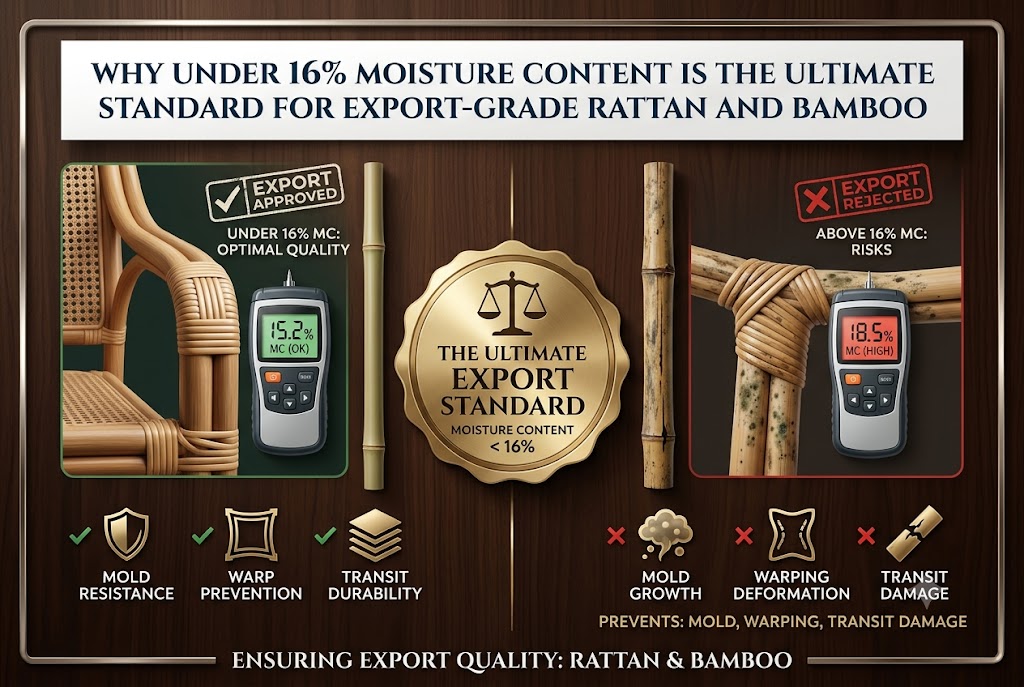
Natural materials such as rattan, bamboo, seagrass, and water hyacinth are highly hygroscopic. They naturally absorb and release moisture to achieve equilibrium with their surrounding environment. When the internal moisture content (MC) of these materials exceeds 16%, it triggers a chain reaction of quality failures during transit:
1. The Mold Threshold
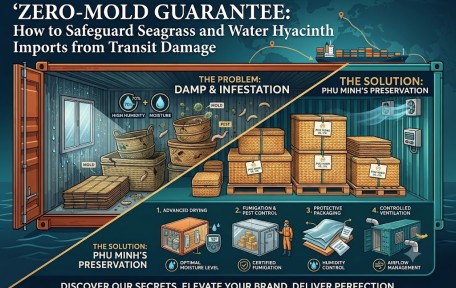
Mold spores are omnipresent in the air. However, they require moisture to germinate and colonize. Scientific studies and industrial standards show that mold growth is heavily suppressed when the moisture content of organic materials is kept strictly under 16%. Above this threshold, the warm, unventilated, and humid microclimate inside a shipping container becomes a perfect incubator for mold and mildew.
2. Structural Warping and Cracking
When high-moisture products are shipped from humid tropical manufacturing hubs like Vietnam to drier, heated climates in North America or Europe, they undergo rapid desorption. As the internal moisture evaporates too quickly, the fibers shrink unevenly, leading to structural warping, joint loosening, and unsightly cracking in the bamboo or rattan frames.
CRAFTING PERFECTION: HOW PHU MINH GUARANTEES MOISTURE-CONTROLLED EXCELLENCE
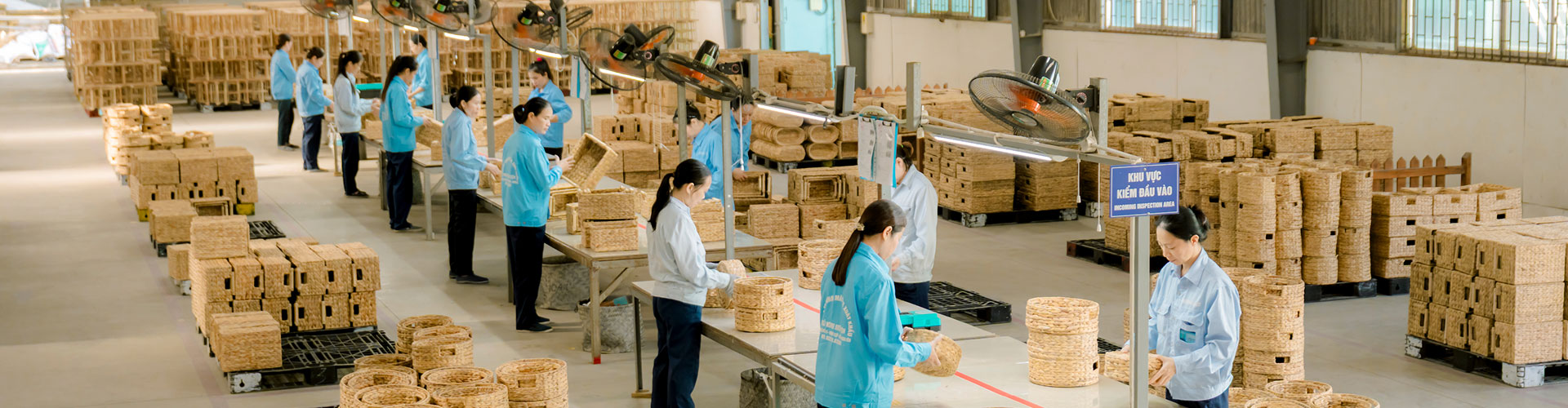
At Phu Minh Co., Ltd., we mitigate these risks through a rigorous, multi-step quality control process. We do not leave moisture management to chance. Our export-grade production line incorporates advanced climate-control measures to ensure every piece meets global standards:
- Precision Kiln-Drying: We utilize state-of-the-art wood-drying and kiln chambers to gradually reduce the moisture of rattan and bamboo to an optimal 12% to 14% range, far below the critical 16% threshold.
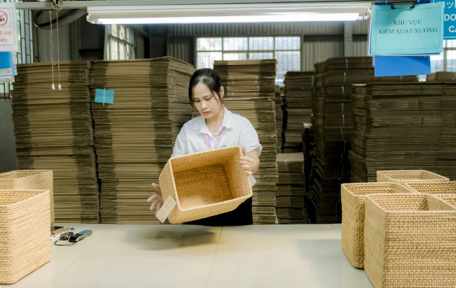
- Multi-Stage Testing: Our quality assurance team tests raw materials, semi-finished goods, and final products using calibrated pin-type and pinless moisture meters. No product is cleared for packing unless it passes our strict moisture tolerance levels.
- International Compliance: Our manufacturing processes align with global audits, including ISO 9001:2015, BSCI, SMETA, SCAN, and WCA, guaranteeing that your sustainable home decor is ethically produced and technically flawless.
SECURE YOUR SUPPLY CHAIN: PARTNER WITH A CERTIFIED SUSTAINABLE MANUFACTURER
In the highly competitive B2B home decor market, product reliability is your greatest asset. By partnering with a manufacturer that prioritizes scientific moisture control, you eliminate the risk of transit damage, reduce costly return rates, and protect your brand's reputation for premium quality.
Ready to elevate your inventory with sustainably crafted, climate-resilient rattan and bamboo products? Contact the B2B specialists at Phu Minh Co., Ltd. today to request our latest catalog, order pre-production samples, or schedule a virtual tour of our certified manufacturing facility.
FAQ SECTION:
1- Why does mold grow on rattan and bamboo during shipping?
Mold grows because shipping containers act as greenhouses, trapping heat and humidity. If the moisture content of the natural materials inside exceeds 16%, the trapped moisture evaporates and condenses, creating an ideal environment for mold spores to thrive.
2- What is the ideal moisture content for exported natural furniture?
The ideal moisture content for export-grade rattan and bamboo furniture is between 12% and 15%. This range ensures the material remains structurally stable and mold-free during ocean transit and adapts well to drier destination climates.
3- How does Phu Minh Co., Ltd. prevent moisture re-absorption before packing?
After kiln-drying, we store our products in moisture-controlled warehouses, apply eco-friendly protective sealants, and pack them using silica gel desiccant bags inside sealed cartons to block humidity during shipping.
RELAVANT ARTICLES