How to Select Export-Grade Rattan Raw Materials for the US Market: A Comprehensive Guide for Global Buyers
KEY TAKEAWAYS:
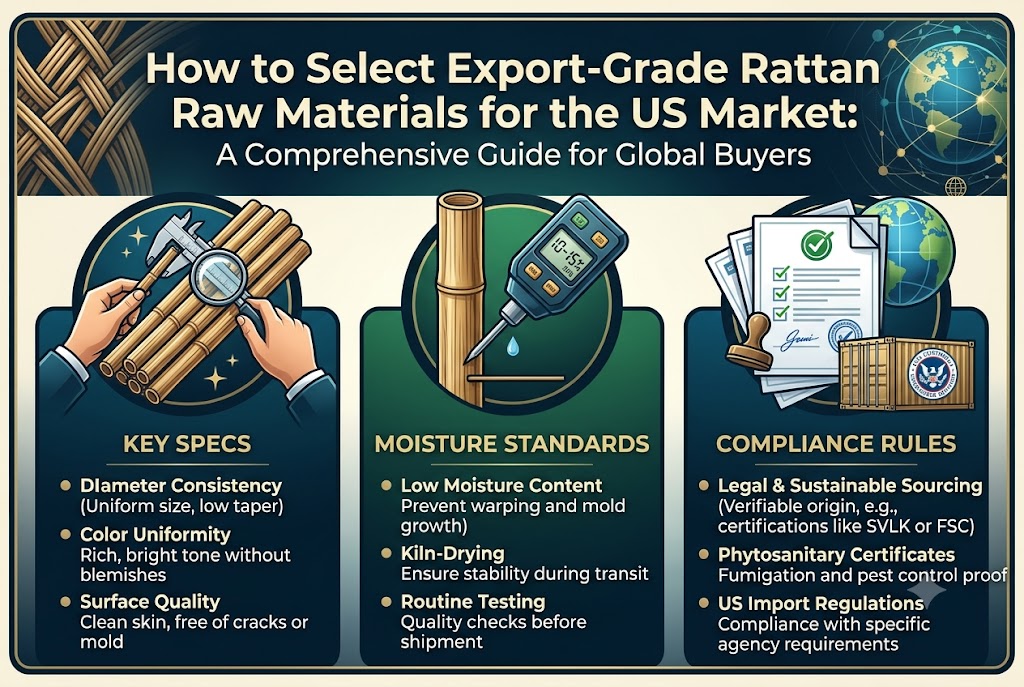
- Maintain raw rattan moisture content between 8% and 12% to prevent mold growth and structural warping during ocean transit to the US.
- Ensure total compliance with the US Lacey Act by verifying legal harvest origin and precise botanical species documentation.
- Select mature rattan canes aged 5 to 7 years with dense inner pith and smooth skin to guarantee flexibility and structural integrity.
- Partner with manufacturers holding ISO 9001:2015, BSCI, SMETA, and SCAN certifications to safeguard ethical and quality standards.
NAVIGATING RATTAN PROCUREMENT FOR THE US HOME DECOR MARKET
Sourcing premium natural rattan for high-end home decor and storage solutions requires rigorous material selection, particularly when targeting the stringent US retail market. US importers, wholesalers, and interior designers demand exceptional aesthetic uniformity, structural longevity, and strict regulatory compliance. Procurement of substandard raw rattan can lead to devastating mold infestation during ocean transit, costly product recalls, and severe legal penalties. At Phu Minh Co., Ltd., we provide global buyers with actionable procurement standards to ensure every batch of rattan meets top-tier export criteria.
PREREQUISITES: UNDERSTANDING US IMPORT STANDARDS FOR RATTAN
Before finalizing purchase orders, B2B procurement managers must establish clear technical parameters aligned with US environmental laws and climate conditions. Key prerequisites include:
- Lacey Act Compliance: Full declaration of legal harvesting and botanical species identification to prevent illegal plant trade.
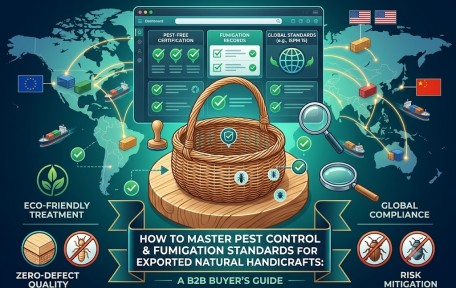
- USDA-APHIS Phytosanitary Standards: Certified fumigation and pest-control treatments to protect against invasive wood-boring insects.
- Strict Moisture Limits: Kiln-drying processes designed to reduce moisture content to an optimal 8%–12%.
- Ethical & Security Audits: Verified factory audits including BSCI, SMETA, SCAN, and ISO 9001:2015.
STEP 1: INSPECT PHYSICAL FIBER QUALITY AND HARVEST MATURITY
Superior rattan products begin with proper harvesting practices. Only mature rattan canes—typically harvested between 5 and 7 years of age—possess the natural density required for premium furniture and home accessories. Immature rattan harbors high moisture levels and weak cell walls, resulting in rapid shrinkage and brittle fibers.
Key Physical Quality Indicators:
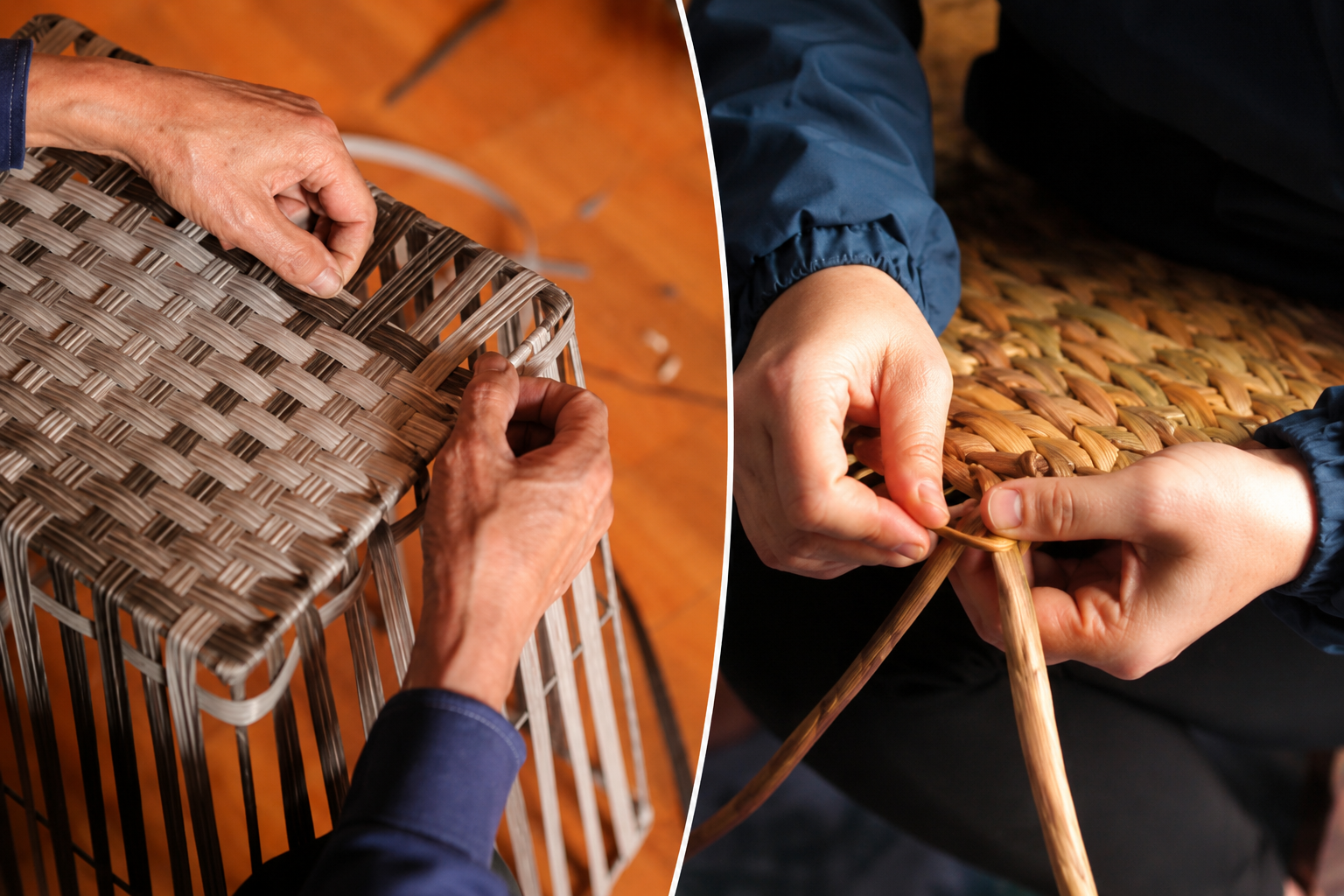
- Pith Density and Elasticity: High-grade raw rattan features a tight, dense inner pith surrounded by a smooth, silicified skin that bends smoothly without splintering.
- Surface Blemish Audit: Reject raw poles exhibiting pinholes, deep black spots, insect boreholes, or irregular wall thickness.
- Color Uniformity: Look for consistent ivory-yellow or light warm-honey hues, indicating proper post-harvest washing, boiling, and sun-curing.
STEP 2: ENFORCE INDUSTRIAL KILN-DRYING AND SAFE TREATMENTS
Atmospheric changes during multi-week container shipping create high humidity levels that foster fungal growth. Moisture management is the single most critical technical step when exporting rattan to North America.
Require your supplier to utilize automated industrial kiln dryers to lower raw material moisture strictly down to 8%–12%. Furthermore, verify that anti-fungal treatments employ eco-friendly, non-toxic chemical dips compliant with US Consumer Product Safety Improvement Act (CPSIA) guidelines, preserving natural textures while protecting against mildew.
STEP 3: AUDIT SUPPLY CHAIN LEGALITY AND INTERNATIONAL CERTIFICATIONS
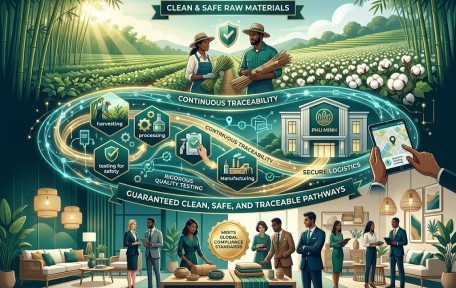
US Customs and Border Protection (CBP) strictly enforces plant trade regulations. Importers must work with verified manufacturers that provide complete supply chain transparency from raw harvest to final packaging.
- Lacey Act Declaration: Secure exact scientific classifications (e.g., Calamus caesius or Calamus manan) alongside country-of-origin certificates.
- Social & Environmental Audits: Choose production partners audited under BSCI and SMETA to satisfy US corporate social responsibility (CSR) requirements.
- Quality Management Systems: Confirm the manufacturing facility operates under ISO 9001:2015 standards to guarantee repeatable batch quality.
STEP 4: EXECUTE IN-LINE QA TESTING AND MOISTURE-PROOF PACKAGING
Establish comprehensive quality control (QC) checkpoints prior to authorizing final shipment. Implement the following verification protocol:
- Flexibility & Load Testing: Test sample weaves under mechanical stress to ensure structural stability in dry US indoor environments.
- Dimensional Tolerance: Verify that cane diameters align with technical specification sheets within a ±1mm margin.
- Moisture-Barrier Packaging: Ensure finished baskets and furniture are packed with high-capacity silica gel desiccants and sealed inside heavy-duty moisture-resistant corrugated cartons.
ELEVATE YOUR RATTAN SOURCING STRATEGY WITH PHU MINH CO., LTD
Selecting export-grade rattan for the US market demands a balance of traditional material knowledge, scientific moisture management, and transparent compliance. By following this systematic selection guide, procurement directors can eliminate supply chain vulnerabilities and deliver premium home decor products to North American clients. Contact Phu Minh Co., Ltd. today to discuss custom OEM/ODM rattan solutions crafted to international standards.
FAQ SECTION:
1- What is the acceptable moisture content for rattan exported to the US?
The ideal moisture content for raw and woven rattan exported to North America is between 8% and 12%. This range prevents mold during ocean transit and protects against cracking in dry, heated indoor environments.
2- How does the US Lacey Act affect rattan furniture imports?
The US Lacey Act requires importers to submit declarations detailing the botanical species, value, quantity, and legal harvest origin of plant-derived materials, including natural rattan, to combat illegal trade.
3- What certifications should buyers look for in a Vietnamese rattan supplier?
Global buyers should look for ISO 9001:2015 for quality management systems, BSCI or SMETA for ethical labor practices, SCAN for supply chain security, and official USDA-compliant phytosanitary certificates.
4- Why does rattan split or warp after arriving in the United States?
Splitting and warping occur when rattan is harvested prematurely or dried unevenly, causing internal fibers to shrink rapidly when exposed to low indoor relative humidity in the US.
RELAVANT ARTICLES