Vietnamese Handicrafts in Global Retail: Supply Chain Evolution, Compliance Trends, and the Journey to Walmart
KEY TAKEAWAYS:
- Vietnam has emerged as a premier global hub for sustainable home decor, successfully scaling traditional weaving techniques to meet the high-volume demands of major retailers like Walmart.
- Social and security compliance audits, including BSCI, SMETA, SCAN, and WCA, are mandatory, non-negotiable prerequisites for entering tier-one US retail supply chains.
- Modern material innovation blends natural fibers like water hyacinth and seagrass with synthetic resins or metal frames to enhance product durability and shipping resilience.
- Partnering with structured manufacturers who manage decentralized artisan networks ensures both authentic craftsmanship and reliable, high-volume B2B delivery.
EXECUTIVE SUMMARY: THE GLOBAL ASCENT OF VIETNAMESE CRAFTSMANSHIP
The global home decor landscape is undergoing a profound shift. Once confined to boutique design shops, hand-woven Vietnamese handicrafts have successfully transitioned into the high-volume, mainstream aisles of global retail giants like Walmart. For international buyers and interior designers, this represents a unique convergence of traditional artistry and industrial-scale supply chain efficiency. This report analyzes how Vietnam's craft villages have evolved to meet rigorous global standards, the material innovations driving this growth, and the strategic roadmap for sourcing premium, compliant homeware at scale.
THE CURRENT LANDSCAPE: VIETNAM'S STRATEGIC POSITION IN GLOBAL SOURCING
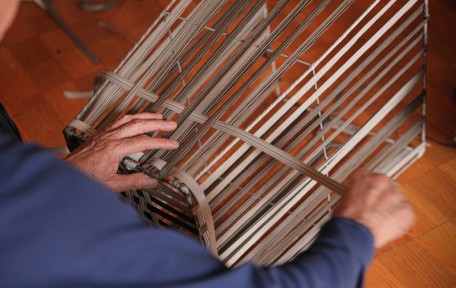
As global consumers increasingly demand eco-friendly, sustainable storage solutions and home accessories, Vietnam has positioned itself as the world's leading sourcing destination for hand-woven goods. Traditional craft villages, utilizing abundant natural resources such as seagrass, water hyacinth, rattan, and bamboo, form the backbone of this industry. However, the modern B2B landscape requires more than just raw weaving talent. Today's market demands a sophisticated integration of localized artisan weaving with centralized, state-of-the-art manufacturing facilities capable of managing complex logistics, rigorous quality control, and international export standards.
KEY TRENDS: MATERIAL FUSION AND UNCOMPROMISING COMPLIANCE
1. Material Innovation and Hybrid Designs
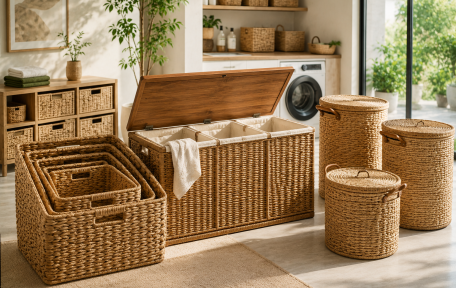
To survive the rigorous trans-Pacific shipping journey and meet the daily durability needs of Western households, manufacturers are pioneering hybrid material designs. By blending natural fibers like water hyacinth and seagrass with durable materials such as PP/PE resin, paper cords, polyester/cotton ropes, acacia, and pine wood, factories can produce high-performance laundry hampers and storage furniture. These hybrid designs maintain the warm, organic aesthetic desired by interior designers while offering the structural integrity required by mass retailers.
2. The Mandatory Rise of Global Compliance
Securing shelf space at retailers like Walmart is impossible without strict adherence to international compliance frameworks. Global buyers now prioritize manufacturers who hold comprehensive certifications. Key non-negotiable standards include:
- BSCI & SMETA: Ensuring ethical labor practices, fair wages, and safe working conditions across all craft villages and factories.
- WCA (Workplace Conditions Assessment): Verifying workplace safety and environmental responsibility.
- SCAN (Supplier Compliance Audit Network): Guaranteeing supply chain security and C-TPAT alignment to prevent cargo tampering.
- ISO 9001:2015: Providing a robust quality management framework that guarantees consistency across thousands of production units.
FUTURE OUTLOOK: SCALING ARTISANAL PRODUCTION FOR MASS RETAIL
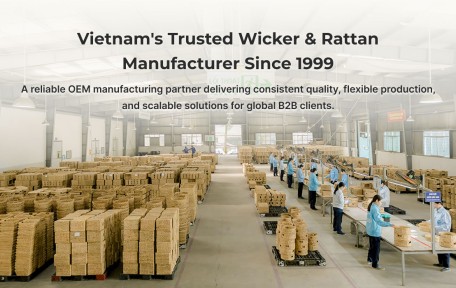
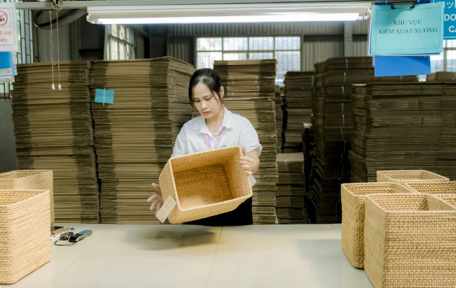
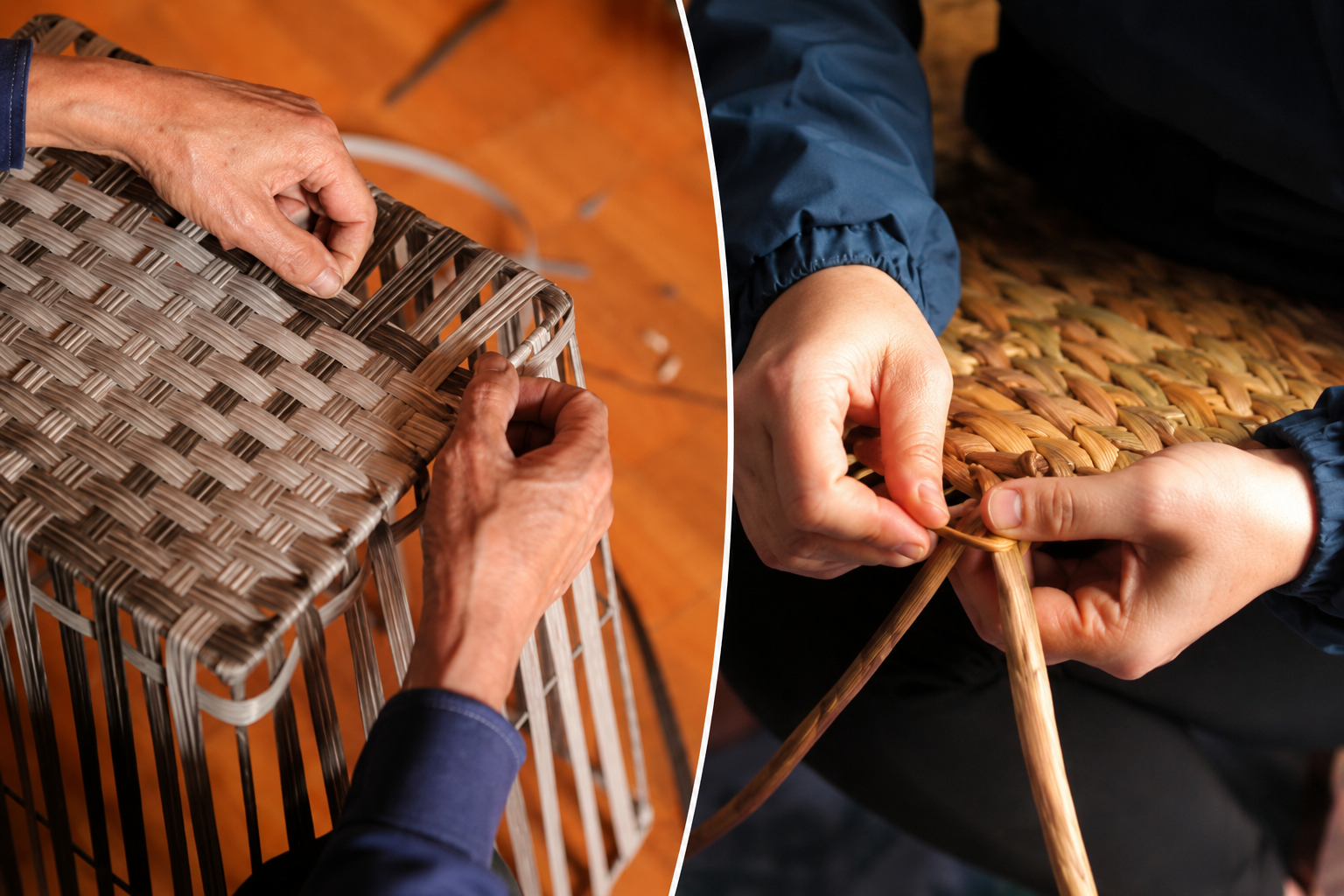
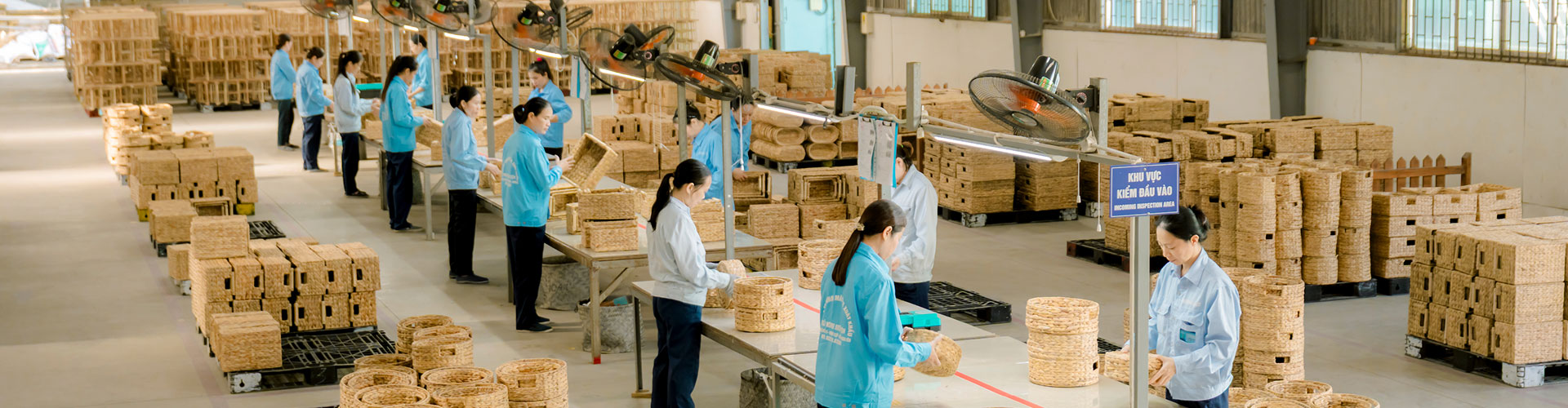
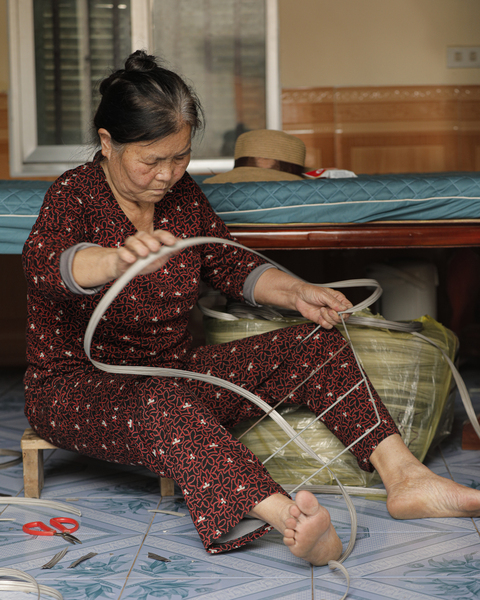
The future of Vietnamese handicraft sourcing lies in the democratization of sustainable luxury. The challenge has always been scalability: how do you produce 100,000 identical, hand-woven storage baskets without losing the unique touch of the artisan? The solution pioneered by leading manufacturers like Phu Minh Co., Ltd involves a hub-and-spoke model. Raw weaving is decentralized across skilled rural villages to support local economies, while finishing, treatment, metal framing, quality control, and packaging are centralized in modern, audit-ready facilities. This hybrid approach ensures that hand-woven products can scale to meet container-load demands while preserving authentic craftsmanship.
STRATEGIC RECOMMENDATIONS: HOW GLOBAL BUYERS CAN NAVIGATE THE VIETNAMESE MARKET
1. Vet for Compliance Before Capacity
When sourcing from Vietnam, ensure your manufacturing partner is fully certified with BSCI, SMETA, and SCAN. A partner without these credentials will fail the onboarding requirements of tier-one retailers like Walmart, regardless of their product quality.
2. Prioritize Material Versatility
Look for suppliers capable of working with diverse materials. A manufacturer skilled in combining natural fibers with synthetic resins, cotton ropes, and plantation woods (like acacia and pine) can offer a wider product portfolio and more resilient designs.
3. Partner with Vertically Integrated Manufacturers
To mitigate supply chain disruptions, partner with manufacturers who control the entire process—from raw material sourcing and village weaving coordination to final packaging and export logistics. This integration guarantees consistent quality, stable pricing, and on-time delivery.
FAQ SECTION:
1- How do Vietnamese manufacturers scale hand-woven products for high-volume retailers like Walmart?
Vietnamese manufacturers utilize a hub-and-spoke model where the initial weaving is decentralized across traditional craft villages to leverage specialized local skills. The semi-finished products are then brought to a centralized, ISO 9001:2015 certified factory for standardized quality control, anti-mold treatment, metal framing, and packaging, ensuring both scale and consistency.
2- What compliance certifications are required to export home decor from Vietnam to the US?
To sell to major US retailers, manufacturers must comply with strict social, security, and quality audits. These include BSCI and SMETA for ethical labor, SCAN (Supplier Compliance Audit Network) for supply chain security, WCA for workplace conditions, and ISO 9001:2015 for quality management.
3- What materials are best suited for durable and sustainable commercial storage solutions?
A combination of natural fibers like seagrass, water hyacinth, and rattan paired with structural elements like acacia wood, pine wood, or iron wire frames offers the best balance of organic aesthetics and commercial-grade durability. For high-moisture environments, combining natural fibers with PP/PE resin or polyester ropes is highly recommended.
4- How do manufacturers prevent mold and damage during long-distance maritime shipping?
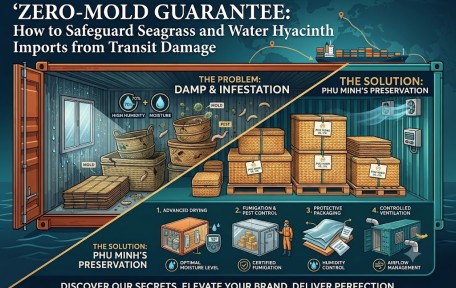
Leading manufacturers implement rigorous moisture control protocols, ensuring raw natural fibers are dried to a specific moisture content (typically below 15%) before production. Products undergo specialized anti-mold treatments and are shipped in moisture-absorbent packaging inside well-ventilated containers to withstand temperature fluctuations during transit.
RELAVANT ARTICLES