Trend Report: How Steam Bending Technology Is Shaping the Future of Rattan and Bamboo Furniture Manufacturing

KEY TAKEAWAYS:
- Steam bending softens natural lignin in rattan and bamboo using saturated steam, preventing fiber scorching and structural weakening.
- Industrial steam chambers enable precise dimensional tolerances (+/- 2mm) required for high-volume B2B contract furniture production.
- Integrating steam shaping with controlled post-drying (8%-12% moisture content) guarantees long-term durability during global transit.
- Leading Vietnamese manufacturers like Phu Minh Co., Ltd leverage steam technology alongside BSCI, SMETA, and ISO 9001:2015 standards.
EXECUTIVE SUMMARY: TRANSFORMING RATTAN AND BAMBOO SHAPING THROUGH STEAM BENDING
As international demand for sustainable home decor and contract furniture accelerates, global B2B buyers face a persistent challenge: balancing organic aesthetic appeal with structural consistency and mass production scalability. Steam bending technology (steamers) has emerged as the definitive bridge between traditional artisan craftsmanship and high-volume industrial manufacturing for rattan and bamboo products.
This trend report analyzes how advanced steam chambers optimize lignocellulosic fiber flexibility, drastically reduce product rejection rates, and enable intricate, ergonomic furniture silhouettes that satisfy stringent international standards like ISO 9001:2015, BSCI, and SMETA.
CURRENT LANDSCAPE: TRADITIONAL HEAT VS. INDUSTRIAL STEAM BENDING SYSTEMS
Historically, artisans relied on direct open-flame heating (blowtorches) or hot-water soaking to bend heavy rattan poles (such as Manau or Tohiti) and thick-walled bamboo. While effective for small-batch handcrafting, these traditional techniques present severe limitations for global volume sourcing:
- Structural Charring & Embrittlement: Direct flame scorches natural fibers, weakening structural integrity and creating inconsistent color tones.
- High Rejection Rates: Uneven heat distribution leads to splintering and tension cracking during tight-radius bending.
- Scalability Bottlenecks: Manual flame shaping lacks repeatability across multi-container purchase orders.
Modern manufacturing facilities, such as Phu Minh Co., Ltd, have upgraded to industrial steam chambers. By injecting saturated steam under controlled pressure (typically 100°C to 120°C), steam softening saturates the natural lignin within bamboo and rattan cells without scorching, rendering the material pliable for precision mold shaping.
KEY TRENDS SHAPING STEAM BENDING IN SUSTAINABLE FURNITURE PRODUCTION
1. Precision Mold Engineering & Zero-Defect Consistency
The integration of high-pressure steamers with custom metal jigs allows manufacturers to achieve exact dimensional tolerances (+/- 2mm) across thousands of units. This is vital for contract furniture, storage hampers, and modular shelving where uniform geometry is mandatory.
2. Enhanced Material Preservation & Eco-Friendly Processing
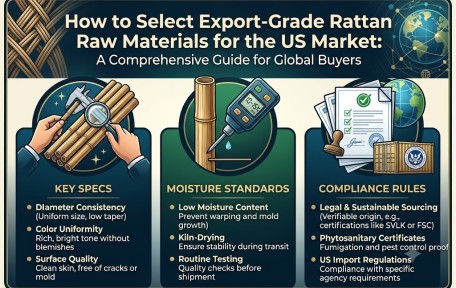
Steam softening preserves the natural bamboo culm exterior and rattan skin, maintaining tensile strength while eliminating the need for aggressive chemical softeners. Combined with compliant kiln-drying post-shaping, steam-bent rattan achieves optimal moisture levels (8%–12%), preventing mold and warp during ocean transport.
3. Complex Ergonomic & Biophilic Geometries
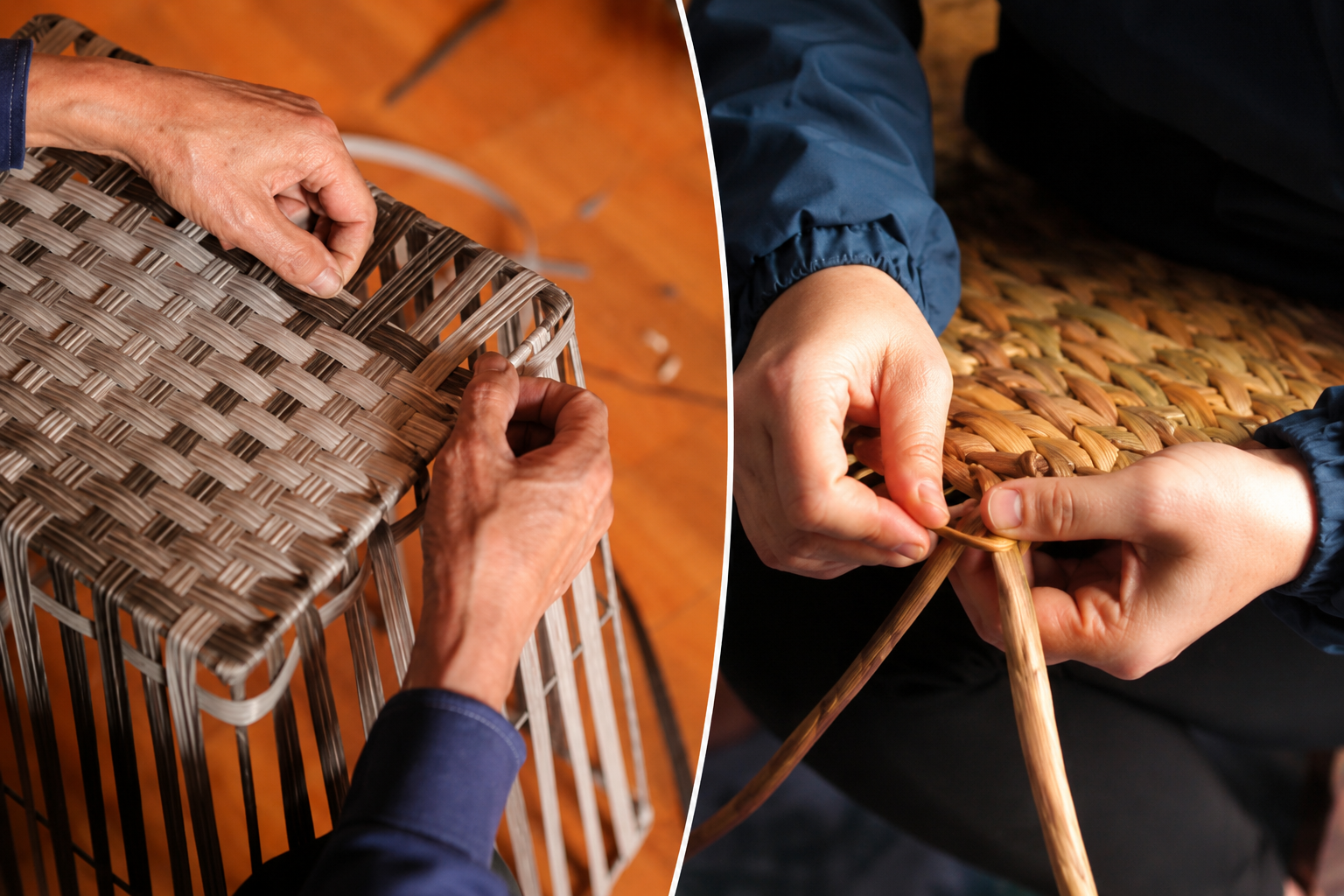
Designers are leveraging steam flexibility to craft sweeping curves, organic armrests, and seamlessly wrapped frames that were previously impossible with rigid wood or un-steamed bamboo. This supports the growing biophilic design movement in commercial and hospitality projects.
FUTURE OUTLOOK: THE EVOLUTION OF STEAM TECHNOLOGY IN GLOBAL HOME DECOR
The adoption of automated, energy-efficient steam chambers will continue to redefine the rattan and bamboo supply chain through 2030. Key developments include:
- Closed-Loop Steam Recovery Systems: Reducing water and energy consumption to meet strict ESG metrics and ISO 14001 alignment.
- Hybrid Material Integration: Combining steam-curved rattan and bamboo frames with acacia wood, pine, paper cords, and durable PP/PE synthetic resin weaves for weather-resistant outdoor collections.
- Automated Bending Jigs: Pneumatic-assisted clamping coupled with steam softening will further reduce production lead times for major global retailers.
STRATEGIC RECOMMENDATIONS FOR SOURCING MANAGERS AND INTERIOR ARCHITECTS
To maximize value and manage risk when importing steam-shaped rattan and bamboo products, sourcing teams should implement the following strategy:
- Verify Supplier Technical Capabilities: Ensure your OEM/ODM partner utilizes calibrated steam chambers rather than open-flame bending to guarantee batch-to-batch consistency.
- Audit Facility Certifications: Partner with manufacturers holding BSCI, SMETA, WCA, SCAN, and ISO 9001:2015 to ensure social compliance, security, and quality assurance.
- Specify Moisture & Bending Tolerances: Include post-steaming drying parameters in tech packs to prevent structural deformation in transit.
At Phu Minh Co., Ltd, our state-of-the-art steam bending infrastructure empowers global brands to bring bold, complex eco-designs to life reliably and at scale.
FAQ SECTION:
1- What is steam bending technology in rattan and bamboo crafting?
Steam bending involves exposing natural rattan poles or bamboo culms to high-temperature saturated steam in pressurized chambers. This softens the lignin inside the fibers, allowing the material to be bent into complex curves using precision molds without scorching or breaking.
2- Why is steam bending superior to traditional open-flame bending?
Unlike open-flame torching, which can scorch, weaken, and cause inconsistent discoloration on natural fibers, steam bending distributes heat and moisture evenly. This preserves fiber strength, ensures uniform color, and significantly lowers rejection rates in mass production.
3- Does steam bending affect the durability of bamboo and rattan furniture?
No. When followed by proper kiln drying to maintain optimal moisture levels (8%-12%), steam bending actually enhances durability by reducing internal fiber stress and preventing cracking during climate shifts.
4- How does Phu Minh Co., Ltd ensure quality control for steam-curved products?
Phu Minh Co., Ltd combines industrial steam softening with calibrated metal jigs and stringent ISO 9001:2015 quality checks. Our factory is fully audited under BSCI, SMETA, WCA, and SCAN, guaranteeing ethical and high-standard international supply chains.
RELAVANT ARTICLES