The Sustainable Minimalism Report: Why Vietnamese Woven Crafts Are the Definitive Choice for Japandi & Nordic Interiors
KEY TAKEAWAYS:
- Vietnamese rattan and bamboo offer the perfect organic texture and structural precision required to balance Japanese minimalism and Scandinavian functionality.
- Phu Minh Co., Ltd provides globally certified (BSCI, SMETA, SCAN, ISO 9001:2015) natural woven storage and decor solutions that meet stringent international B2B retail standards.
- The integration of sustainable wood frames (acacia, pine) with natural fibers (seagrass, water hyacinth, paper cord) represents the future of eco-friendly, high-end furniture design.
EXECUTIVE SUMMARY: THE CONFLUENCE OF ECO-CONSCIOUSNESS AND MINIMALIST AESTHETICS
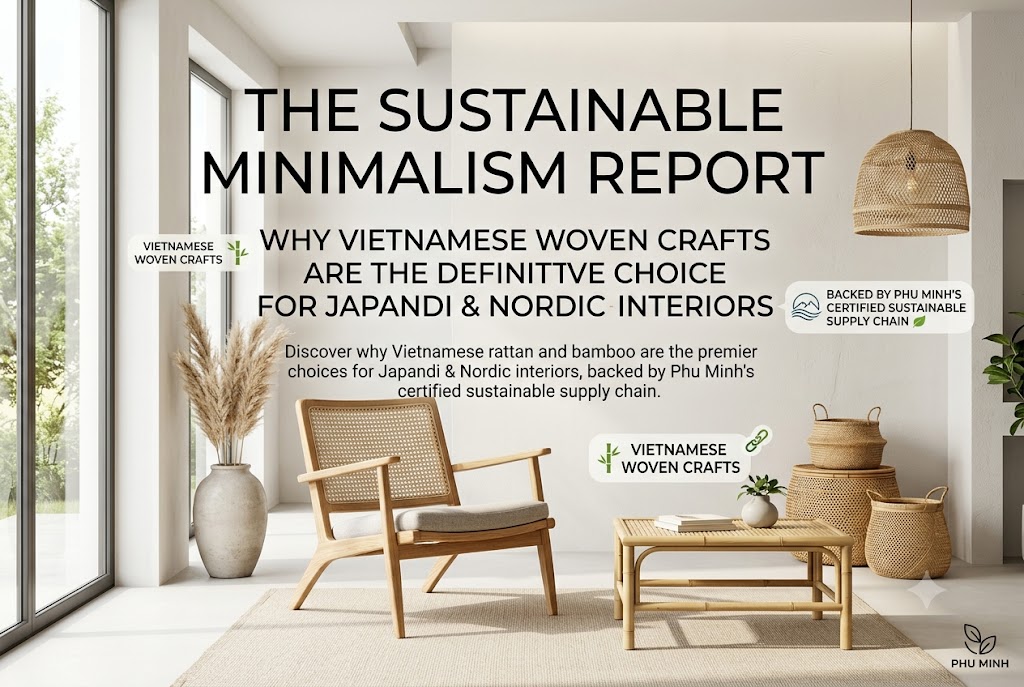
In the global home decor market, the intersection of Japanese minimalism and Scandinavian functionality—collectively known as Japandi—has transitioned from a passing design trend to a permanent consumer preference. As international buyers and interior designers seek to satisfy the growing demand for warm, organic minimalism, Vietnam's natural woven crafts have emerged as the premier material choice. This report analyzes why Vietnamese rattan, bamboo, seagrass, and water hyacinth are uniquely positioned to dominate the Japandi and Nordic sourcing landscape, and how Phu Minh Co., Ltd serves as the strategic bridge for global B2B retailers.
THE CURRENT LANDSCAPE: SOURCING DEMANDS IN A POST-PLASTIC ERA
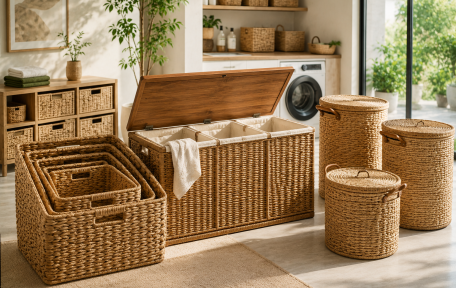
Modern consumers are actively rejecting synthetic plastics in favor of biodegradable, renewable, and circular materials. In response, global procurement managers are restructuring their supply chains to prioritize verified eco-friendly suppliers. The Nordic design philosophy emphasizes hygge (warmth and comfort) through natural textures, while Japanese design demands wabi-sabi (the beauty of imperfection and natural materials). Vietnamese hand-woven products—ranging from laundry hampers and storage baskets to accent furniture—perfectly embody these principles. By utilizing fast-growing, renewable resources like seagrass, water hyacinth, and bamboo, manufacturers offer products that are both aesthetically superior and environmentally responsible.
KEY TRENDS: WHY VIETNAMESE CRAFTSMANSHIP COMPLEMENTS JAPANDI & NORDIC DESIGN
1. Perfect Balance of Organic Texture and Geometric Precision
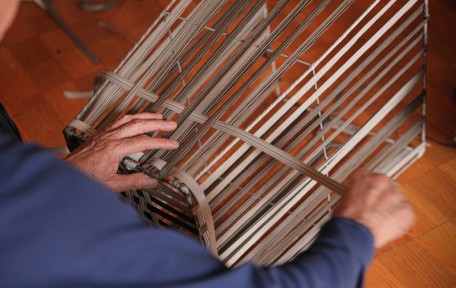
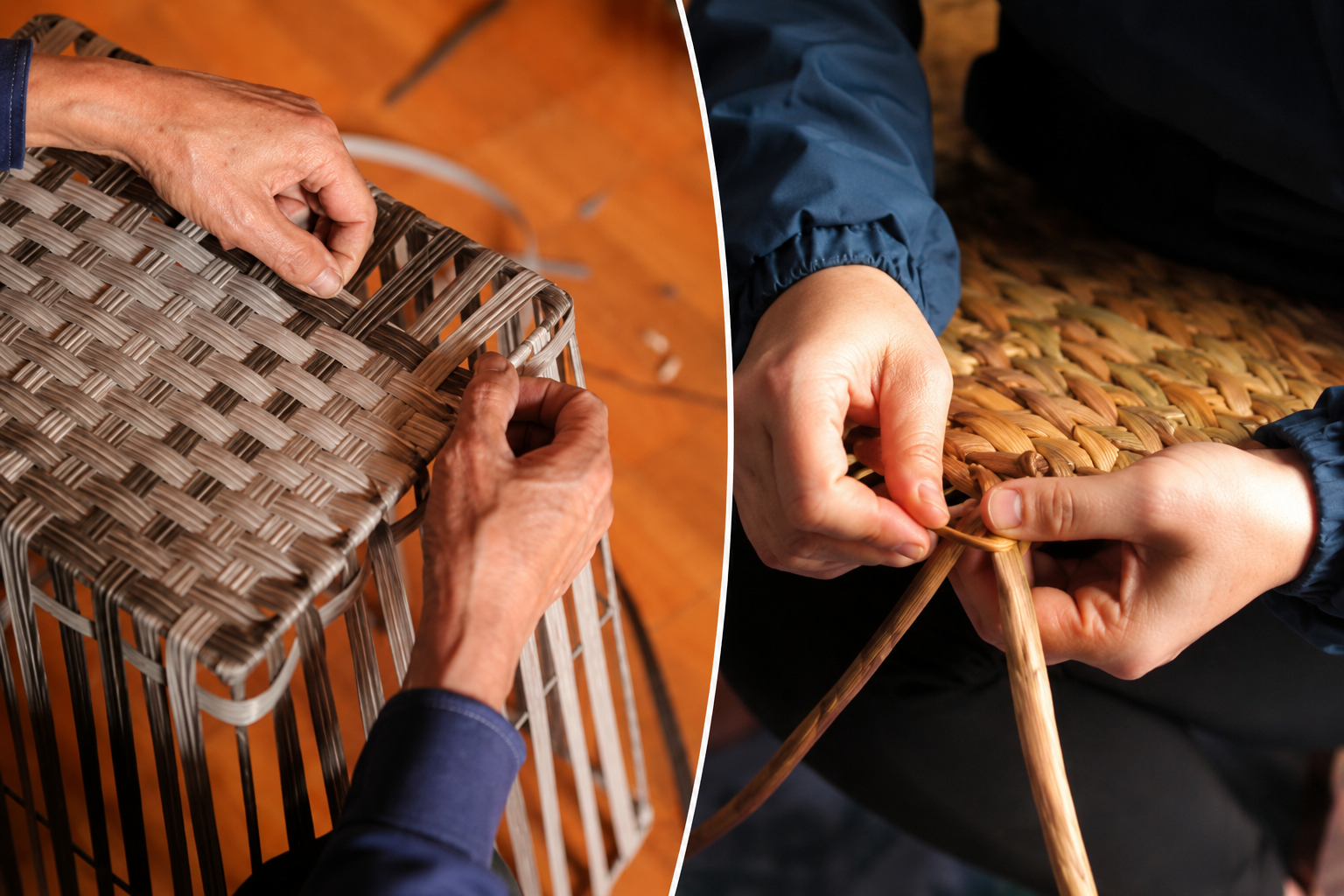
Japandi interiors require clean lines combined with rich, tactile surfaces. Vietnamese artisans possess centuries of weaving expertise, allowing them to create tight, uniform patterns using natural rattan, paper cords, and cotton ropes. These materials soften the sharp edges of minimalist Scandinavian spaces without adding visual clutter.
2. Material Synergy: Combining Natural Fibers with Hardwoods
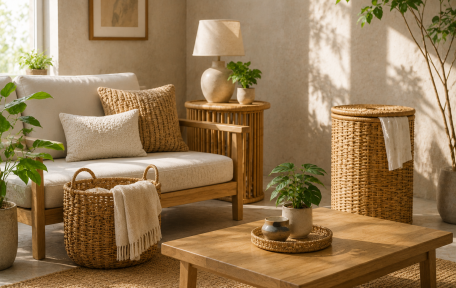
A major trend in high-end storage furniture is the fusion of natural fibers with sustainable hardwoods like acacia and pine. Phu Minh Co., Ltd specializes in structuring woven seagrass and rattan panels onto durable wooden frames, delivering the exact warm-toned, functional aesthetic demanded by Nordic-inspired living spaces.
3. Uncompromising Compliance and Quality Control
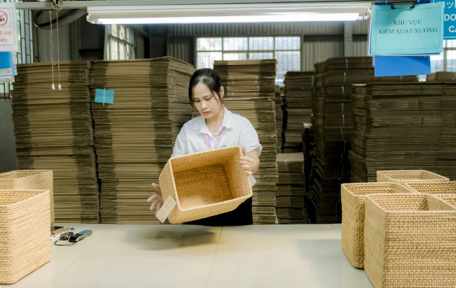
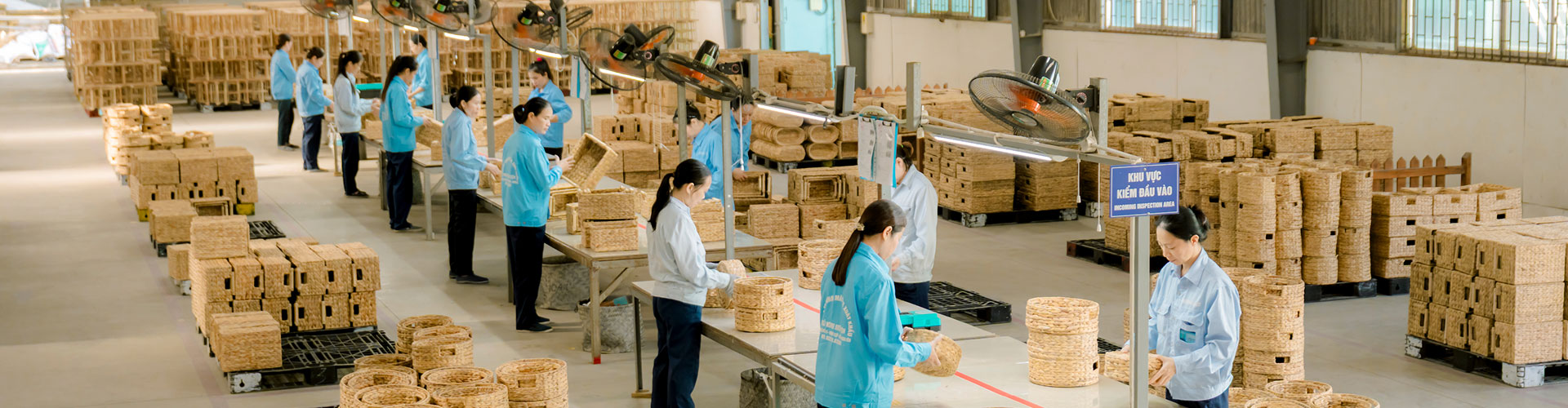
To succeed in the European and North American B2B sectors, aesthetic appeal must be backed by rigorous compliance. Vietnamese manufacturers have elevated their operations to meet international standards. Phu Minh Co., Ltd proudly maintains SCAN, WCA, BSCI, SMETA, and ISO 9001:2015 certifications, guaranteeing ethical labor, secure supply chains, and consistent quality that global buyers can trust.
FUTURE OUTLOOK: HIGH-PERFORMANCE NATURAL FIBERS AND CIRCULAR DESIGN
Looking ahead, the demand for versatile, indoor-outdoor living solutions will drive innovation in material compositions. We anticipate a surge in demand for hybrid products that utilize weather-resistant PP/PE resin alongside natural rattan and bamboo to extend the product lifespan. Furthermore, circular design—where every component of a laundry hamper or storage bin can be easily recycled or biodegraded—will become a non-negotiable standard. Vietnam's rich agricultural landscape and established artisan communities provide an agile foundation for developing these next-generation sustainable home accessories.
STRATEGIC RECOMMENDATIONS FOR GLOBAL BUYERS AND RETAILERS
To capitalize on the enduring Japandi and Nordic design wave, B2B buyers should implement the following sourcing strategies:
- Prioritize Certified Manufacturers: Mitigate supply chain risks by partnering with Vietnamese factories that hold BSCI and SMETA audits, ensuring ethical production that aligns with your brand's ESG goals.
- Diversify Material Portfolios: Source collections that blend various natural fibers—such as combining seagrass laundry hampers with paper cord storage baskets—to offer consumers a rich, multi-textured product line.
- Collaborate on Custom Designs: Leverage the prototyping capabilities of experienced manufacturers like Phu Minh Co., Ltd to develop exclusive, minimalist designs tailored specifically to your target demographic.
FAQ SECTION:
1- Why is Vietnamese rattan preferred over other regions for Japandi design?
Vietnamese rattan is celebrated for its exceptional flexibility, durability, and the refined skill of local artisans who can achieve the precise, clean-lined weaves essential for minimalist Japandi and Nordic aesthetics.
2- How does Phu Minh Co., Ltd ensure social and environmental compliance?
We maintain top-tier international certifications including BSCI, SMETA, WCA, SCAN, and ISO 9001:2015, ensuring ethical labor, secure supply chains, and consistent quality control.
3- Can these natural woven products withstand diverse global climates?
Yes. Through advanced treatment processes, strict moisture control, and the integration of durable materials like treated acacia wood or PP/PE resin, our products are engineered for global longevity.
RELAVANT ARTICLES