The Journey of a Woven Basket: How Smart Stacking Protects Eco-Friendly Masterpieces from Distortion

KEY TAKEAWAYS:
- Limit nesting and stacking heights based on material resilience, keeping flexible water hyacinth and seagrass baskets to a maximum of 3 to 5 layers.
- Utilize rigid corner protectors, pallet wrapping, and sturdy shelving to distribute weight evenly and prevent bottom-layer crushing.
- Enforce warehouse transport protocols, including a 5 km/h speed limit for forklifts, to eliminate sudden jolts that cause product deformation.
- Separate storage zones by material type, placing heavy acacia wood furniture on lower racks and lightweight woven decor on upper levels.
THE ARRIVAL: A MOMENT OF TRUTH FOR GLOBAL BUYERS
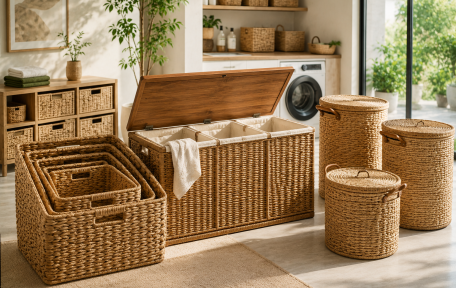
Imagine the anticipation of an interior design boutique in Paris or a major retail distributor in New York opening a newly arrived container from Vietnam. They expect to unbox pristine, high-end seagrass laundry hampers and elegant rattan storage baskets. Instead, they are met with collapsed edges, warped frames, and misshapen silhouettes. The culprit? Not the ocean transit, but improper stacking and reckless internal transport within the warehouse long before the container was sealed.
At Phu Minh Co., Ltd., we know that a sustainable product is only truly sustainable if it arrives at its destination in perfect, sellable condition. Every dent and deformation represents wasted natural resources and disrupted retail timelines. This is the story of how we mastered warehouse logistics to protect the structural integrity of handcrafted home decor.
THE HIDDEN CHALLENGE: WHY NATURAL FIBERS DEMAND SPECIALIZED CARE
The Vulnerability of Eco-Friendly Materials
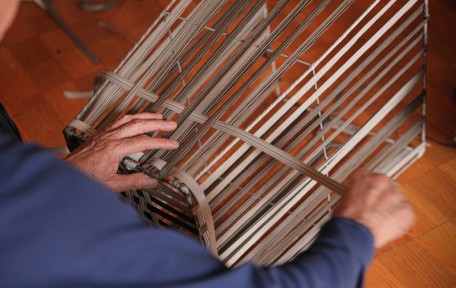
Unlike mass-produced plastic or metal storage solutions, premium handcrafted decor made from water hyacinth, seagrass, rattan, and bamboo possesses organic flexibility. While this flexibility gives woven items their charming, tactile appeal, it also makes them highly vulnerable to structural memory. If a woven basket is subjected to uneven pressure or excessive weight for even a few hours, the natural fibers stretch and set into a deformed shape.
During the early days of global scaling, manufacturers often overlooked the physics of internal warehouse logistics. Common mistakes included:
- Over-nesting: Shoving too many baskets inside one another to save space, stretching the outer baskets beyond their recovery limit.
- Unsecured Palletization: Transporting tall stacks of woven goods on forklifts without lateral support, causing the stack to sway and compress the bottom corners.
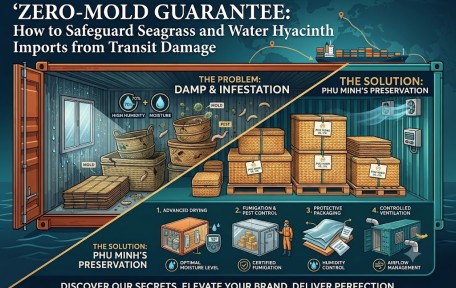
- Moisture Exposure: Storing natural materials in humid zones, which softens the fibers and makes them even more susceptible to crushing under light loads.
THE TURNING POINT: ENGINEERING THE ZERO-DEFORMATION PROTOCOL
Transitioning from Traditional Crafting to Scientific Logistics
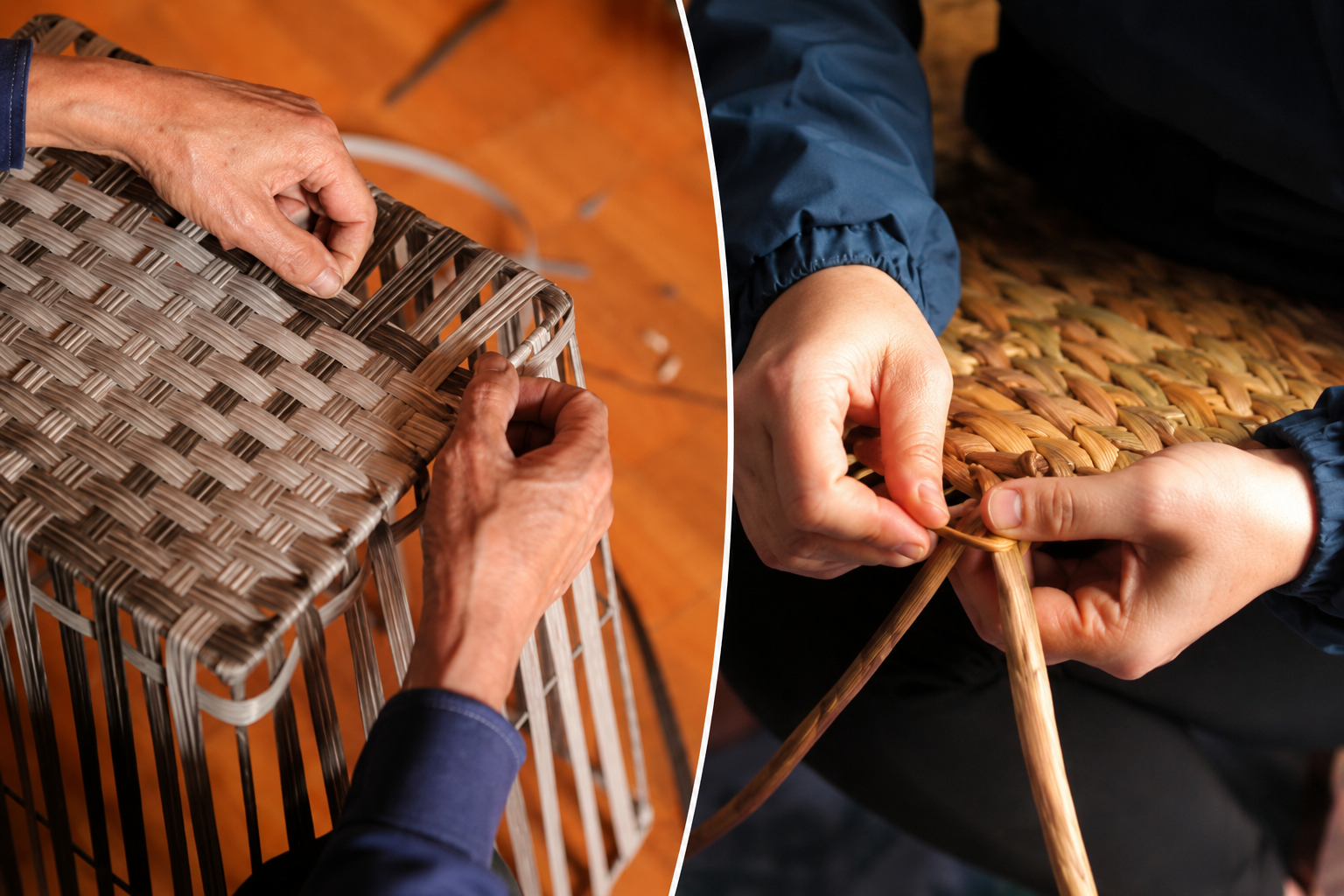
To solve this, Phu Minh Co., Ltd. did not just rely on thicker weaving; we engineered a comprehensive Zero-Deformation Warehousing Protocol. We realized that protecting the artisan's work required treating logistics as an extension of the crafting process. Aligning our operations with international standards like ISO 9001:2015, BSCI, and SMETA, we standardized every movement a product makes from the weaving loom to the shipping container.
We conducted rigorous pressure tests on our key materials, determining the exact load-bearing capacity of seagrass, rattan, and paper cord. This scientific approach allowed us to design customized stacking matrices and internal transport guidelines that guarantee our products retain their perfect shapes.
THE RESOLUTION: YOUR GUIDE TO SAFE STACKING AND INTERNAL TRANSPORT
Phu Minh's Golden Rules for Warehouse Management
To help our global partners protect their inventory and maintain flawless product quality, we share our proven internal warehouse guidelines:
1. The Golden Ratio of Nesting and Stacking
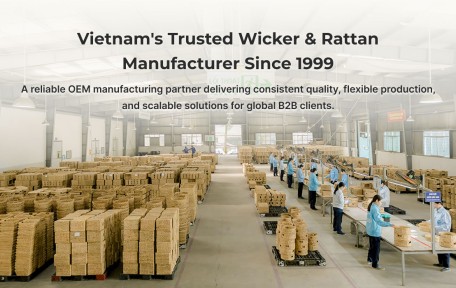
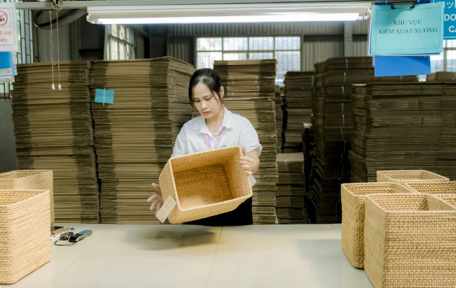
While nesting (inserting smaller baskets into larger ones) is highly efficient for shipping, it must be strictly controlled. We recommend nesting no more than 3 to 4 items of the same design. For vertical stacking of pallets or cartons, always place heavier items—such as acacia or pine wood storage furniture—on the bottom, and lightweight woven items on top. Never exceed a stacking height of 2.5 meters for uncartoned woven goods.
2. Rigid Support and Palletization
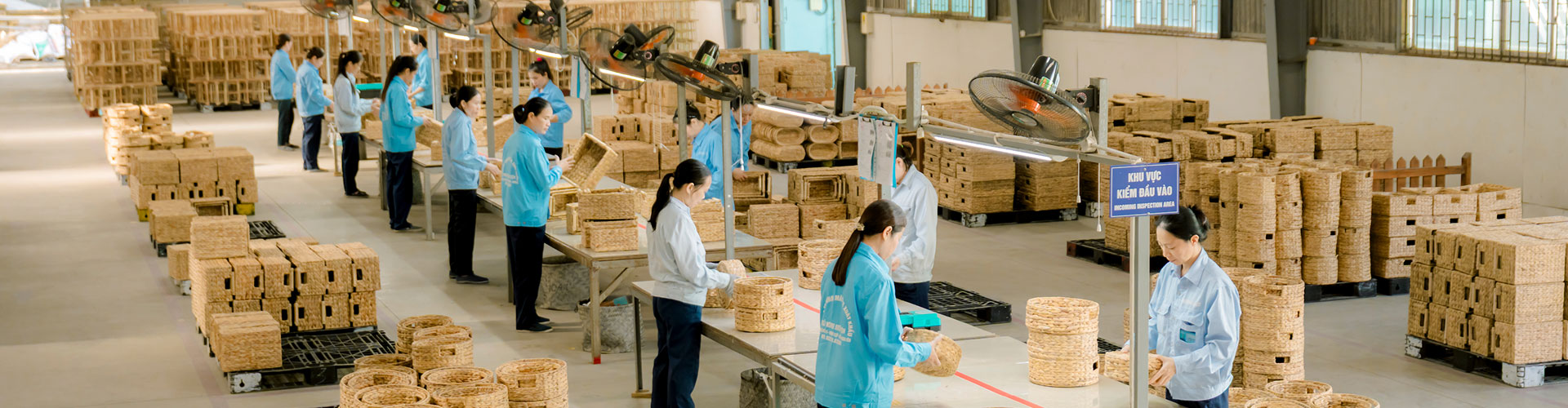
Never transport loose stacks of woven decor. When moving items internally, always secure them on standard pallets using heavy-duty L-shaped cardboard corner protectors. Wrap the entire pallet in high-tension stretch film to distribute pressure evenly and prevent lateral shifting during forklift movement.
3. Smooth-Transit Protocols
Sudden stops and sharp turns are the primary causes of warehouse-level product damage. Our forklifts and hand trucks operate under a strict 5 km/h speed limit within the warehouse. Floors must be kept perfectly smooth and free of debris to prevent sudden jolts that could deform delicate woven structures.
4. Climate-Controlled Zoning
Because humidity softens natural fibers, our warehouses maintain a strict relative humidity level of 50-60%. Keeping the air dry ensures that materials like water hyacinth and paper cord remain rigid and capable of supporting their designated stack weights without sagging.
Delivering Perfection, Every Single Time
By implementing these rigorous stacking and transport standards, Phu Minh Co., Ltd. maintains a near-perfect 99.8% damage-free delivery rate. For our global B2B buyers and interior designers, this means absolute peace of mind. When you partner with us, you are not just buying beautiful, sustainable home decor—you are investing in a highly optimized, professional supply chain that respects the craft from the artisan's hands to your customer's home.
FAQ SECTION:
1- What is the maximum nesting limit for woven baskets during warehouse storage?
To prevent stretching and structural deformation, we recommend nesting no more than 3 to 4 baskets of the same design inside one another, depending on the stiffness of the material (e.g., rattan is more rigid than water hyacinth).
2- How does humidity affect the stacking strength of natural fiber products?
High humidity softens natural fibers like seagrass and water hyacinth, reducing their load-bearing capacity. Warehouses should maintain a relative humidity of 50-60% to keep the fibers rigid and prevent bottom-layer crushing.
3- Should we use pallets or shelving for storing handcrafted home decor?
We highly recommend using heavy-duty pallet racking systems. This allows you to store products vertically without placing direct physical weight on the items below, completely eliminating the risk of crushing.
4- How does Phu Minh Co., Ltd. pack products to prevent transit damage?
We use custom-fit, high-burst-strength export cartons, reinforced internal cardboard dividers, and rigid corner protectors. For bulk shipments, pallets are tightly wrapped in stretch film to prevent any shifting during transit.
RELAVANT ARTICLES