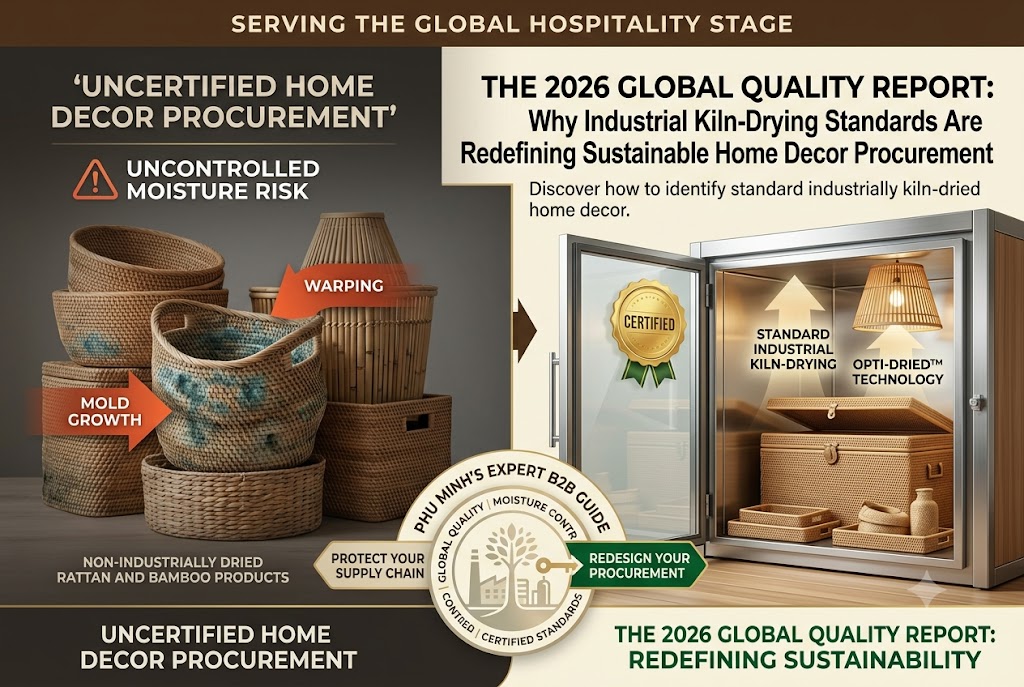
The 2026 Global Quality Report: Why Industrial Kiln-Drying Standards Are Redefining Sustainable Home Decor Procurement
KEY TAKEAWAYS:
- Standard industrial kiln-drying maintains moisture levels of natural fiber handicrafts strictly between 12% and 14% to prevent both mold growth and structural brittleness.
- B2B buyers can verify drying quality on-site by checking for uniform coloration, the absence of musty odors, and a clear, resonant sound when tapping the material.
- Partnering with manufacturers compliant with ISO 9001:2015 and BSCI ensures rigorous, monitored drying protocols that withstand high-humidity maritime transit.
EXECUTIVE SUMMARY: MOISTURE CONTROL AS THE ULTIMATE QUALITY BENCHMARK
In the global home decor and storage solutions market, natural materials like rattan, bamboo, water hyacinth, and seagrass are highly sought after by eco-conscious consumers. However, for B2B buyers and interior designers, importing these products presents a silent but costly risk: moisture damage. Poorly dried natural fibers are highly susceptible to mold, warping, and structural failure during long maritime voyages.
This report highlights why industrial kiln-drying has transitioned from an optional premium process to an absolute necessity. We provide global procurement teams with the exact technical indicators needed to identify and verify standard industrially kiln-dried products, ensuring supply chain resilience and protecting brand reputation.
THE CURRENT LANDSCAPE: THE MARITIME TRANSIT RISK FOR NATURAL FIBERS
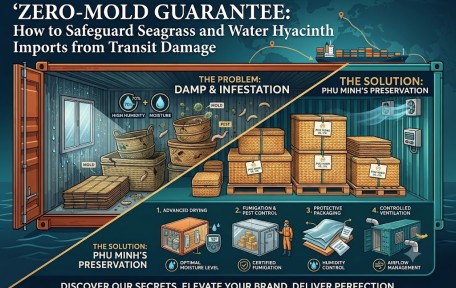
Shipping natural fiber handicrafts across different climate zones exposes cargo to extreme temperature fluctuations and high humidity inside shipping containers—a phenomenon known as "container sweat." Without professional moisture control, natural materials quickly absorb this ambient moisture.
The Vulnerability of Raw Materials
- Rattan & Bamboo: High starch content makes them primary targets for wood-boring insects and mold if moisture levels exceed 15%.
- Seagrass & Water Hyacinth: These highly porous fibers act like sponges. If not dried to their core, they will develop musty odors and black mold within weeks of container sealing.
- Acacia & Pine Wood: Inadequate drying leads to internal tension, causing the wood to warp, split, or crack when exposed to drier destination climates.
KEY TRENDS: TECHNICAL INDICATORS OF STANDARD INDUSTRIALLY KILN-DRIED PRODUCTS
To safeguard your inventory, quality assurance (QA) teams must look beyond aesthetics. Standard industrial kiln-drying uses computerized thermal chambers to gradually reduce moisture without damaging the fiber's cellular structure. Here is how to identify compliant products:
1. The Golden Moisture Range (under 16 %)
Using a calibrated pin-type or non-destructive moisture meter is the most reliable verification method. For woven natural fibers (seagrass, water hyacinth, rattan), the ideal moisture content is under 16%. Anything above 16% is a mold hazard; anything below 10% makes the fibers brittle and prone to snapping.
2. Visual and Tactile Uniformity
Standard industrial drying ensures even heat distribution. Look for:
- Color Consistency: No dark, damp patches or localized discoloration.
- Surface Texture: The material should feel dry, smooth, and firm, not cold or slightly damp to the touch.
- No Hairline Cracks: Over-drying in non-regulated sun-drying environments causes micro-cracks. Professional kiln-drying preserves structural integrity.
3. The Acoustic and Olfactory Tests
Two simple yet highly effective physical checks:
- The Sound Test: Lightly tap a rattan or bamboo frame. A crisp, resonant sound indicates dry, solid internal fibers. A dull, muffled thud suggests trapped core moisture.
- The Smell Test: Standard kiln-dried products emit a clean, natural straw or wood scent. Any hint of a musty, sour, or damp smell indicates active fungal growth or incomplete drying.
FUTURE OUTLOOK: SMART KILN-DRYING AND GREEN MANUFACTURING STANDARDS
The future of sustainable home decor sourcing lies in automated, energy-efficient drying technologies. Leading manufacturers are shifting away from traditional sun-drying—which is highly dependent on unpredictable weather—toward smart biomass or solar-powered kiln systems. This ensures year-round production stability and consistent quality.
Furthermore, global compliance frameworks are increasingly scrutinizing manufacturing processes. International buyers now prioritize suppliers whose drying facilities align with global standards such as ISO 9001:2015 (Quality Management), BSCI, and SMETA (Ethical and Safe Workplaces). Standardized drying not only protects the product but also ensures a safer, emission-controlled working environment for factory artisans.
STRATEGIC RECOMMENDATIONS: SECURING YOUR SUPPLY CHAIN WITH PHU MINH
To eliminate quality risks at the source, global buyers should implement the following procurement strategies:
1. Mandate Moisture Specifications in Contracts
Never leave moisture levels to chance. Explicitly state in your purchase agreements that natural fiber products must maintain a moisture content of 12%–14% upon pre-shipment inspection.
2. Partner with Certified Manufacturers
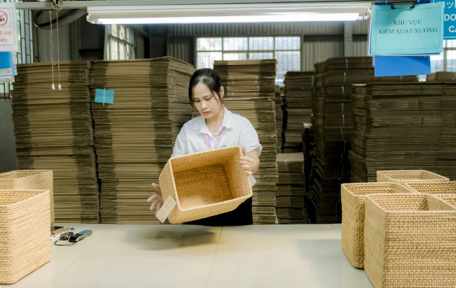
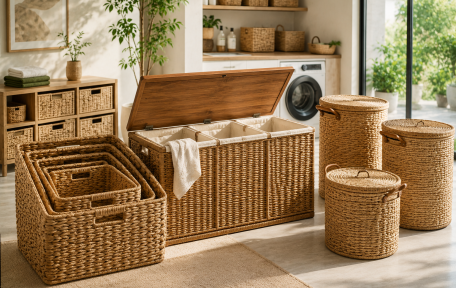
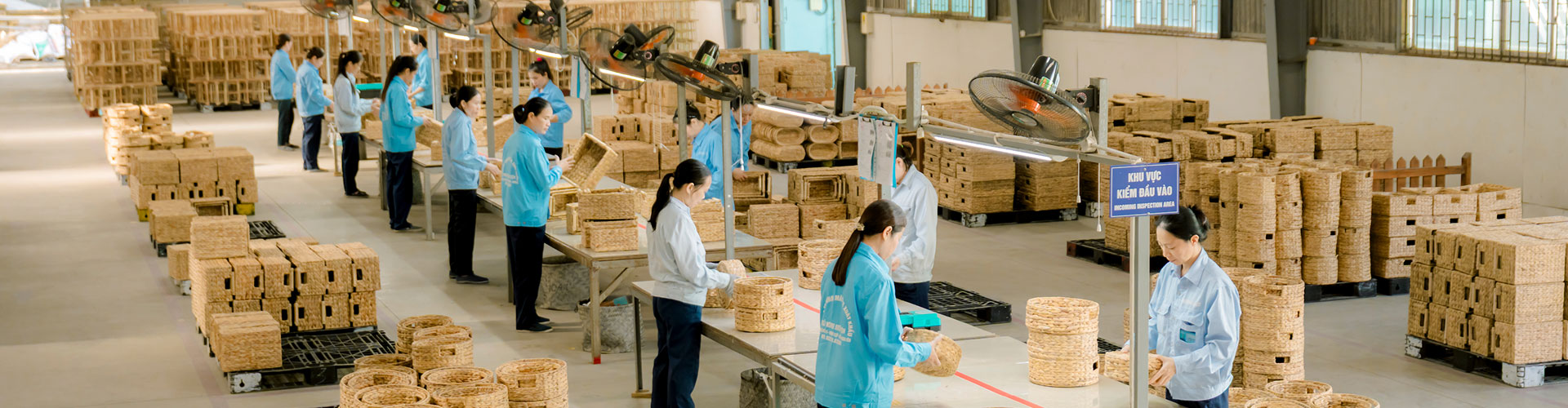
Work with established manufacturers like Phu Minh Co., Ltd. Our state-of-the-art industrial kiln-drying systems are strictly calibrated to meet international export standards. Backed by prestigious certifications including SCAN, WCA, BSCI, SMETA, and ISO 9001:2015, we guarantee that every batch of storage baskets, laundry hampers, and home decor accessories is engineered to withstand global transit and diverse climates.
Contact our B2B sourcing team today to request our technical specifications and secure a resilient, premium product line for your next collection.
FAQ SECTION:
1- Why is sun-drying insufficient for high-volume B2B orders?
Sun-drying is highly dependent on weather conditions, leading to inconsistent moisture levels within the same batch. It only dries the outer surface, leaving the core damp, which inevitably causes mold during long-term maritime transit.
2- What happens if natural fiber products are over-dried below 10%?
Over-drying makes natural fibers like rattan and seagrass extremely brittle. The products lose their natural elasticity, making them prone to cracking, snapping, and structural deformation under weight.
3- How does Phu Minh Co., Ltd ensure moisture control during monsoon seasons?
Phu Minh utilizes advanced, fully enclosed industrial kiln-drying chambers with automated temperature and humidity sensors. This allows us to maintain consistent, high-quality drying standards year-round, regardless of external weather conditions.
RELAVANT ARTICLES