State of Compliance: How the New PPWR of the EU Redefines Packaging and Labeling for Sustainable Handicrafts

KEY TAKEAWAYS:
- The EU Packaging and Packaging Waste Regulation (PPWR) replaces the old directive, making strict eco-packaging and standardized labeling legally binding across all EU member states.
- Under PPWR, e-commerce and transport packaging are subject to a maximum 40% empty space ratio, forcing manufacturers to optimize carton dimensions.
- All packaging components—including hangtags, tissue paper, and protective fillers—must be designed for recyclability, driving a shift toward FSC-certified paper and bio-based materials.
- Importers must ensure their Vietnamese handicraft suppliers provide accurate packaging material breakdowns to comply with Extended Producer Responsibility (EPR) reporting.
NAVIGATING THE NEW ERA OF GREEN TRADE IN THE EUROPEAN MARKET
As the European Union accelerates its transition toward a circular economy, the regulatory landscape for imported consumer goods is undergoing a historic transformation. The landmark Packaging and Packaging Waste Regulation (PPWR - Regulation (EU) 2025/40) has officially replaced the outdated 94/62/EC Directive, introducing legally binding requirements directly applicable across all EU member states. For global B2B buyers, retailers, and interior designers sourcing natural home decor, storage solutions, and laundry hampers, packaging compliance is no longer a secondary operational detail. It is now a critical prerequisite for market access. This analytical report explores how these stringent new rules redefine packaging and labeling for handicraft exports, and how forward-thinking manufacturers are adapting to secure seamless European supply chains.
THE PPWR SHIFT: FROM VOLUNTARY ECO-DESIGN TO HARD LEGAL MANDATES
Under the new PPWR framework, the definition of packaging has expanded significantly. It is no longer restricted to the outer corrugated shipping cartons. For handicraft products—such as woven rattan baskets, seagrass laundry hampers, and bamboo storage furniture—every component used in transport and presentation is scrutinized. This includes hangtags, sticky labels, protective tissue paper, silica gel packets, and binding ropes. Furthermore, the regulation imposes strict substance restrictions, notably limiting heavy metals and hazardous chemicals to a combined threshold of 100 mg/kg. Consequently, global buyers must ensure that their Vietnamese manufacturing partners move away from generic, untested packaging components toward fully compliant, certified materials.
THREE CRUCIAL PACKAGING AND LABELING TRENDS DOMINATING 2026 AND BEYOND
1. Radical Volume Minimization and the 40% Empty Space Cap
One of the most disruptive changes under the PPWR is the mandatory reduction of packaging volume and weight. E-commerce and transport shipments are now subject to a strict 40% maximum empty space ratio. This forces a shift away from oversized boxes filled with plastic air cushions. For bulky but lightweight handicrafts, manufacturers must design custom-fit cartons or utilize nestable product designs—such as nesting storage basket sets—to optimize container space and minimize wasted volume.
2. The Transition to Monomaterials and Bio-Based Fillers
The era of single-use plastic bubble wraps and expanded polystyrene (EPS) foam is coming to an end in the EU. Current trends favor bio-based, renewable, and easily recyclable materials. Exporters are increasingly utilizing FSC-certified corrugated cardboard, recycled paper stuffing, and natural paper cords. Sourcing natural home decor that is packaged in matching biodegradable materials not only ensures compliance but also enhances the sustainable brand narrative for eco-conscious consumers.
3. Harmonized Material Labeling and Digital Integration
To facilitate efficient waste sorting, the EU is introducing standardized material labeling. Packaging must clearly indicate its material composition using harmonized pictograms. Furthermore, there is a rapid rise in the integration of QR codes and Digital Product Passports (DPPs) on packaging, allowing European consumers and recycling facilities to instantly access recycling instructions and product origin data.
LOOKING TO 2030: THE ROAD TO 100% RECYCLABLE PACKAGING
Looking ahead to 2030, the EU mandates that all packaging placed on the market must be 100% recyclable in an economically viable manner. Non-recyclable composite packaging will face outright market bans. Additionally, Extended Producer Responsibility (EPR) fees will be eco-modulated, meaning importers using non-recyclable or excessive packaging will pay significantly higher financial penalties. B2B buyers who proactively realign their sourcing strategies today by partnering with compliant, eco-certified manufacturers will secure a major competitive edge, safeguarding their supply chains from customs delays, fines, and brand reputation risks.
ACTIONABLE STRATEGIES FOR B2B BUYERS SOURCING FROM VIETNAM
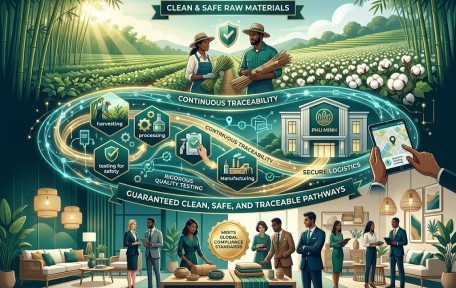
- Partner with Certified Manufacturers: Ensure your Vietnamese suppliers hold robust international certifications. Manufacturers like Phu Minh Co., Ltd., who maintain compliance with BSCI, SMETA, SCAN, WCA, and ISO 9001:2015, are uniquely equipped to meet stringent EU compliance, quality control, and traceability standards.
- Mandate Eco-Design in Product Development: Work with designers to create nestable storage solutions and collapsible laundry hampers. This inherently reduces transport packaging volume and aligns perfectly with the PPWR empty space restrictions.
- Standardize Your Labeling Protocols: Work with your supplier to implement clear, compliant labeling on all master cartons and individual product tags, including EAN barcodes, 'Made in Vietnam' marks, material composition codes, and required EPR symbols.
FAQ SECTION:
1- What is the EU PPWR, and how does it affect handicraft imports?
The EU Packaging and Packaging Waste Regulation (PPWR) is a binding regulation that replaces the old packaging directive. It mandates strict rules on packaging recyclability, minimization (such as a 40% empty space limit), and standardized sorting labels for all goods imported into the EU, including handmade and natural crafts.
2- Are natural materials like rattan, bamboo, and seagrass exempt from these packaging rules?
No. While the handicraft products themselves are made of natural fibers, any packaging used to transport or present them—such as outer cardboard boxes, inner plastic wrapping, hangtags, or paper fillers—must fully comply with the PPWR's recyclability, chemical limits, and minimization standards.
3- What are the immediate labeling requirements for EU handicraft shipments?
Shippers must ensure outer packaging labels match the packing list exactly, featuring the producer name, consignee, quantity, size, and caution signs. Product-level labels must include clear material composition, country of origin ('Made in Vietnam'), EAN barcodes, and harmonized waste sorting symbols as required by the destination country's EPR schemes.
4- How does Phu Minh Co., Ltd. support EU buyers with packaging compliance?
Phu Minh Co., Ltd. designs custom-fit, nestable packaging to meet the 40% empty space rule, utilizes FSC-certified carton boxes and biodegradable fillers, and provides comprehensive material breakdowns to facilitate our clients' EPR registrations. Our factories are certified under BSCI, SMETA, SCAN, and WCA.
RELAVANT ARTICLES