
How to Safely Fix Frayed Rattan Strands and Protruding Fibers: A B2B Maintenance Guide

KEY TAKEAWAYS:
- Inspect natural rattan items before trimming to determine if protruding strands require tucking or precise cutting.
- Moisten natural rattan strands lightly with a fine mist of water prior to trimming to restore flexibility and prevent fiber splitting.
- Use sharp precision micro-shear clippers to snip stray rattan fibers at a 45-degree angle flush against the woven joint.
- Apply a clear protective coat of eco-friendly lacquer or beeswax to seal exposed fiber ends and preserve structural integrity.
INTRODUCTION: MAINTAINING THE ELEGANCE OF WOVEN RATTAN PRODUCTS
Natural rattan furniture and woven home decor represent timeless craftsmanship, sustainability, and luxury. However, during international transit, unboxing, or retail display, minor fiber splinters or protruding rattan strands can occasionally appear. For B2B importers, interior designers, and procurement managers, knowing how to handle these minor imperfections safely ensures your inventory maintains its pristine condition without compromising structural integrity or aesthetic appeal.
PREREQUISITES: TOOLS AND MATERIALS REQUIRED FOR SAFE RATTAN REPAIR
Before performing maintenance on woven rattan furniture, storage baskets, or decor accessories, gather the following commercial-grade tools:
- Precision Micro-Shears or Curved Cuticle Scissors: Essential for clean, flush cuts without crushing adjacent fibers.
- Fine Water Sprayer: To hydrate natural rattan strands prior to handling.
- Fine-Grained Sandpaper (320–400 Grit): For gently smoothing micro-burrs along trimmed edges.
- Blunt Tucking Tool or Bone Folder: To re-insert loose strands back into the woven matrix.
- Eco-Friendly Clear Lacquer or Natural Beeswax Polish: To seal exposed ends against ambient moisture and friction.
STEP 1: INSPECT AND HYDRATE THE RATTAN MATRIX
Begin by carefully evaluating the protruding fiber. Determine whether the strand is simply a loose end from the termination of a weave joint or a damaged fiber split along the surface.
Lightly mist the target area with clean water using a fine-spray bottle and allow it to sit for two minutes. Hydrating natural rattan restores its natural elasticity, preventing the fiber from snapping or splitting further during repair.
STEP 2: EXECUTE PRECISION TRIMMING AND TUCKING TECHNIQUES
Follow these professional techniques depending on the nature of the fiber issue:
Tucking Intact Strands
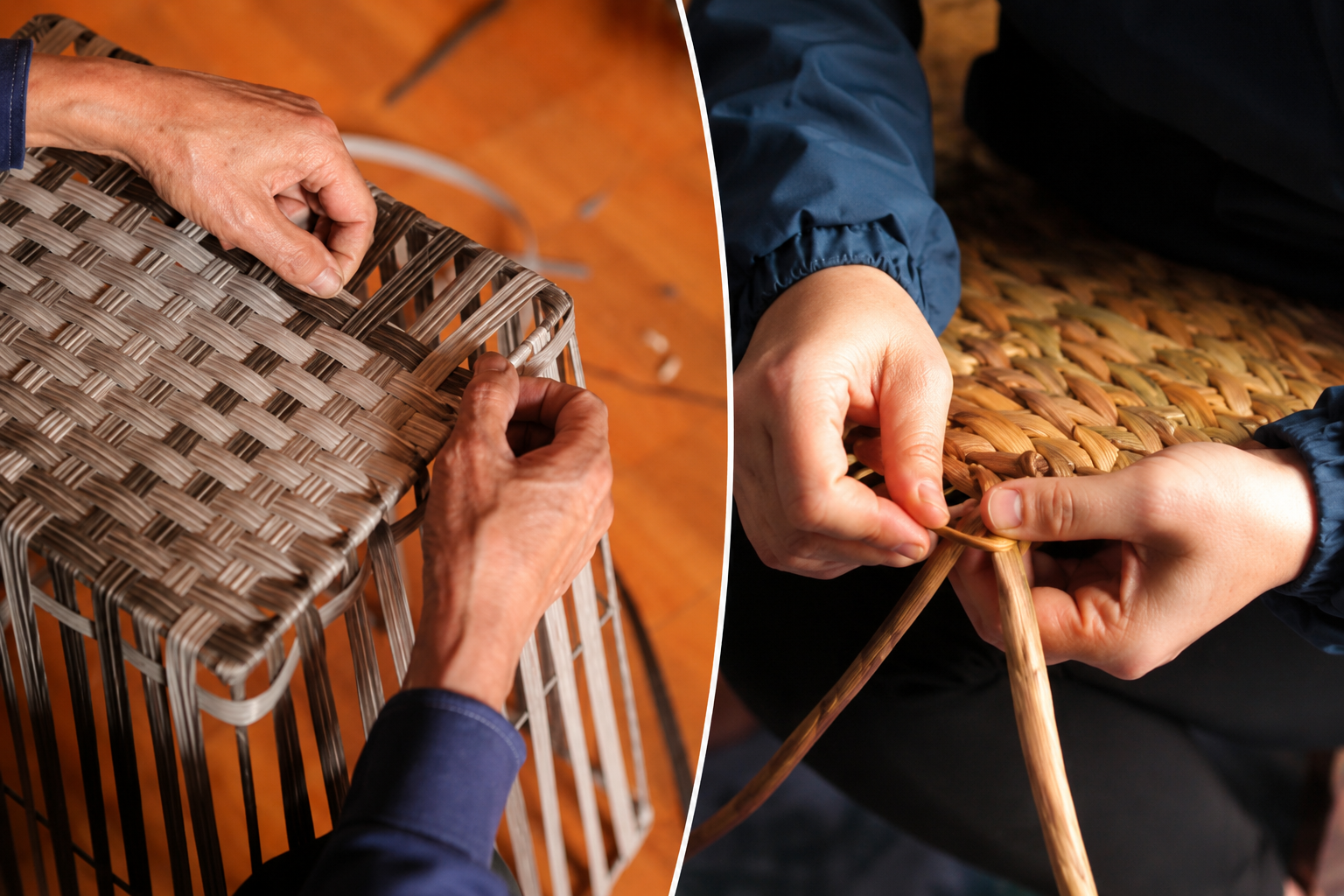
If the strand has slid out from a woven joint but remains intact, use a blunt bone folder or tucking tool to gently guide the strand back beneath adjacent horizontal or vertical stakes. Never force dry strands, as dry fibers can crack under pressure.
Trimming Stray Fibers
For frayed ends or small fiber whiskers, hold the stray strand gently with tweezers. Place sharp precision micro-shears flat against the woven joint and snip at a 45-degree angle pointing inward. Cutting at an angle prevents sharp points from protruding outward toward end-consumers.
STEP 3: SAND, SEAL, AND PROTECT THE REPAIRED SURFACE
After trimming, lightly touch the trimmed area with 400-grit sandpaper to remove any microscopic roughness. Wipe away lingering dust with a soft microfiber cloth.
To seal the exposed core of the natural rattan fiber, apply a thin coat of clear water-based lacquer or premium natural beeswax using a fine brush. This protective barrier locks out humidity, prevents future fraying, and ensures compliance with international quality standards like ISO 9001:2015 and BSCI.
CONCLUSION: SAFEGUARD PRODUCT QUALITY ACROSS YOUR SUPPLY CHAIN
Mastering simple rattan maintenance helps buyers and distributors protect product presentation and minimize returns. Partnering with experienced manufacturers like Phu Minh Co., Ltd guarantees export-ready rattan products produced under SMETA, WCA, and BSCI certified standards, ensuring superior durability and reduced maintenance requirements across global supply chains.
FAQ SECTION:
1- Will trimming protruding rattan strands unravel the entire basket or chair?
No. When clipped flush against a structural weave joint using sharp precision tools, the friction within the woven matrix holds the strand firmly in place without unraveling.
2- Can water misting harm raw natural rattan furniture?
A light misting hydrates dry rattan fibers safely. However, avoid soaking the material, and ensure the piece dries completely in a well-ventilated area to prevent mold formation.
3- What clear coat is recommended for commercial rattan product maintenance?
We recommend low-VOC, water-based clear acrylic lacquers or natural beeswax polish, which preserve the natural look while meeting strict international environmental compliance standards.
RELAVANT ARTICLES