How to Restore Light Mold on Rattan and Bamboo Decor: A B2B Guide to Warehouse Remediation

KEY TAKEAWAYS:
- Light mold on rattan and bamboo products is a superficial issue caused by elevated humidity and restricted airflow, which does not compromise structural integrity if treated promptly.
- Effective warehouse remediation involves a systematic four-step process: isolation, dry-brushing, sanitization with a mild vinegar or alcohol solution, and thorough dehydration.
- Long-term prevention requires maintaining warehouse relative humidity below 60%, storing products on elevated pallets, and ensuring continuous air circulation.
INTRODUCTION: THE REALITY OF NATURAL FIBER WAREHOUSING
For global B2B buyers, importers, and interior designers, sourcing high-quality rattan and bamboo home decor is a powerful way to meet the growing consumer demand for sustainable living. However, because these materials are 100% natural and hygroscopic, they remain sensitive to their environment. When subjected to improper warehousing—such as poor ventilation, high humidity, or direct contact with damp concrete floors—surface moisture can accumulate, leading to light mold outbreaks.
As a leading exporter committed to global standards like BSCI and ISO 9001:2015, Phu Minh Co., Ltd understands that logistics challenges happen. The good news is that light, superficial mold is entirely treatable and does not ruin the structural integrity of your inventory. This guide provides your warehouse operations team with a professional, step-by-step protocol to safely restore affected products and protect your investment.
PREREQUISITES: MATERIALS AND SAFETY GEAR
Before beginning the remediation process, ensure your warehouse maintenance team is equipped with the correct tools. Working with mold spores requires basic personal protective equipment (PPE) to ensure worker safety and prevent the cross-contamination of clean stock.
Required Materials:
- Personal Protective Equipment: N95 dust masks, protective eyewear, and nitrile gloves.
- Cleaning Tools: Soft-bristled nylon brushes or medium-stiff paintbrushes (avoid metal wire brushes which can scratch the natural fibers).
- Sanitizing Solutions: White distilled vinegar (5% acidity) or isopropyl alcohol (70% concentration) diluted 1:1 with water. Avoid harsh chlorine bleach, as it can discolor natural rattan and bamboo.
- Wiping Cloths: Clean microfiber cloths.
- Drying Equipment: Industrial dehumidifiers, high-velocity floor fans, or access to a dry, sunny outdoor area.
STEP 1: ISOLATE AND ASSESS THE AFFECTED INVENTORY
The moment light mold is detected on a pallet, immediate isolation is critical. Mold spores travel easily through warehouse airflow systems.
Action Steps:
- Quarantine: Move the affected cartons or individual items to a designated, dry isolation zone away from your main inventory.
- Unpack: Carefully remove the products from their plastic polybags or outer cardboard packaging. Damp packaging materials must be discarded immediately, as they harbor active spores.
- Assess: Verify that the mold is indeed "light" and superficial (white, grey, or light green powdery spots on the surface). If the mold has penetrated deep into the core of the rattan pole or bamboo split, causing soft rot, those specific units should be discarded.
STEP 2: DRY BRUSHING (SPORE REMOVAL)
Never apply liquid cleaning agents directly to dry mold spores, as this can push the mold deeper into the porous wood grain. The spores must first be physically removed.
Action Steps:
- Conduct this step in a highly ventilated area, preferably outdoors or near an exhaust hood.
- Using a dry, soft-bristled brush, gently sweep away the powdery mold along the grain of the rattan or bamboo weaving.
- Pay close attention to tight joints, overlapping weaves, and crevices where dust and moisture tend to settle.
- Use a vacuum cleaner equipped with a HEPA filter to immediately capture the brushed-off spores from the air and surrounding surfaces.
STEP 3: SANITIZATION AND GENTLE CLEANING
Once the loose spores are removed, you must neutralize the remaining microscopic root structures (mycelium) to prevent the mold from returning.
Action Steps:
- Dampen (do not soak) a clean microfiber cloth in your diluted white vinegar or isopropyl alcohol solution. Tip: Distilled white vinegar is highly effective at killing mold species commonly found on wood without damaging natural finishes.
- Gently wipe down the entire surface of the product. Avoid oversaturating the rattan, bamboo, or seagrass fibers, as excess moisture is the root cause of the issue.
- For intricate hand-woven details, use a soft toothbrush lightly dipped in the sanitizing solution to clean hard-to-reach spots.
STEP 4: THOROUGH DEHYDRATION AND AIR DRYING
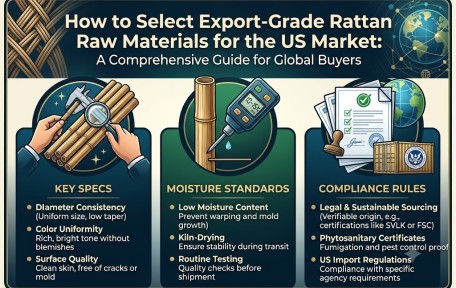
Moisture control is the ultimate cure for mold. The sanitized products must be dried completely to bring their internal moisture content back down to a safe level (ideally between 8% and 12%).
Action Steps:
- Natural Drying: If weather permits, place the items in a dry, warm outdoor space with indirect sunlight for 2 to 4 hours. Direct, harsh sunlight for extended periods should be avoided to prevent bamboo from cracking or rattan from warping.
- Active Indoor Drying: In humid climates, place the items in a closed room equipped with industrial dehumidifiers and high-velocity fans to create continuous, dry airflow.
- Verification: Use a wood moisture meter to verify that the products are completely dry before repackaging.
STEP 5: PREVENTIVE WAREHOUSE MANAGEMENT
Remediation is only a temporary fix if warehouse conditions remain unchanged. To protect your sustainable home decor inventory long-term, implement these strict storage protocols:
- Maintain Low Humidity: Keep warehouse relative humidity (RH) consistently below 60%. Use hygrometers to monitor levels daily.
- Elevated Storage: Never store cartons directly on concrete floors, which can wick moisture. Always utilize wooden or plastic pallets, keeping stock at least 10-15 cm off the ground and away from cold exterior walls.
- Air Circulation: Ensure active ventilation. Avoid packing pallets too tightly together; leave adequate spacing for air to flow freely.
- Desiccant Integration: When repackaging, insert high-absorption silica gel packets or container desiccants into the cartons to absorb residual moisture.
CONCLUSION: PARTNERING FOR QUALITY ASSURANCE
Experiencing a light mold issue due to transit humidity or temporary warehouse fluctuations is a manageable challenge. By training your logistics team on this simple restoration protocol, you can salvage valuable inventory, minimize waste, and uphold your brand's commitment to sustainability.
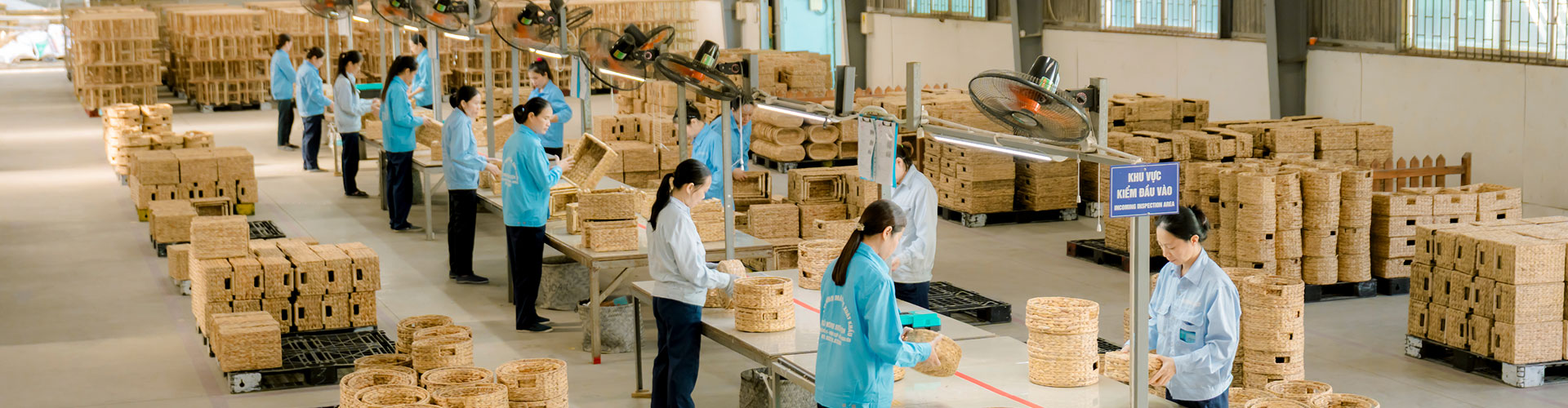
At Phu Minh Co., Ltd, we proactively mitigate these risks. Our manufacturing process includes rigorous kiln-drying, anti-mold treatments, and strict pre-shipment quality checks compliant with international standards. We pack our premium storage baskets, laundry hampers, and home accessories with optimal desiccant levels to withstand long ocean transits. Partner with us for reliable, beautifully crafted, and climate-resilient natural decor solutions.
FAQ SECTION:
1- Can we use chlorine bleach to clean mold off rattan and bamboo?
No, chlorine bleach is highly discouraged. Bleach is too harsh for natural fibers like rattan, bamboo, and seagrass; it can strip away natural protective oils, cause severe discoloration, weaken the fibers, and leave behind chemical residues that damage the product's aesthetic appeal.
2- How can we tell if the mold has permanently damaged the product?
Light mold is purely superficial and appears as a dry, powdery coating that wipes away easily. If the product feels soft, spongy, has structural warping, or exhibits dark black staining deep within the fiber pores even after cleaning, the structural integrity has been compromised, and the item should be discarded.
3- What is the ideal moisture content for rattan and bamboo products?
For optimal durability and mold resistance during storage and transit, natural fiber products should maintain an internal moisture content of 8% to 12%. Anything consistently above 18% in a stagnant environment will rapidly trigger mold growth.
4- How does Phu Minh Co., Ltd prevent mold during international shipping?
Phu Minh utilizes a multi-layered prevention strategy: we kiln-dry all materials to precise moisture levels, apply eco-friendly protective sealants, conduct strict quality control under ISO 9001:2015, and load containers with high-capacity silica gel desiccants to manage humidity fluctuations during sea transit.
RELAVANT ARTICLES