How to Protect Rattan and Bamboo Decor in Warehouses During Humid Seasons: A Step-by-Step B2B Guide
KEY TAKEAWAYS:
- Maintain warehouse relative humidity strictly between 40% and 60% using industrial dehumidifiers to prevent mold growth on natural fiber products.
- Elevate all natural woven products at least 15 to 20 cm off the concrete floor using heavy-duty plastic or treated wooden pallets.
- Ensure continuous air circulation by leaving a minimum clearance of 30 cm from exterior walls and 10 cm between stacked pallets.
- Utilize high-capacity calcium chloride or silica gel desiccants inside master cartons and individual product polybags.
INTRODUCTION: THE HIDDEN RISK OF HUMIDITY FOR NATURAL FIBER PRODUCTS
Natural fiber products crafted from rattan, bamboo, seagrass, and water hyacinth bring organic warmth and sustainable elegance to global home decor retail collections. However, during rainy seasons or high-humidity months, these natural materials are inherently hygroscopic—meaning they readily absorb atmospheric moisture. Uncontrolled humidity during warehouse storage can lead to mold development, structural warping, surface discoloration, and high return rates.
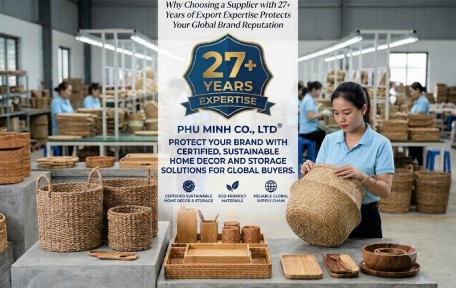
As a leading natural handicraft manufacturer certified under international standards such as BSCI, SMETA, SCAN, and ISO 9001:2015, Phu Minh Co., Ltd. recognizes that maintaining product excellence extends throughout the entire logistics chain. This step-by-step guide provides practical warehousing protocols for global buyers, logistics managers, and retailers to safeguard inventory during high-humidity periods.
PREREQUISITES AND ESSENTIAL CLIMATE CONTROL EQUIPMENT
Before implementing seasonal storage protocols, ensure your warehouse facility is equipped with the following essential tools and materials:
- Industrial Dehumidifiers: Commercial-grade dehumidifiers capable of continuous moisture extraction across large square footage.
- Digital Thermo-Hygrometers: Calibrated monitoring sensors placed in multiple warehouse zones to track relative humidity (RH) and temperature.
- Heavy-Duty Pallets: Plastic or heat-treated wooden pallets to elevate inventory off concrete floors.
- Air Circulation Fans: High-velocity fans to eliminate dead zones and ensure active airflow.
- Industrial Desiccants: High-absorption calcium chloride or silica gel desiccants rated for bulk packaging.
- Pinless Moisture Meters: Handheld gauges to periodically audit internal moisture levels of natural fibers.
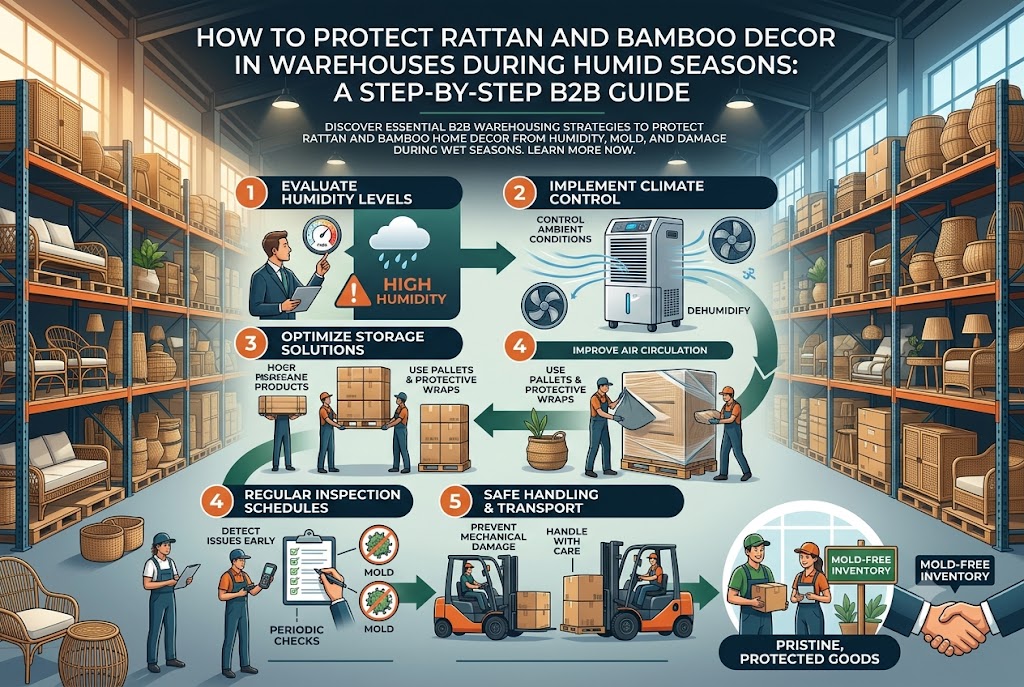
STEP 1: MAINTAIN STRICT ATMOSPHERIC CONTROL AND AIRFLOW
The primary line of defense against mold growth in natural woven goods is consistent atmospheric control. Fungal spores proliferate rapidly in environments where relative humidity exceeds 65% combined with stagnant air.
Target Optimal Relative Humidity
Program automated commercial dehumidifiers to maintain warehouse relative humidity between 40% and 60%. Mount digital thermo-hygrometers near loading bays, outer walls, and storage corners to catch localized moisture spikes early.
Eliminate Stagnant Air Pockets
Position high-velocity circulation fans to maintain continuous air movement across all pallet bays. Continuous airflow prevents ambient humidity from settling onto woven rattan, bamboo hampers, and storage baskets.
STEP 2: IMPLEMENT PROPER ELEVATION AND CLEARANCE STACKING
Moisture readily transfers from concrete flooring and exterior building walls. Direct contact with these structural surfaces is a primary cause of bottom-tier carton moisture damage.
Elevate Off Warehouse Floors
Never store master cartons directly on concrete floors. Always store products on plastic or sanitized wooden pallets elevated at least 15 to 20 cm off the ground to prevent moisture migration.
Maintain Boundary Clearances
Position pallets at least 30 cm away from exterior walls. Leave a minimum 10 cm gap between adjacent pallet stacks to allow continuous air movement throughout storage rows.
Respect Stacking Load Limits
Adhere strictly to master carton stacking limits. Compression damage can alter the shape of handwoven rattan baskets and bamboo storage furniture, creating gaps in packaging that allow ambient moisture to penetrate deeper into master boxes.
STEP 3: OPTIMIZE MASTER PACKAGING AND MOISTURE ABSORBERS
Proper inner and outer packaging creates an active micro-climate shield during extended storage periods.
Deploy Container-Grade Desiccants
Place calibrated calcium chloride or silica gel desiccant packs inside master cartons and product polybags. Ensure desiccant quantities are calculated according to carton volume and expected storage duration in humid transit regions.
Avoid Moisture-Trapping Wraps
Ensure outer master cartons are sealed securely with water-resistant sealing tape while using micro-perforated or breathable inner wrapping. Completely sealed, non-breathable plastic wraps without desiccants trap residual moisture inside, creating a greenhouse effect that accelerates mold growth.
STEP 4: ESTABLISH ROUTINE MOISTURE AUDITS AND ISOLATION PROTOCOLS
Proactive inspections ensure minor atmospheric changes do not result in widespread inventory loss.
Conduct Weekly Spot Inspections
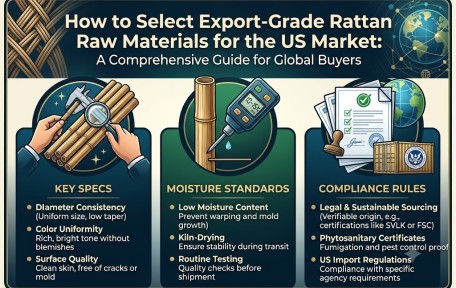
Perform weekly physical audits on high-risk pallet locations, such as bottom racks and areas near entry points. Use a pinless moisture meter to test wood and fiber moisture content; rattan and bamboo products should consistently test below 12% to 14% moisture content.
Implement Quarantine Procedures
If any carton exhibits dampness or surface micro-mold, immediately move the affected lot to a dedicated quarantine area equipped with active dehumidifiers. Clean and inspect affected items immediately to prevent cross-contamination to adjacent stock.
CONCLUSION: SAFEGUARDING PRODUCT QUALITY ACROSS THE SUPPLY CHAIN
Protecting natural woven home decor during humid seasons requires an integrated approach comprising atmospheric control, physical elevation, optimized packaging, and routine inspection protocols. By adopting these practical warehouse management procedures, international retailers can minimize seasonal return rates, safeguard profit margins, and deliver flawless natural fiber home products to end consumers.
At Phu Minh Co., Ltd., we combine traditional Vietnamese artisan craftsmanship with rigorous industrial quality management—including SCAN, WCA, BSCI, and ISO 9001:2015 certifications—to supply expertly kiln-dried, moisture-controlled natural home decor globally. Contact our B2B team today to discuss high-quality, sustainable home decor solutions for your retail catalog.
FAQ SECTION:
1- What is the recommended relative humidity level for storing rattan and bamboo decor?
The ideal relative humidity for storing natural fiber decor in a warehouse is between 40% and 60%. Humidity levels above 65% significantly increase the risk of mold and mildew development.
2- How far off the floor should natural fiber products be stored in a warehouse?
Master cartons containing natural fiber products should be elevated at least 15 to 20 cm off the floor using heavy-duty plastic or sanitized wooden pallets.
3- What is a safe internal moisture content for rattan and bamboo handicrafts?
Rattan, bamboo, seagrass, and water hyacinth products should maintain an internal moisture content between 10% and 14% to ensure structural integrity and mold resistance.
4- Is it safe to seal natural woven baskets tightly in plastic wrap during wet seasons?
Sealing natural products in airtight plastic wrap without proper desiccants is not recommended. Trapped ambient humidity can condense inside the plastic, creating ideal conditions for mold growth.
RELAVANT ARTICLES