How to Measure Moisture in Woven Rattan and Bamboo: A B2B Quality Control Guide

KEY TAKEAWAYS:
- Maintaining a moisture level between 12% and 18% is critical to preventing mold and preserving the structural integrity of rattan and bamboo handicrafts during maritime transit.
- Pin-type handheld moisture meters are the industry standard for woven wares, providing precise localized readings when inserted parallel to the natural fibers.
- Regular calibration and documenting moisture levels are essential compliance steps for meeting ISO 9001:2015, BSCI, and SMETA quality assurance standards.
WHY MOISTURE CONTROL IS THE ULTIMATE QUALITY GATEKEEPER FOR WOVEN DECOR
For global B2B buyers and interior designers, importing premium woven handicrafts made of rattan, bamboo, seagrass, or water hyacinth is an investment in sustainable luxury. However, the long maritime journey across varying climate zones introduces a silent threat: moisture. High moisture content triggers mold growth, structural warping, and fiber degradation, which can ruin entire shipments and damage brand reputation. Ensuring that products stay within the golden moisture range of 12% to 18% is not just a preference—it is a critical compliance requirement for international standards like ISO 9001:2015, BSCI, and SMETA.
ESSENTIAL TOOLS: CHOOSING THE RIGHT HANDHELD MOISTURE METER
To implement an airtight quality control (QC) process, sourcing professionals must use the correct diagnostic tools. Handheld moisture meters are the industry standard, divided into two main categories: pinless (destructive-free) and pin-type meters. For woven materials such as rattan and bamboo, pin-type moisture meters are highly recommended. These devices feature sharp metal probes that penetrate the fibrous layers of the material, offering highly localized, deep-core readings that pinless scanners cannot accurately capture on uneven, woven surfaces.
STEP 1: CALIBRATE YOUR DEVICE FOR NATURAL FIBERS
Before initiating any measurement, calibration is vital. Different natural materials have varying electrical resistances. To calibrate your handheld moisture meter: First, turn on the device and check the battery status to ensure consistent current flow. Second, select the correct species setting or material group code on your meter (most manufacturers provide a lookup table where rattan and bamboo map to specific wood or bamboo density settings). Third, perform a built-in calibration check using the cap or a calibration block to verify the device reads 'zero' or the designated reference value accurately.
STEP 2: EXECUTE PRECISE PROBE INSERTION
To get an accurate reading without damaging the aesthetic value of the high-end home decor, follow these precise insertion techniques:
- Align with the grain: Insert the pins parallel to the longitudinal direction of the rattan or bamboo fibers, not across them. This ensures the electrical current flows along the natural vascular bundles, yielding the most accurate resistance measurement.
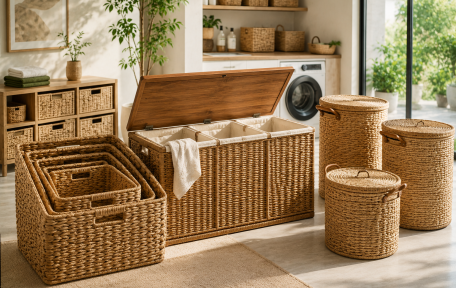
- Target hidden areas: To preserve the product's visual appeal, press the pins into inconspicuous areas, such as the underside of a laundry hamper, the inner rim of a storage basket, or the joints of storage furniture.
- Ensure firm contact: Push the pins smoothly into the material until they are firmly embedded (usually 3-5mm deep). Avoid forcing them, which could split delicate bamboo slats or damage the meter's probes.
STEP 3: INTERPRET AND DOCUMENT THE READINGS
Once the pins are inserted, the digital screen will display the moisture percentage. A professional QC workflow requires systematic recording:
- Acceptable Range (12% - 18%): Safe for packing and container loading.
- Action Required (Above 18%): The product must be sent back to the drying ovens or sun-drying yards. Packing damp items will inevitably lead to mold during ocean transit.
- Action Required (Below 12%): Over-dried rattan or bamboo becomes brittle and prone to cracking under stress. These items may require controlled conditioning.
CONCLUSION: PARTNERING WITH PHU MINH FOR MOLD-FREE, PREMIUM EXPORTS
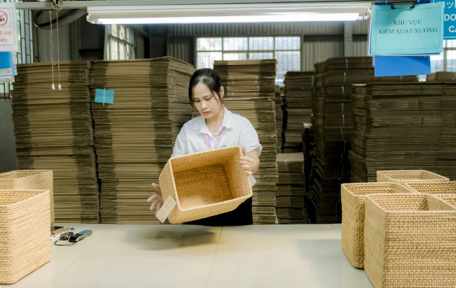
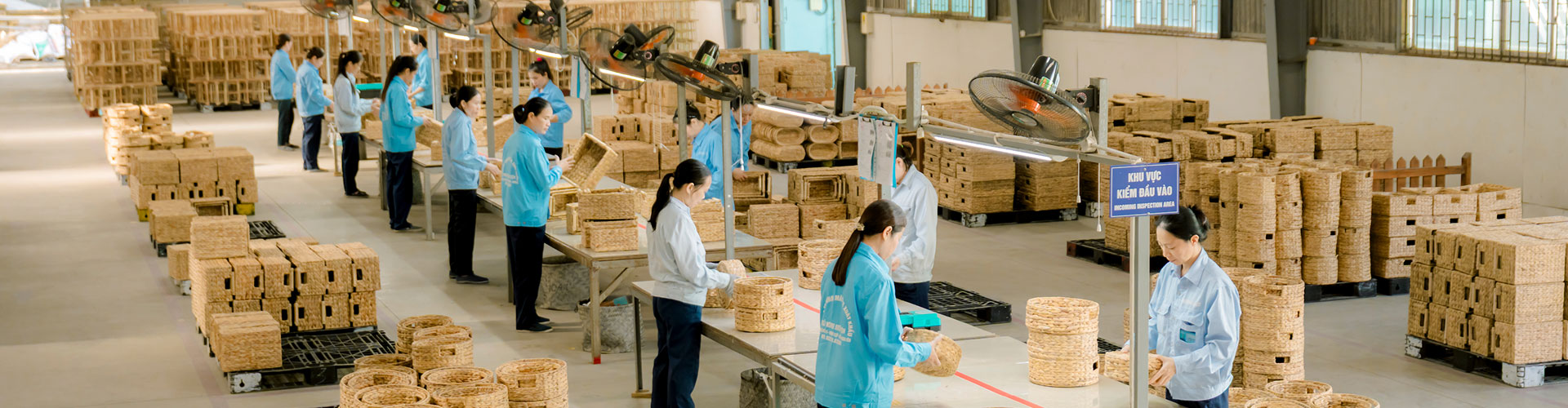
Mastering moisture control is a collaborative effort between global buyers and manufacturers. By understanding how to use a handheld moisture meter, sourcing managers can confidently audit incoming shipments. At Phu Minh Co., Ltd., we eliminate the guesswork. Our state-of-the-art manufacturing facilities combine traditional Vietnamese craftsmanship with strict, modern QC protocols. From raw rattan selection to final container loading, we guarantee moisture compliance, giving you peace of mind and products that stand the test of time.
FAQ SECTION:
1- What is the ideal moisture content for exported rattan and bamboo products?
The ideal moisture content is between 12% and 18%. Anything above 18% significantly increases the risk of mold growth during container shipping, while levels below 12% can make the natural fibers brittle and prone to cracking.
2- Should I use a pin-type or pinless moisture meter for woven handicrafts?
A pin-type moisture meter is highly recommended for woven handicrafts like rattan, bamboo, and seagrass. It allows you to measure the exact moisture level within the core of the woven strands, whereas pinless meters require a flat, solid surface that woven items rarely have.
3- How does Phu Minh Co., Ltd. ensure moisture compliance for global shipments?
At Phu Minh Co., Ltd., we implement rigorous QC protocols aligned with ISO 9001:2015 and BSCI standards. Every batch undergoes multi-stage moisture checks using calibrated handheld meters before packing, followed by the strategic placement of high-grade desiccants in shipping containers.
RELAVANT ARTICLES