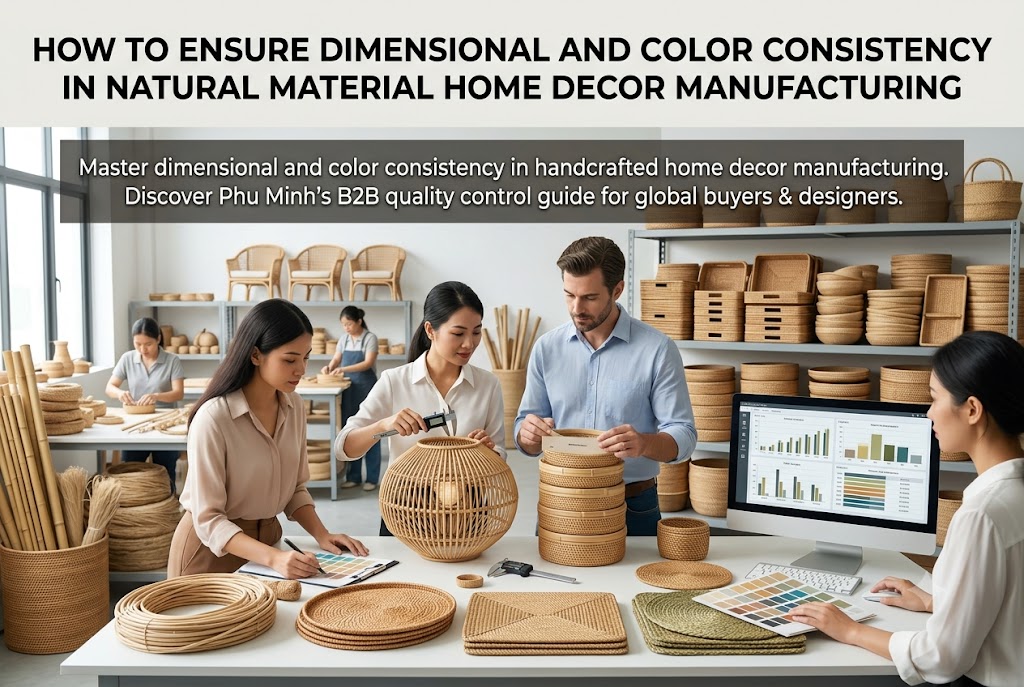
How to Ensure Dimensional and Color Consistency in Natural Material Home Decor Manufacturing
KEY TAKEAWAYS:
- Sorting natural fibers by baseline moisture and shade prior to weaving reduces batch color variance by over 85% in large-scale production.
- Utilizing custom steel framing jigs ensures dimensional tolerances remain strictly within ±3mm to ±5mm across all handcrafted home decor items.
- Implementing ISO 9001:2015 Master Golden Samples establishes an unambiguous benchmark for spectrophotometer color matching and visual audits.
- Controlling post-production moisture content at 10-12% prevents dimensional warping, shrinkage, and color alteration during long-distance shipping.
INTRODUCTION: THE CHALLENGE OF UNIFORMITY IN HANDCRAFTED HOME DECOR
For global B2B buyers and interior designers, sourcing natural fiber home decor—such as rattan storage baskets, water hyacinth laundry hampers, seagrass rugs, and acacia accent furniture—presents a persistent challenge: maintaining dimensional and color consistency across high-volume production runs. Because natural materials inherently possess organic color variations and natural flexibility, achieving retail-ready uniformity requires rigorous engineering and operational discipline.
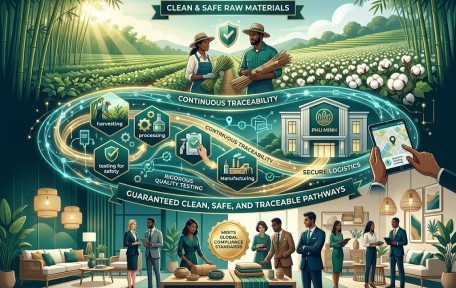
At Phu Minh Co., Ltd, we combine sustainable craftsmanship with internationally certified manufacturing systems (ISO 9001:2015, BSCI, SMETA, SCAN, WCA). This step-by-step guide outlines the exact quality control protocol used to guarantee precision, batch consistency, and long-term durability for enterprise buyers worldwide.
PREREQUISITES: QUALITY STANDARDS AND ESSENTIAL CALIBRATION TOOLS
Before starting production, establish clear baseline criteria and equip your production floor with technical measurement equipment. Skipping this preparatory phase leads to preventable batch rejections.
- Master Golden Samples: Buyer-approved physical reference units representing target color tone, weave density, and outer dimensions.
- Industrial Metal Jigs: Precision-welded steel or aluminum frames built to the exact product dimensions to guide hand-weaving.
- Digital Spectrophotometers / Colorimeters: Tools to calculate color variance using the standard CIE L*a*b* scale (targeting Delta E < 2.0).
- Pin-Type Pinless Moisture Meters: Calibrated testing devices to verify internal wood and fiber moisture levels.
- Compliance Framework: Standard Operating Procedures aligned with ISO 9001:2015 quality management guidelines.
STEP 1: STANDARDIZE RAW MATERIAL SELECTION AND PRE-TREATMENT
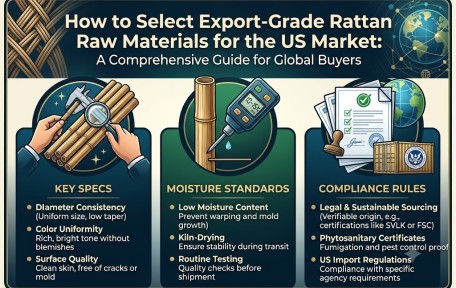
Consistency begins before production starts. Natural fibers such as rattan, bamboo, seagrass, paper cord, and water hyacinth naturally vary depending on soil, harvest season, and sun exposure.
Color Sorting and Pigment Grading
Technicians sort harvested fibers into distinct visual grades (A, B, and C) based on baseline shade. Only Grade-A natural strands with uniform pigmentation are selected for master batches. For dyed or stained finishes, we utilize eco-friendly, REACH-compliant water-based pigments with UV stabilizers to ensure color fastness.
Moisture Standardization
Raw materials must undergo controlled kilning or solar drying to achieve an initial moisture content between 10% and 12%. Standardizing moisture prevents uneven absorption during dyeing and eliminates fiber shrinkage later in the process.
STEP 2: ESTABLISH MASTER GOLDEN SAMPLES AND PRECISION METAL JIGS
Handcrafting does not mean sacrificing mathematical accuracy. To eliminate human error in dimensions, artisan weavers must work within physical constraints.
Golden Sample Sign-Off
Once the prototype is perfected, three identical Master Golden Samples are produced: one for the buyer, one for the Quality Assurance (QA) team, and one for the lead factory supervisor. All visual inspections refer directly to these units.
Precision Jig Tooling
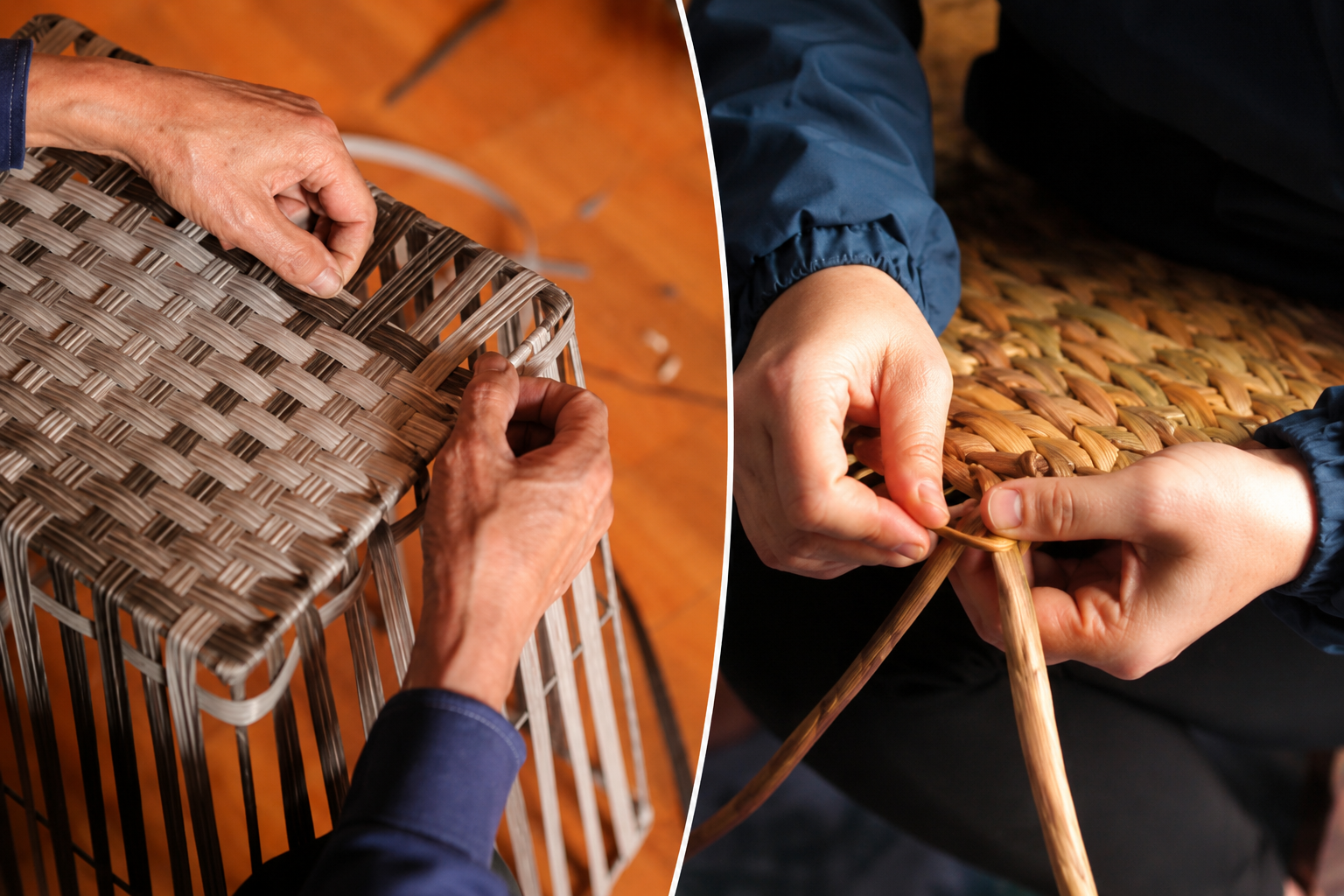
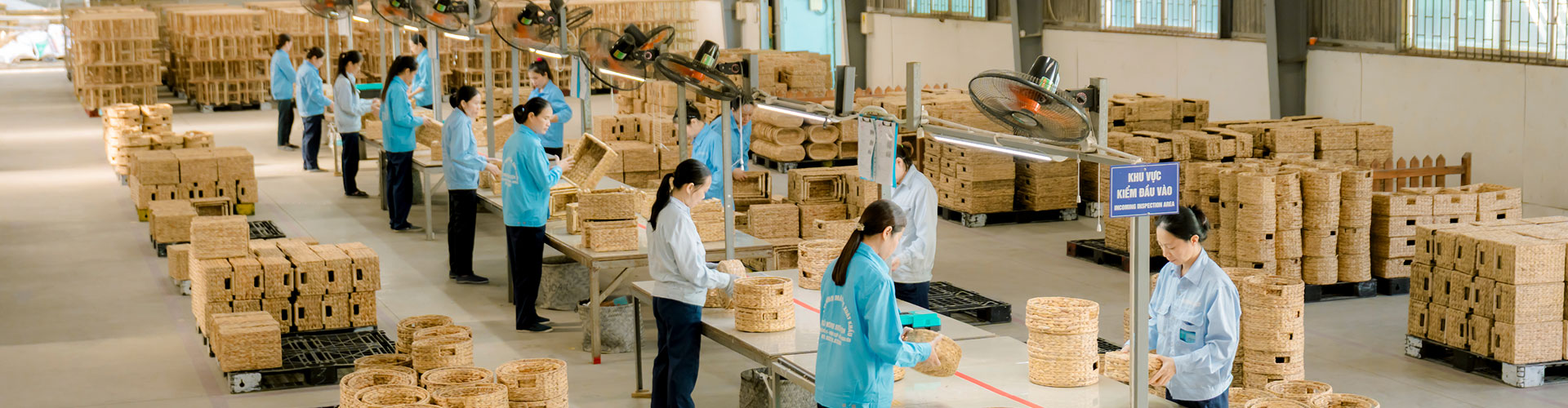
For woven items such as storage hampers, paper cord chairs, or PE resin outdoor pieces, artisans weave around rigid internal steel or wooden jigs. This tool-guided process holds outer dimensional tolerances to strict commercial limits: ±3mm for items under 50cm and ±5mm for large storage furniture.
STEP 3: DEPLOY IN-LINE SPECTROPHOTOMETRY AND MULTI-POINT AUDITS
Quality checks must happen continuously during assembly rather than exclusively at final packing.
In-Line Visual and Digital Color Matching
Quality inspectors conduct hourly color checks under standardized light boxes (D65 North Sky Daylight simulation). Spectrophotometers scan dyed surfaces to keep color drift below Delta E 2.0, ensuring that items placed side-by-side on retail shelves match seamlessly.
3-Stage Quality Audits
- Initial Production Check (IPC): Audits initial raw material batches and first-off weaving samples against the Golden Sample.
- During Production Check (DUPRO): Inspected when 20-30% of the order is completed to verify weave tightness, joint stability, and dimensional fidelity using steel calipers.
- Final Random Inspection (FRI): Performed using AQL 2.5/4.0 sampling plans prior to container loading.
STEP 4: CONTROL MOISTURE CONTENT AND ENVIRONMENTAL STORAGE CONDITIONS
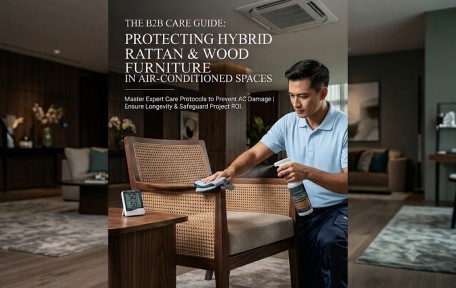
Fluctuations in humidity cause natural fibers, pine wood, and acacia to expand, warp, or change color. Rigorous environmental control protects finished inventory.
Dehumidification and Kiln Conditioning
After finishing treatments, woven products pass through low-temperature drying chambers to lock in dimensions and color coatings. Final moisture content is verified and logged for every batch.
Moisture-Barrier Packaging
Finished goods are packed in heavy-duty corrugated cartons lined with PE polybags and high-absorption silica desiccant packs. Container loading docks are sealed to prevent tropical ambient humidity from penetrating cartons before transit.
CONCLUSION: PARTNERING FOR FLAWLESS B2B NATURAL DECOR MANUFACTURING
Achieving outstanding color and dimensional consistency in natural home decor requires a disciplined, science-backed approach to artisan manufacturing. By combining raw material sorting, precision metal jigs, digital colorimetry, and strict ISO 9001:2015 quality protocols, B2B buyers can confidently deliver premium green products to discerning global markets.
As a certified sustainable manufacturer, Phu Minh Co., Ltd bridges traditional Vietnamese craftsmanship with world-class supply chain standards. Contact our engineering and sales team today to discuss custom OEM/ODM specifications and receive master sample evaluation kits for your upcoming catalog.
FAQ SECTION:
1- How does Phu Minh Co., Ltd control color variance in natural materials like rattan and water hyacinth?
We pre-grade raw fibers by natural shade before processing, use eco-friendly UV-stabilized dyes, and inspect batches under D65 standardized lighting using spectrophotometers to keep Delta E variance under 2.0.
2- What size tolerance can buyers expect for handcrafted baskets and furniture?
Through custom steel framing jigs and standardized weaving specifications, we maintain tight dimensional tolerances within ±3mm for small decor items and ±5mm for large storage furniture.
3- How do compliance audits like BSCI and ISO 9001:2015 support product consistency?
ISO 9001:2015 establishes repeatable Standard Operating Procedures, traceable raw material batch coding, and structured 3-stage inline inspections at every manufacturing phase.
4- How are products protected from humidity and dimensional warping during ocean transit?
All finished goods are kiln-conditioned to 10-12% moisture content, packed with heavy-duty desiccants, and sealed in polybag liners to block humidity changes inside shipping containers.
RELAVANT ARTICLES