How to Distinguish High-Quality Natural Rattan from Low-Quality Adulterated Alternatives: The Guide off A B2B Buyer
KEY TAKEAWAYS:
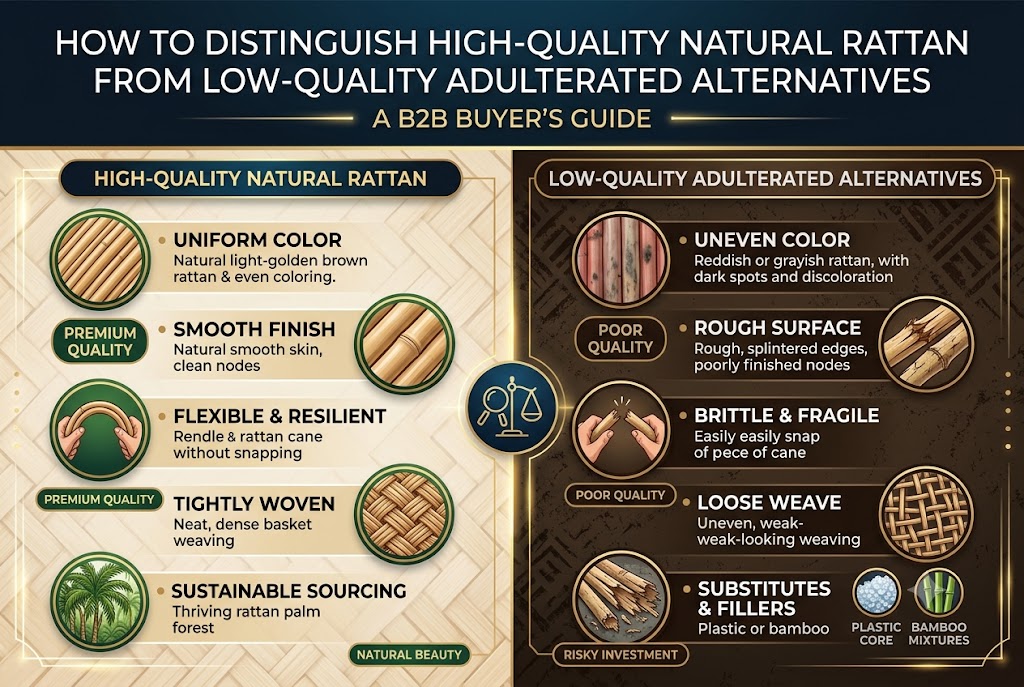
- High-quality natural rattan features a solid, dense fibrous core that provides exceptional weight and tensile strength, unlike hollow or spongy low-grade alternatives.
- Adulterated rattan products are often secretly blended with cheap synthetic PP/PE plastic cords, paper cords, or weak wild vines to artificially lower manufacturing costs.
- Professional inspection techniques like the physical flex test, surface luster analysis, and moisture level checks (ideally 12-18%) can easily expose low-quality rattan.
- Partnering with suppliers certified under global compliance standards like BSCI, SMETA, and ISO 9001:2015 guarantees ethical sourcing and premium material integrity.
INTRODUCTION: THE HIGH STAKES OF RATTAN MATERIAL INTEGRITY
In the global home decor and storage solutions market, natural rattan remains a premium, highly sought-after material. However, as global demand rises, the B2B market has seen an influx of low-quality, adulterated rattan products. Some suppliers blend natural fibers with cheap synthetic plastics (PP/PE), paper cords, or weak wild vines to cut costs. For global buyers, sourcing managers, and interior designers, purchasing these subpar materials can lead to rapid product degradation, negative customer reviews, and brand damage.
This step-by-step guide will equip you with the professional knowledge to distinguish premium natural rattan from inferior, adulterated alternatives, ensuring your supply chain remains sustainable, durable, and elite.
PREREQUISITES: WHAT YOU NEED FOR A PROFESSIONAL MATERIAL INSPECTION
Before conducting a physical quality assessment on your samples, ensure you have the following tools and benchmarks ready:
- A Pinless Moisture Meter: Optimal moisture content for premium rattan is between 12% and 18%.
- A Magnifying Loupe: To inspect the cellular pore structure of the rattan core.
- A Certified Control Sample: A verified premium natural rattan specimen for direct physical comparison.
- Supplier Compliance Documentation: Certifications such as BSCI, SMETA, or ISO 9001:2015 to verify supply chain transparency.
STEP 1: ANALYZE CORE DENSITY AND WEIGHT
The core of the rattan vine is the ultimate indicator of its structural integrity. Premium natural rattan possesses a solid, fibrous core that provides immense strength while maintaining flexibility.
Check the Physical Weight
Pick up the product. High-quality natural rattan is surprisingly heavy due to its dense, oil-rich fibrous structure. Adulterated products or those mixed with hollow wild vines feel remarkably light, brittle, and fragile.
Inspect the Cross-Section
Look at the cut ends of the rattan. Premium rattan shows a dense, uniform distribution of vascular bundles. If you notice hollow centers, large gaps, or spongy textures, the material is either low-grade wild vine or has been poorly processed.
STEP 2: PERFORM THE TENSILE AND FLEXIBILITY TEST
Natural rattan is celebrated for its ability to bend without breaking, making it perfect for complex weaves in laundry hampers, storage baskets, and accent furniture.
The Bend Test
Gently bend a strand of the rattan sample. High-quality rattan will flex smoothly and return to its original shape. If it cracks, splinters, or snaps easily, it is either over-dried, chemically damaged, or an inferior vine species.
The Stretch Test
Watch out for synthetic adulteration. Some suppliers weave cheap PP/PE plastic cords or paper cords coated in wax into the design to cut costs. If a strand stretches like plastic or tears like paper when twisted, it is not pure natural rattan.
STEP 3: ASSESS SURFACE TEXTURE, LUSTER, AND AROMA
A sensory inspection is highly effective for identifying premium rattan processing quality.
Texture and Finish
Premium rattan is smooth to the touch, with minimal splintering. It retains a natural, semi-glossy protective skin (silica layer). Adulterated or low-grade rattan often feels rough, fuzzy, or overly dry.
Color Consistency
While natural rattan has beautiful, subtle color variations, it should not have large black spots, which indicate mold or rot. Beware of heavily bleached rattan; excessive sulfur bleaching masks poor quality but severely weakens the fibers.
The Aroma Check
Pure, well-treated natural rattan has a clean, woody, slightly sweet scent. A pungent chemical odor indicates heavy chemical treatment or toxic VOC coatings, whereas a musty smell indicates active mold growth.
STEP 4: VERIFY GLOBAL COMPLIANCE AND CERTIFICATIONS
Technical tests are only part of the equation; the ultimate assurance of quality comes from rigorous supply chain audits. When sourcing at scale, always request verified certification documents from your manufacturing partner.
Look for internationally recognized standards:
- BSCI & SMETA: Ensure ethical labor and environmental practices.
- ISO 9001:2015: Guarantees a standardized, high-quality manufacturing process.
- SCAN & WCA: Confirm security and workplace conditions meet global retail requirements.
CONCLUSION: SECURING YOUR PREMIUM RATTAN SUPPLY CHAIN
Distinguishing high-quality natural rattan from cheap, adulterated alternatives is crucial to protecting your brand's reputation and delivering long-lasting, sustainable products to your clients. By applying these physical tests and verifying supplier credentials, you can source with confidence.
At Phu Minh Co., Ltd, we combine traditional Vietnamese craftsmanship with rigorous international quality standards (BSCI, SMETA, ISO 9001:2015) to deliver premium, 100% authentic natural rattan, bamboo, and seagrass home decor solutions. Partner with us to secure a reliable, high-performing, and sustainable supply chain.
FAQ SECTION:
1- Can natural rattan be used outdoors?
While natural rattan is highly durable, it is best suited for indoor or covered outdoor spaces. Prolonged exposure to direct rain and intense UV rays can weaken the fibers. For fully exposed outdoor furniture, synthetic PE rattan is typically preferred.
2- How can I detect if synthetic plastic is mixed into a natural rattan weave?
You can detect synthetic mixing by checking the texture and conducting a gentle burn test on a sample strand. Synthetic PP/PE will melt, smell of burning plastic, and leave a hard bead, whereas natural rattan burns to ash with a wood-like aroma.
3- What is the ideal moisture content for shipping natural rattan products?
The ideal moisture content is between 12% and 18%. Anything higher than 18% risks mold development during sea transit, while moisture levels below 10% can make the rattan brittle and prone to cracking.
4- How does Phu Minh Co., Ltd ensure the quality of its natural rattan products?
Phu Minh Co., Ltd implements a strict quality control system from raw material harvesting to final packaging. Our processes are certified under ISO 9001:2015, and we undergo regular BSCI and SMETA social compliance audits.
RELAVANT ARTICLES