How a Global Retailer Scaled Sustainable Sourcing: A Case Study Comparing Vietnam, China, and Indonesia in Woven Handicrafts
KEY TAKEAWAYS:
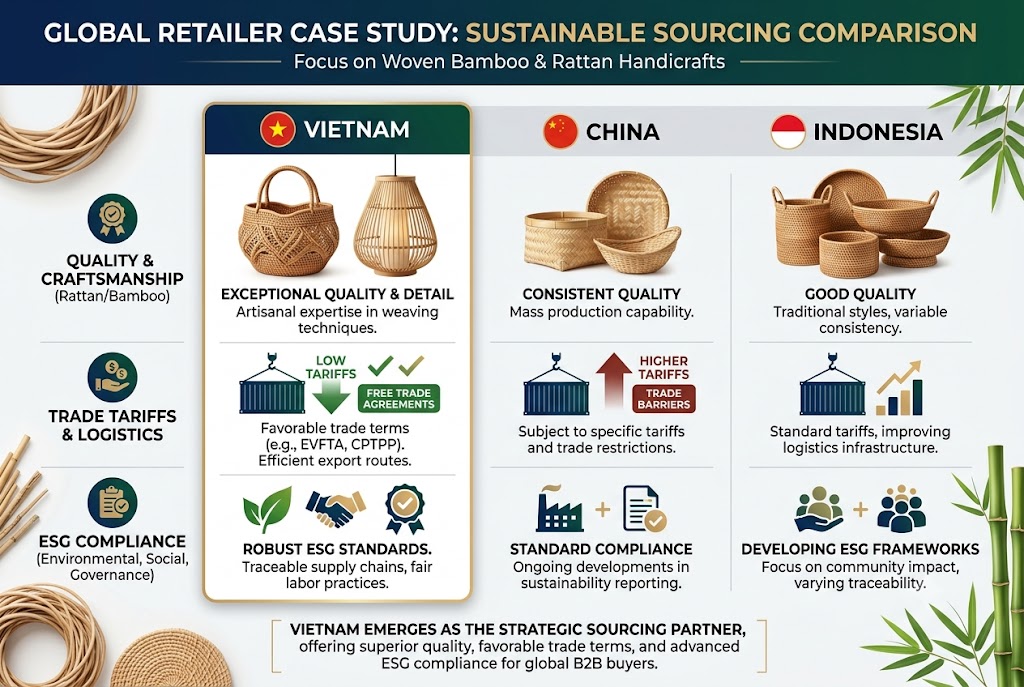
- Vietnam offers an optimal balance of artisanal weaving skills, competitive pricing, and high ESG compliance (BSCI, SMETA, SCAN) for global home decor buyers.
- China excels in synthetic resin and automation but faces escalating labor costs and trade tariff burdens compared to Southeast Asian hubs.
- Indonesia maintains vast raw rattan reserves but encounters longer shipping lead times and lower density of social compliance certified factories.
- Vietnamese manufacturers like Phu Minh Co., Ltd. lead in hybrid material innovations combining rattan, seagrass, water hyacinth, acacia wood, and paper cord.
THE PROBLEM: NAVIGATING SUPPLY CHAIN DISRUPTIONS, HIGH TARIFFS, AND ESG DEMANDS IN ASIAN CRAFT SOURCING
In recent years, global buyers and interior designers for major home decor brands faced critical sourcing bottlenecks: rising geopolitical tariffs, stringent European ESG mandates, and inconsistent product quality across traditional Asian craft manufacturing hubs. A leading European retail group needed to restructure its supply chain for storage solutions, laundry hampers, and home accessories without compromising on margins or sustainability.
Evaluating the Big Three Manufacturing Hubs
When analyzing sourcing hubs for handcrafted natural fiber goods—such as natural rattan, bamboo, seagrass, water hyacinth, and paper cords—buyers must weigh distinct operational realities across the key producing nations:
- China: Unmatched industrial automation and synthetic resin (PP/PE) manufacturing capacity, but offset by escalating labor costs, heavy tariffs (such as Section 301), and a declining workforce in traditional artisanal hand-weaving.
- Indonesia: Abundant native raw rattan species and deep cultural weaving traditions, yet constrained by domestic raw material trade regulations, port infrastructure bottlenecks, and fewer export-ready factories certified under audit frameworks like SCAN, BSCI, or SMETA.
- Vietnam: A sweet spot featuring centuries-old craft village clusters, flexible OEM/ODM capabilities, favorable free trade agreements (such as the EVFTA), and a strong density of export factories operating under international quality systems like ISO 9001:2015.
THE SOLUTION: STRATEGIC DIVERSIFICATION TO VIETNAM'S INTEGRATED GREEN SUPPLY CHAIN
To solve the dual challenges of compliance and cost efficiency, the brand strategically transitioned a major portion of its natural woven home decor production to Phu Minh Co., Ltd. in Vietnam. The implementation leveraged three specific operational strengths:
1. Multi-Material Craftsmanship and Hybrid Design
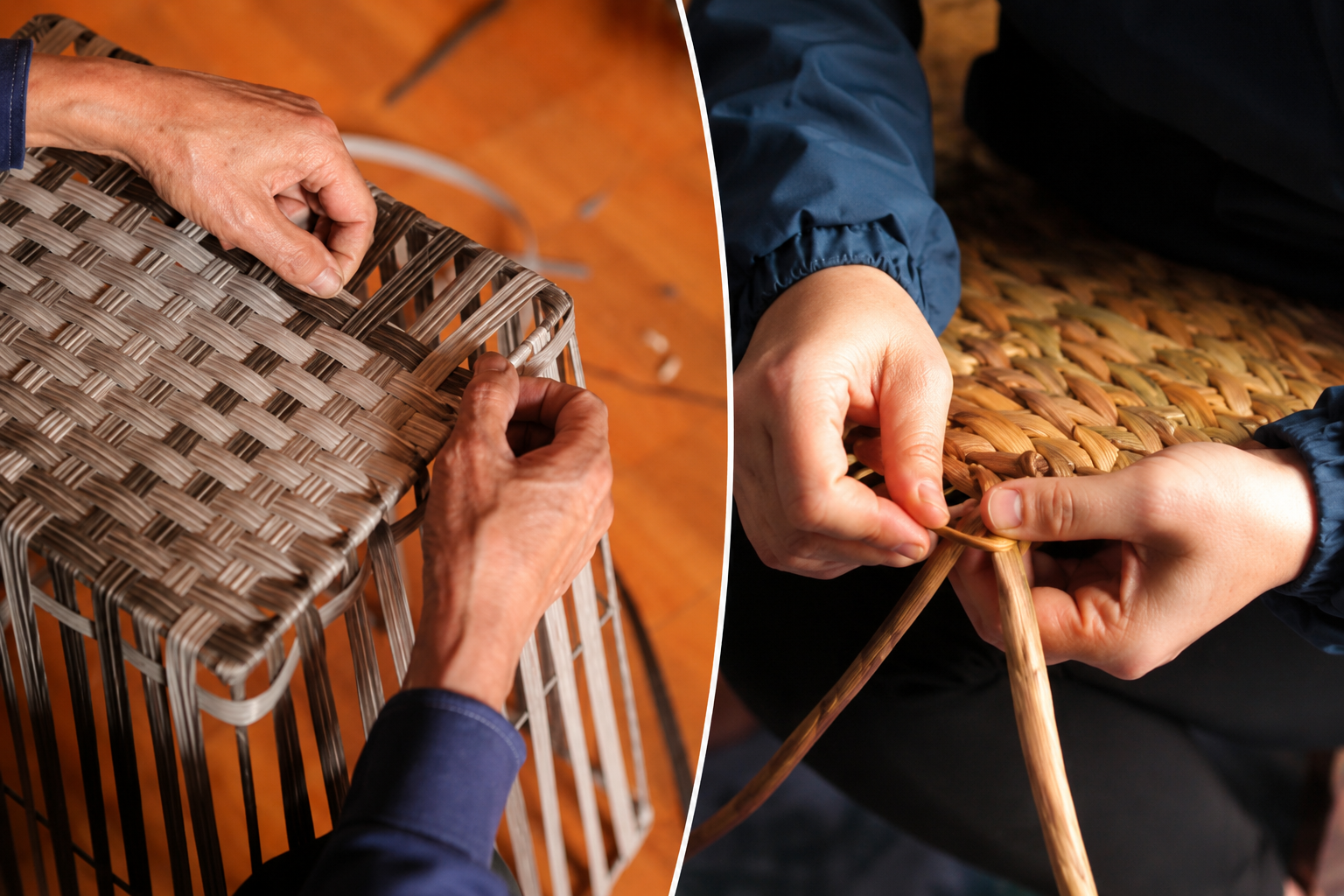
Phu Minh Co., Ltd. integrated natural materials—blending water hyacinth, seagrass, rattan, and bamboo with FSC-certified acacia and pine wood frames, durable paper cords, and polyester/cotton ropes. This multi-material capability allowed the buyer to launch versatile, high-margin storage furniture and home accessories.
2. Turnkey International Compliance and Audit Standards
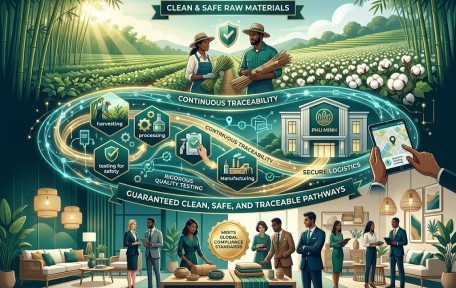
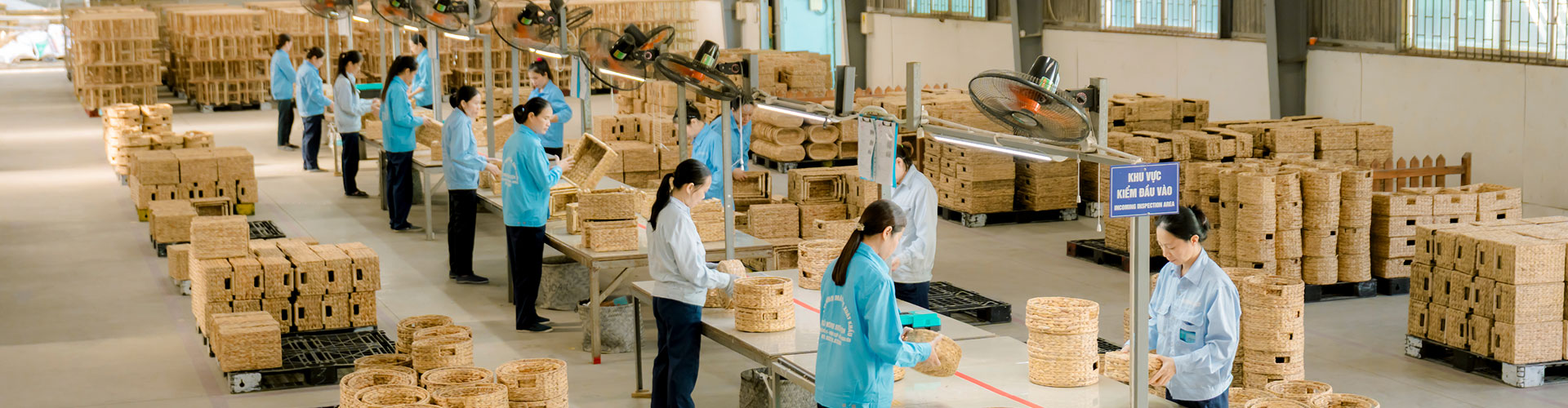
Unlike unorganized supplier networks, Phu Minh Co., Ltd. provided full supply chain audit readiness, backed by active certifications including BSCI, SMETA, SCAN, WCA, and ISO 9001:2015. This eliminated social compliance friction and simplified vendor onboarding for stringent Western retail channels.
3. Trade Tariff Savings & Supply Chain Agility
Sourcing from Vietnam enabled the buyer to leverage duty-free trade advantages under the EVFTA and CPTPP, significantly improving landed margins compared to Chinese alternatives while maintaining reliable 60-to-75-day production lead times.
THE IMPACT: COST OPTIMIZATION, ZERO QUALITY RECALLS, AND MARKET SHARE GROWTH
The strategic shift to Vietnam yielded measurable business outcomes for the global retail partner within the first 12 months of deployment:
- 18% Reduction in Total Landed Costs: Achieved through tariff advantages, optimized container loading, and competitive regional labor efficiency.
- 99.5% First-Pass Quality Rate: Enforced by strict ISO 9001:2015 quality control processes across pre-production, inline weaving, and final packing stages.
- Substantial ESG Positioning Gain: Transparent sourcing of natural, renewable materials strengthened the partner's sustainability reporting and resonated strongly with eco-conscious consumers.
Strategic Conclusion: For international importers, distributors, and interior design houses seeking resilient, ethically audited, and cost-effective woven home decor, Vietnam represents Asia's most balanced and competitive manufacturing destination today.
FAQ SECTION:
1- How does Vietnam's rattan and bamboo craft quality compare to China and Indonesia?
Vietnam offers superior balance by combining traditional hand-weaving skill with rigorous factory audit standards (BSCI, ISO 9001:2015), providing higher material versatility than China and better compliance infrastructure than Indonesia.
2- What trade tariff advantages exist when importing woven crafts from Vietnam?
Vietnam benefits from free trade agreements like the EVFTA and CPTPP, offering lower or zero import tariffs into Europe, Canada, and Australia compared to tariffs levied on Chinese exports.
3- What sustainable materials does Phu Minh Co., Ltd specialize in?
Phu Minh Co., Ltd. specializes in natural rattan, bamboo, seagrass, water hyacinth, paper cords, cotton/polyester ropes, combined with FSC-certified acacia and pine wood.
4- Which compliance certifications are critical for importing Vietnamese handicrafts?
Key certifications include BSCI and SMETA for social compliance, SCAN and WCA for security and workplace conditions, and ISO 9001:2015 for quality management.
RELAVANT ARTICLES