Mastering North American Compliance: The Ultimate Inspection Guide for Importing Acacia and Pine Wood Decor
KEY TAKEAWAYS:
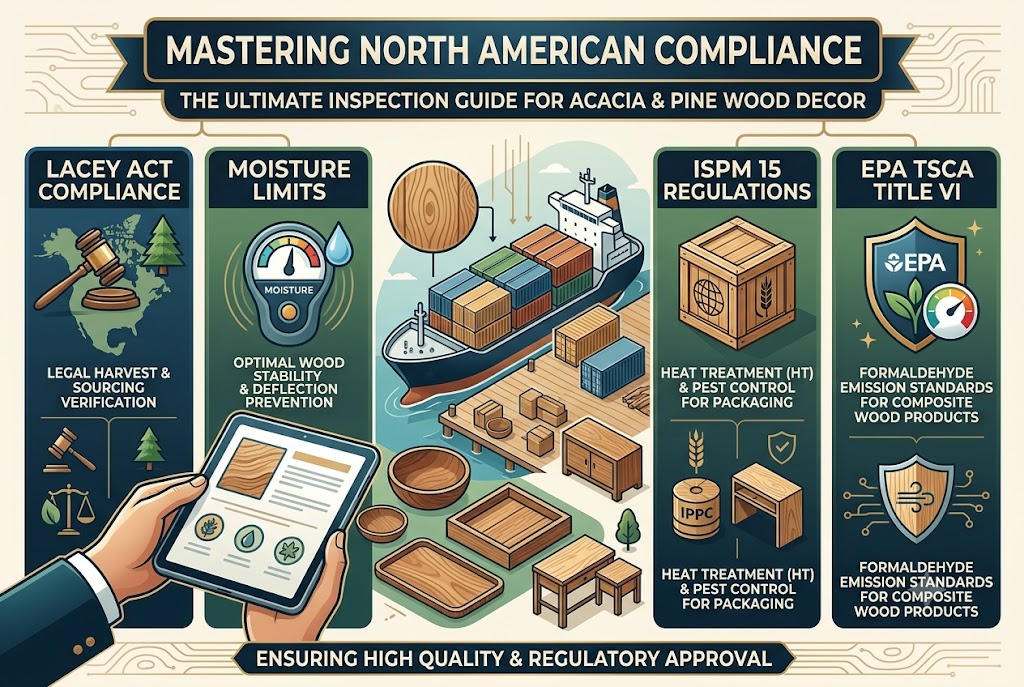
- The U.S. Lacey Act Phase VII requires mandatory plant declarations detailing exact botanical species and harvest countries for all imported Acacia and Pine wood furniture.
- Solid Acacia and Pine wood imports must maintain an 8% to 12% moisture content (MC) and undergo ISPM 15 heat treatment to prevent structural cracking and pest risks.
- Composite wood components integrated into timber furniture must strictly adhere to EPA TSCA Title VI formaldehyde emission limits (<=0.05 ppm).
- Partnering with certified manufacturers like Phu Minh Co., Ltd ensures full FSC chain-of-custody compliance and social compliance through BSCI and SMETA audits.
NAVIGATING NORTH AMERICA'S STRICT TIMBER IMPORT LANDSCAPE: HIGH RISKS, BIGGER OPPORTUNITIES
For global buyers and interior designers sourcing Acacia and Pine wood home decor, the North American market presents both immense commercial opportunity and rigorous regulatory hurdles. Navigating US Customs and Border Protection (CBP), USDA APHIS, and Health Canada requires far more than aesthetic appeal—it demands complete supply chain transparency and strict quality control.
A single missing declaration or an unverified timber origin can result in severe port delays, cargo forfeiture, or heavy financial penalties. To safeguard your brand reputation and ensure smooth customs clearance, understanding the exact technical and legal inspection standards for solid Acacia and Pine wood imports is non-negotiable.
KEY TECHNICAL & REGULATORY INSPECTION STANDARDS FOR ACACIA AND PINE WOOD
Importing Acacia (such as Acacia mangium) and Pine (such as Pinus radiata) products into North America requires compliance across legal sourcing, phytosanitary treatment, and material safety.
1. Lacey Act Compliance & Phase VII Declarations
The U.S. Lacey Act strictly prohibits trading illegally harvested timber. Under Phase VII enforcement, importers must submit electronic PPQ Form 505 declarations detailing:
- Scientific Botanical Name: Exact genus and species (e.g., Acacia mangium or Pinus caribaea).
- Country of Harvest: Traceable chain-of-custody documentation proving legal harvesting.
- Quantity and Declared Value: Accurate measurements matching commercial invoices.
2. Moisture Content (MC) & ISPM 15 Phytosanitary Rules
North America’s varied climate demands precise kiln-drying processes. Solid wood components must adhere to strict moisture standards:
- Optimal Moisture Level: Solid Acacia and Pine wood must maintain a target 8% to 12% moisture content (MC) to eliminate risk of warping, cracking, or mold growth during transit and retail display.
- ISPM 15 Stamp: Solid wood packaging and raw lumber must undergo heat treatment (HT) at 56°C for 30 minutes, certified with official IPPC stamps to prevent pest contamination.
3. EPA TSCA Title VI & Formaldehyde Regulations
If your Acacia or Pine decor integrates composite elements (such as drawer bottoms or back panels), it must comply with EPA TSCA Title VI emission limits (≤0.05 ppm for plywood) and carry valid third-party certification (TPC) labels.
HOW PHU MINH GUARANTEES ZERO-RISK COMPLIANCE & PREMIUM QUALITY
At Phu Minh Co., Ltd, we bridge the gap between artisanal craftsmanship and international regulatory standards. As a leading manufacturer and exporter of sustainable home decor, storage furniture, and natural lifestyle accessories, we ensure every piece meets North American import standards before it leaves our dock.
1. End-to-End Chain of Custody & FSC Certification
We source exclusively from sustainably managed, FSC-certified plantations. Our rigorous lot-by-lot tracking provides buyers with full supply chain documentation, simplifying your Lacey Act filings and ensuring 100% legal compliance.
2. Advanced Kiln-Drying & In-House Quality Assurance
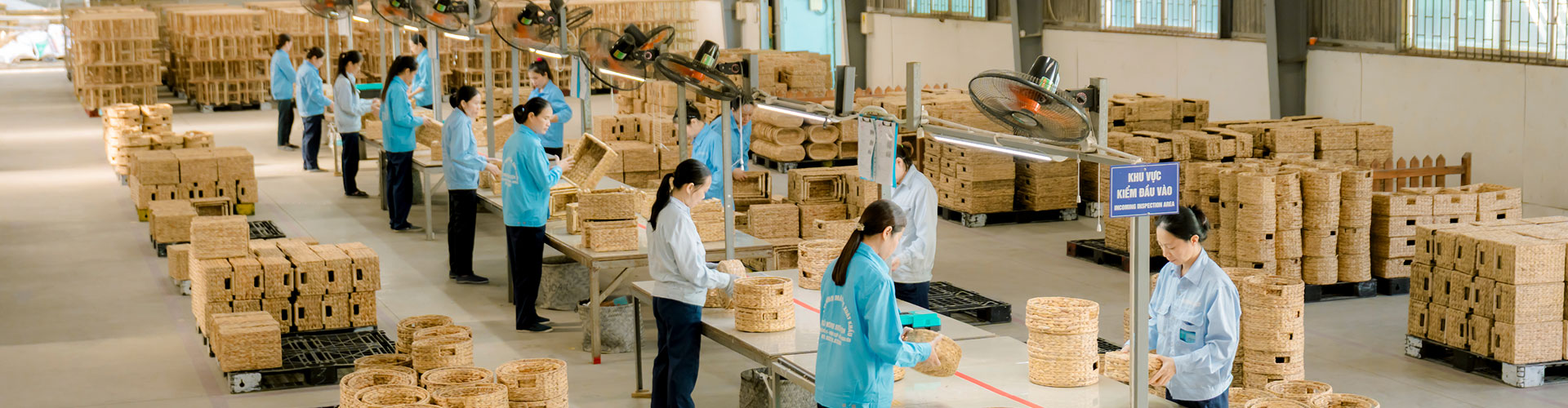
Utilizing state-of-the-art kiln-drying chambers, our team monitors timber moisture levels daily. Every batch of Acacia and Pine wood undergoes strict pinless moisture meter testing, surface finish checks, and structural load tests under ISO 9001:2015 standards.
3. Internationally Audited Facilities
Phu Minh operates with complete social and environmental compliance, backed by global auditing frameworks including BSCI, SMETA, WCA, and SCAN. Partnering with us gives your brand total peace of mind and immediate market readiness.
PARTNER WITH PHU MINH FOR SEAMLESS NORTH AMERICAN IMPORTS
Ready to scale your home decor collection with compliant, sustainable Acacia and Pine wood products? Streamline your procurement process and protect your business against import delays with Phu Minh Co., Ltd.
Contact our B2B export consultancy team today to request product samples, inspect our compliance documentation, or discuss your upcoming custom OEM/ODM designs.
FAQ SECTION:
1- What specific species information is required under the Lacey Act for Acacia and Pine wood?
Importers must specify the exact scientific botanical genus and species, such as Acacia mangium or Pinus radiata, along with the precise country of harvest on the USDA PPQ Form 505 declaration.
2- What is the acceptable moisture content for Acacia and Pine decor imported into North America?
The ideal moisture content ranges between 8% and 12% to prevent warping, splitting, or mold during sea transit and adaptation to North American indoor climates.
3- Does solid Acacia and Pine furniture require EPA TSCA Title VI certification?
Pure solid wood does not require TSCA Title VI certification, but any embedded composite wood elements like MDF or plywood backings must be TSCA Title VI certified and labeled.
4- How does ISPM 15 compliance affect solid wood furniture shipments?
ISPM 15 mandates that solid wood packaging and raw timber undergo certified heat treatment (56°C for 30 minutes) or fumigation to kill wood-boring pests prior to customs entry.
RELAVANT ARTICLES