How to Implement Labor Safety and Safety Training in Traditional Craft Villages: The Compliance Guide of A Buyer
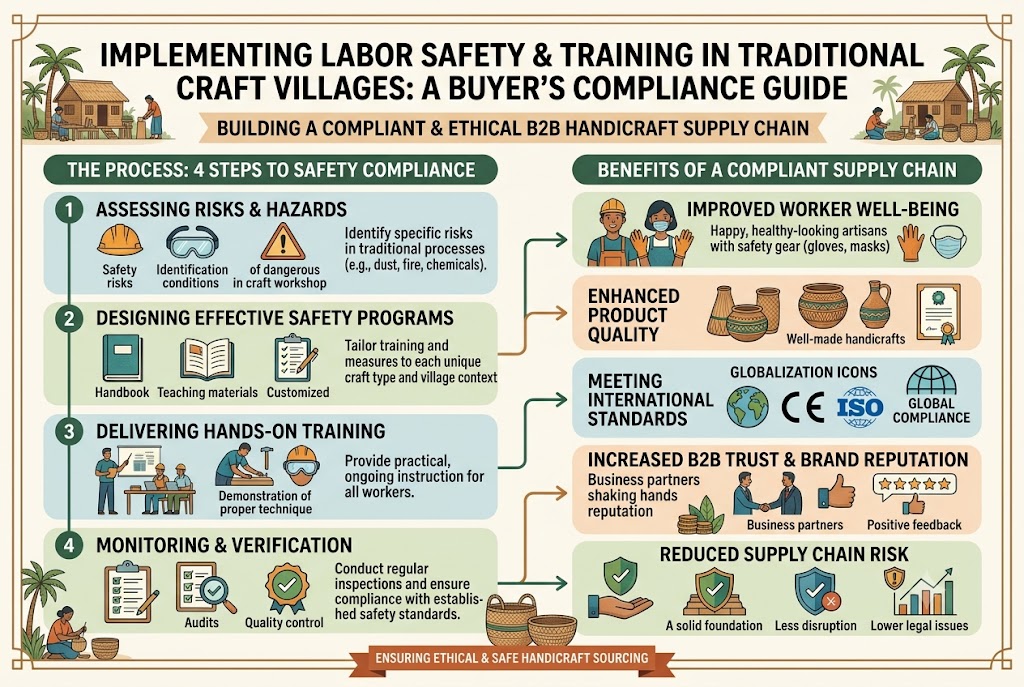
KEY TAKEAWAYS:
- Integrating labor safety and continuous safety training in artisan craft villages mitigates supply chain risks and ensures ESG compliance.
- Targeted ergonomic interventions and specialized protective gear preserve traditional handweaving heritage while improving workplace health.
- Adhering to international audit standards such as BSCI, SMETA, and WCA safeguards brand reputation and establishes reliable B2B supply chains.
INTRODUCTION: ELEVATING ARTISANAL HERITAGE THROUGH MODERN OCCUPATIONAL SAFETY
Global importers, interior designers, and volume buyers increasingly demand ethical transparency across their home decor supply chains. Traditional craft villages in Vietnam, renowned for handwoven rattan, seagrass, water hyacinth, paper cord, and acacia wood products, represent the pinnacle of artisanal craftsmanship. However, maintaining sustainable production requires aligning centuries-old heritage techniques with modern occupational health and safety (OHS) standards.
At Phu Minh Co., Ltd, we recognize that true sustainability extends beyond eco-friendly materials like bamboo and recycled PE/PP resin. It encompasses the human element. This comprehensive guide outlines the actionable steps global buyers and manufacturers must take to institute robust labor protection and safety training in traditional craft communities, ensuring certified, audit-ready supply chains for global retail markets.
PREREQUISITES: IDENTIFYING WORK ENVIRONMENT HAZARDS IN CRAFT COMMUNITIES
Before launching a safety initiative in rural craft villages, sourcing directors and factory operations teams must categorize the specific risks associated with natural material processing and handcrafted furniture assembly:
- Airborne Dust & Fine Particulates: Sanding acacia or pine wood and processing raw bamboo generate respirable dust.
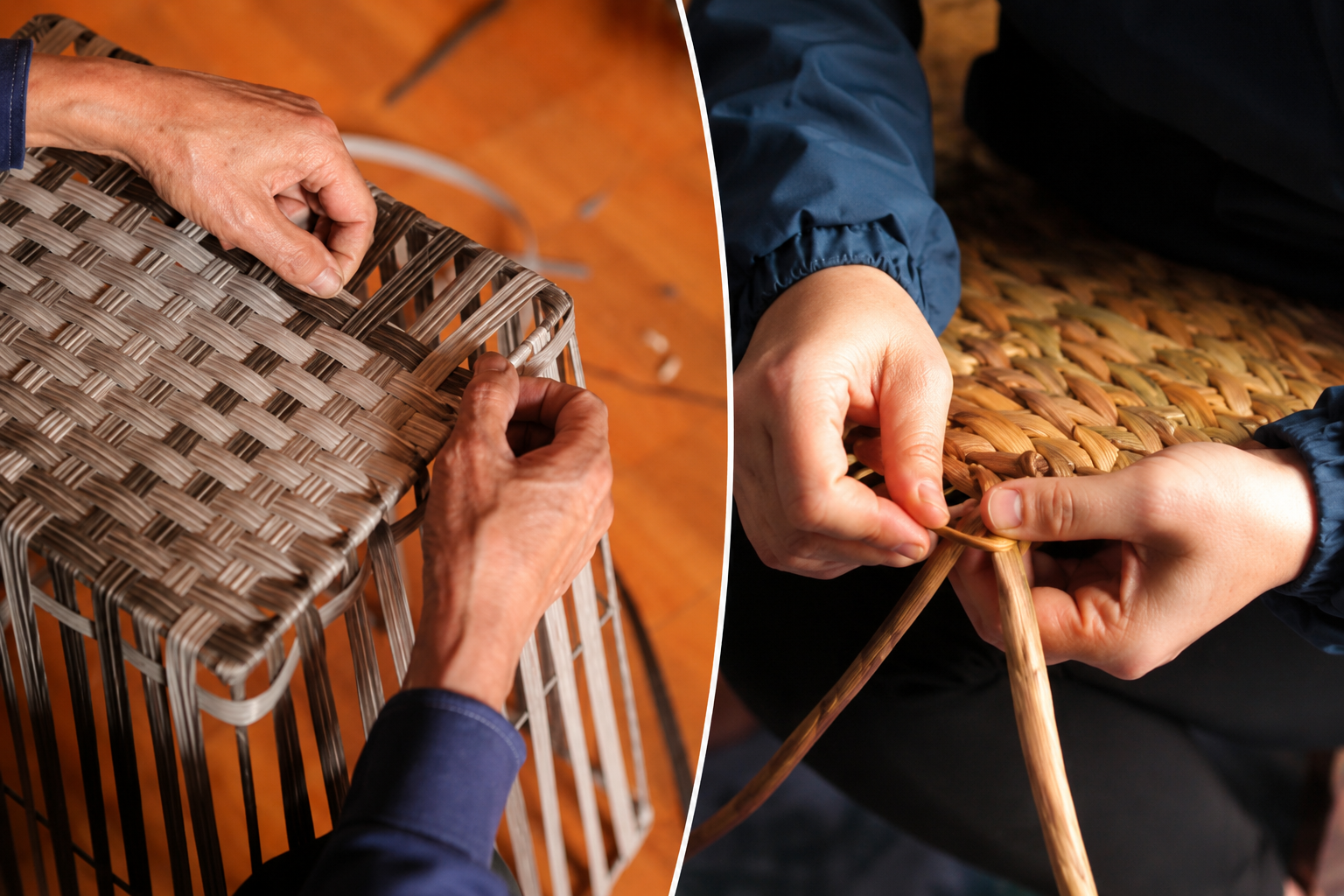
- Ergonomic Strain: Prolonged posture during handweaving storage baskets, laundry hampers, and outdoor furniture can cause repetitive strain injuries (RSIs).
- Chemical & Treatment Exposure: Finishing processes, non-toxic varnishes, and flame-retardant applications require controlled handling.
- Material Handling Hazards: Cutting raw rattan, splitting bamboo, and operating mechanical frame-welding tools involve sharp edges and machinery risks.
STEP 1: DEPLOY TAILORED PERSONAL PROTECTIVE EQUIPMENT (PPE) FOR ARTISANS
Standard industrial safety gear often hampers the dexterity required for intricate weaving and fine woodworking. Labor protection in craft villages requires specialized, highly functional equipment:
- Ergonomic Hand Protection: Breathable, high-dexterity cut-resistant gloves for handling raw seagrass, paper cords, and wire frames without compromising tactical control.
- Respiratory Protection: Dual-filter dust masks provided to workers handling wood sanding, spraying non-toxic lacquers, or processing water hyacinth fibers.
- Vision & Hearing Safeguards: Anti-fog safety eyewear and noise-canceling earplugs for artisans operating machinery in frame preparation and timber milling workshops.
STEP 2: CONDUCT ON-SITE SAFETY TRAINING AND WORKSHOP ERGONOMICS
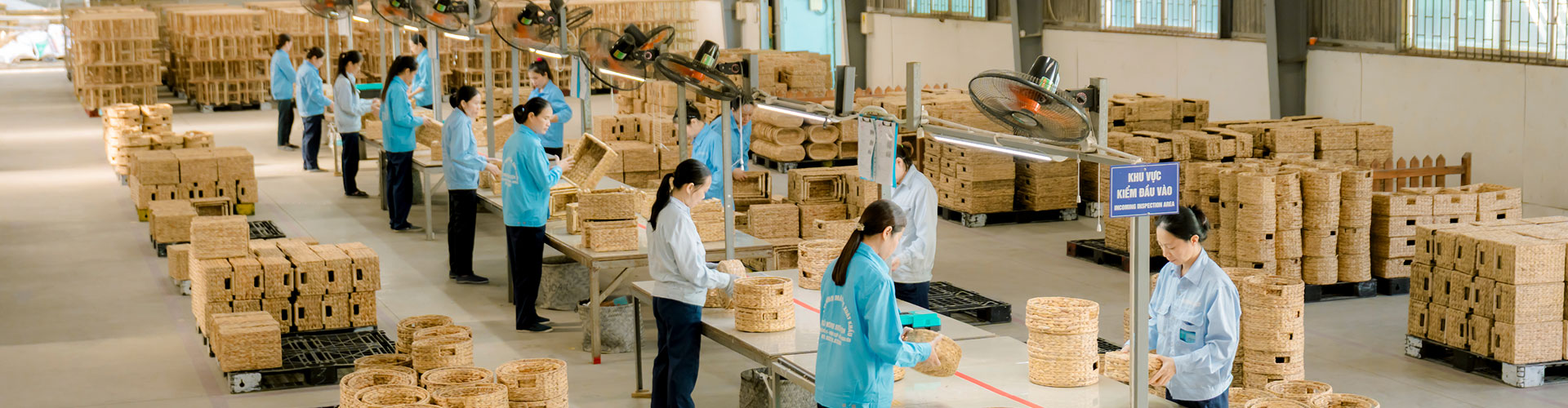
Training must be practical, visual, and adapted to the cultural context of rural craft villages. Phu Minh Co., Ltd. executes structured training modules directly within craft hubs:
1. Practical Machine & Tool Safety
Artisans receive hands-on instruction on blade guard maintenance, emergency shut-offs, and safe handling techniques for power tools used in acacia and pine wood framing.
2. Ergonomic Staging & Dynamic Workstations
By introducing height-adjustable weaving tables, supportive seating, and scheduled stretching intervals, workshops dramatically reduce fatigue among artisans crafting large storage furniture and laundry baskets.
3. Safe Material Handling & Chemical Storage
Workers are trained on proper ventilation protocols, standard operating procedures for eco-friendly adhesives, and fire prevention strategies in high-density raw material storage areas.
STEP 3: BENCHMARK AGAINST INTERNATIONAL SOCIAL COMPLIANCE STANDARDS
To convert safety practices into verifiable sourcing credentials for international buyers, traditional craft production must undergo rigorous audit frameworks:
- BSCI & SMETA Audits: Implementing structured labor safety policies satisfies key audit pillars regarding health and safety, fair working hours, and ethical treatment.
- WCA & SCAN Standards: Comprehensive physical security and hazard controls fulfill Workplace Conditions Assessment (WCA) and Supplier Ethical Data Exchange criteria.
- ISO 9001:2015 Integration: Standardizing safety workflows directly reinforces quality control, reducing product defect rates in high-volume production.
CONCLUSION: BUILDING A COMPLIANT, SUSTAINABLE FUTURE FOR HANDWOVEN DECOR
Investing in labor protection and continuous safety training in craft villages bridges the gap between traditional artisanal heritage and global commercial demands. For interior designers, global retail chains, and trade buyers, partnering with a manufacturer that prioritizes occupational safety ensures consistent product quality, ethical compliance, and uncompromised supply chain resilience.
Contact Phu Minh Co., Ltd. today to explore our audit-compliant, ethically manufactured collections of home decor, storage solutions, and woven accessories.
FAQ SECTION:
1- Why is labor safety critical when sourcing handwoven home decor from craft villages?
Implementing safety protocols protects artisan health, prevents production delays, and guarantees compliance with global ESG and social audit standards required by major international buyers.
2- What protective gear is necessary for working with materials like rattan, bamboo, and seagrass?
Essential gear includes high-dexterity cut-resistant gloves for weaving, particulate dust masks for sanding and processing raw fibers, and safety glasses for framing operations.
3- How does Phu Minh Co., Ltd maintain safety compliance across rural craft village networks?
Phu Minh establishes centralized quality and safety nodes, provides continuous visual training, supplies standardized protective equipment, and conducts internal audits aligned with BSCI and SMETA standards.
4- Does artisan safety training impact product lead times and manufacturing quality?
Yes, proper safety training and ergonomic practices reduce injury rates, lower artisan turnover, and standardize weaving techniques, leading to superior quality control and reliable delivery schedules.
RELAVANT ARTICLES