European Furniture Standardization Report: Optimizing Handwoven Storage Basket Dimensions for B2B Retail Success
KEY TAKEAWAYS:
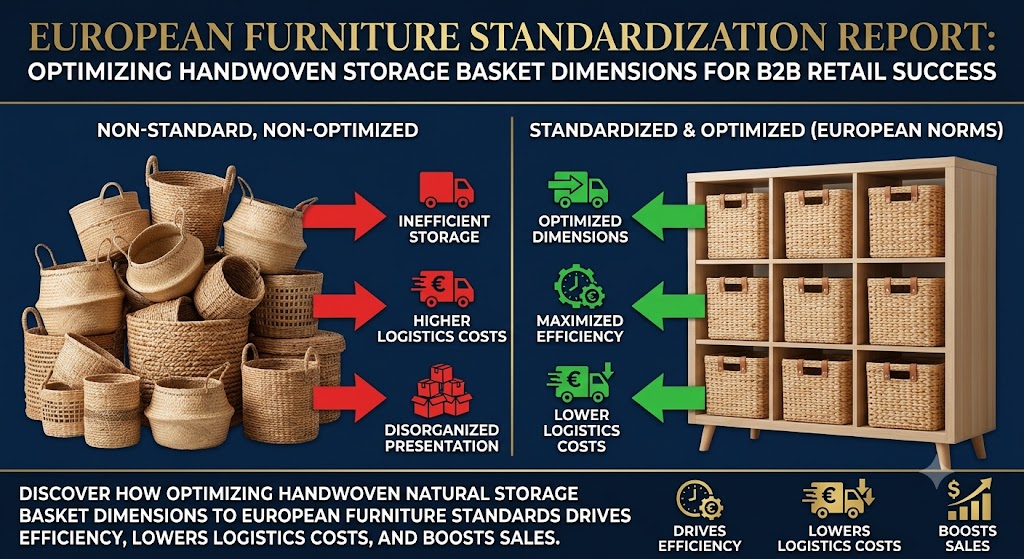
- Standardizing natural woven storage baskets to European modular shelf dimensions (e.g., 33x38x33cm) significantly lowers return rates and improves retail sell-through.
- Precision sizing in handcrafted items like rattan, seagrass, and water hyacinth requires strict quality control frameworks such as ISO 9001:2015 and BSCI compliance.
- Designing baskets with nested sizing profiles cuts international container shipping costs and reduces supply chain carbon footprints by up to 25%.
EXECUTIVE SUMMARY: ALIGNING HANDWOVEN CRAFTSMANSHIP WITH EUROPEAN STANDARDIZED LIVING
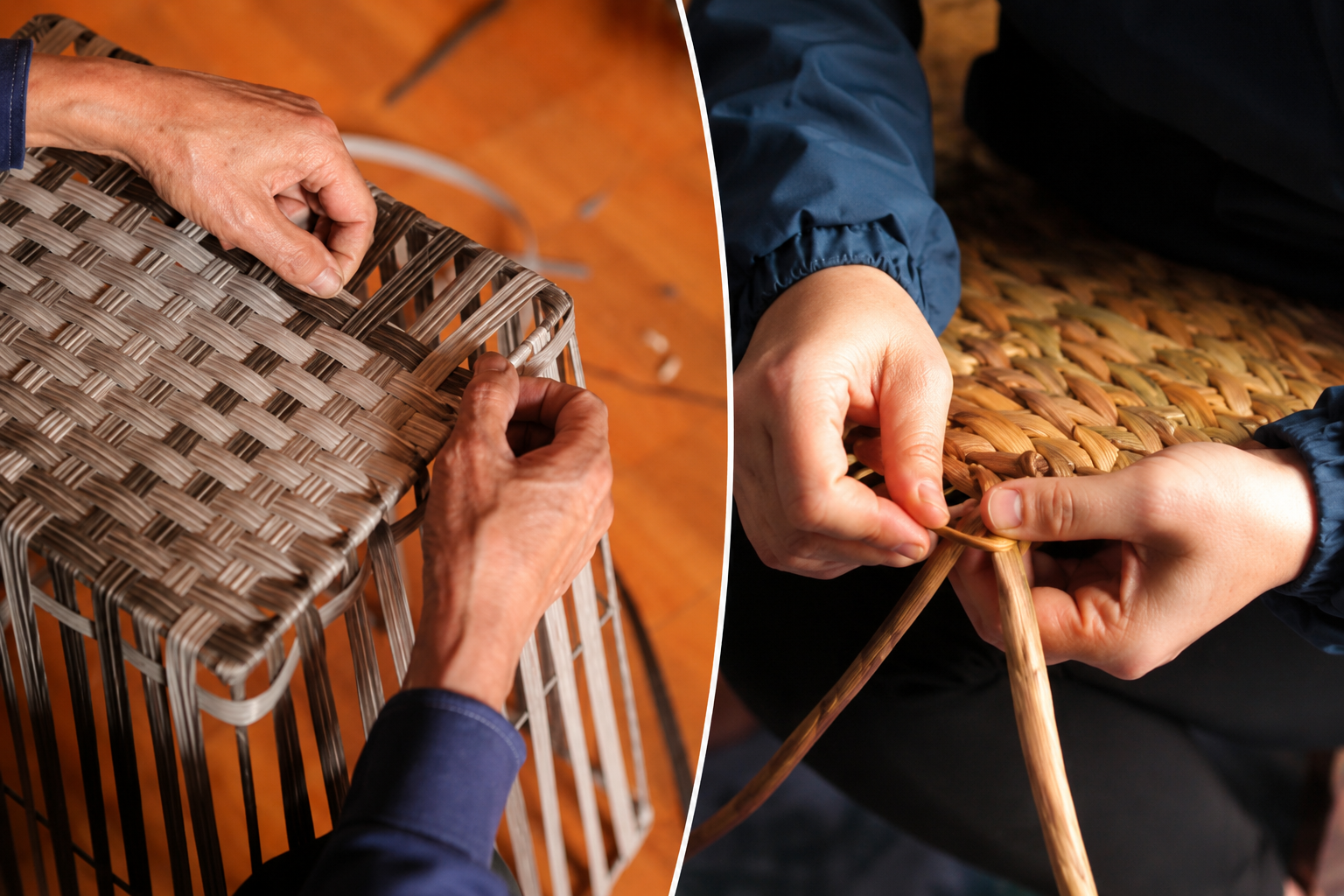
As European consumers increasingly favor modular, space-efficient interior design, demand for natural eco-friendly storage solutions has surged. However, a persistent challenge for global buyers and retail chains lies in dimensional variance. Handwoven storage hampers and baskets crafted from natural fibers like rattan, water hyacinth, seagrass, and paper cords often suffer from size inconsistencies that lead to customer dissatisfaction and shelf misfits.
This market trend report provides European interior buyers, catalog managers, and product designers with an actionable roadmap for specifying and optimizing handwoven storage basket dimensions. By aligning artisanal manufacturing in Vietnam with standardized European modular furniture systems, B2B buyers can maximize container density, streamline warehouse fulfillment, and secure higher retail margins.
CURRENT LANDSCAPE: THE MODULAR FURNITURE DOMINANCE IN EUROPEAN HOME RETAIL
European home decor is dominated by standardized modular shelving units, such as 33 x 38 x 33 cm cubbies, shallow wardrobe inserts, and under-bed clearance heights ranging from 15 cm to 22 cm. Consumers expect natural woven storage baskets to fit these spaces seamlessly, serving as functional drawers and organizing bins.
Historically, natural material baskets suffered a shrinkage or expansion variance of 5% to 8% during drying and transport. In modern B2B retail, this margin of error is unacceptable. Major retail chains operating under audit standards such as BSCI, SMETA, and WCA now demand a tolerance threshold below +/- 1 cm to prevent operational bottlenecks and high e-commerce return rates.
KEY TRENDS: DIMENSIONAL PRECISION, NESTABILITY, AND MATERIAL SYNERGY
Leading importers and interior designers are driving three strategic trends in natural storage manufacturing:
- Metric Modular Standardization: Specifying exact external dimensions (e.g., 32 x 35 x 32 cm) ensures baskets slide smoothly into standard 33 cm furniture openings without binding against side walls or metal frames.
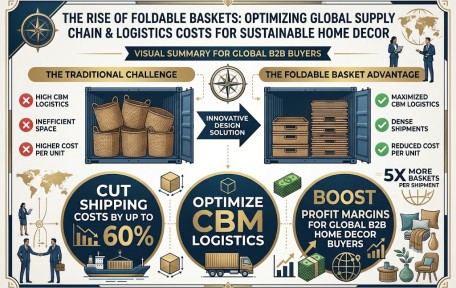
- Tapered Nestability for Freight Optimization: Sourcing multi-piece sets (Set of 3 or Set of 5) with slight 3-degree wall tapers allows items to nest inside one another, dramatically boosting CBM efficiency during ocean transport.
- Hybrid Material Frameworks: Combining natural weaves (seagrass, water hyacinth, PE resin, or cotton rope) with rigid acacia wood or iron wire skeletons ensures dimensional integrity remains stable under varying humidity levels during ocean shipping.
FUTURE OUTLOOK: THE EVOLUTION OF METRIC PRECISION IN ECO-FRIENDLY HOME ORGANIZATION
Over the next three to five years, European sustainability regulations like the EU Digital Product Passport will demand full traceability and standard compliance across home goods. The market for synthetic-natural hybrid storage solutions—such as recycled polyester rope interwoven with natural rattan—will expand rapidly to deliver both rustic aesthetics and structural rigidity.
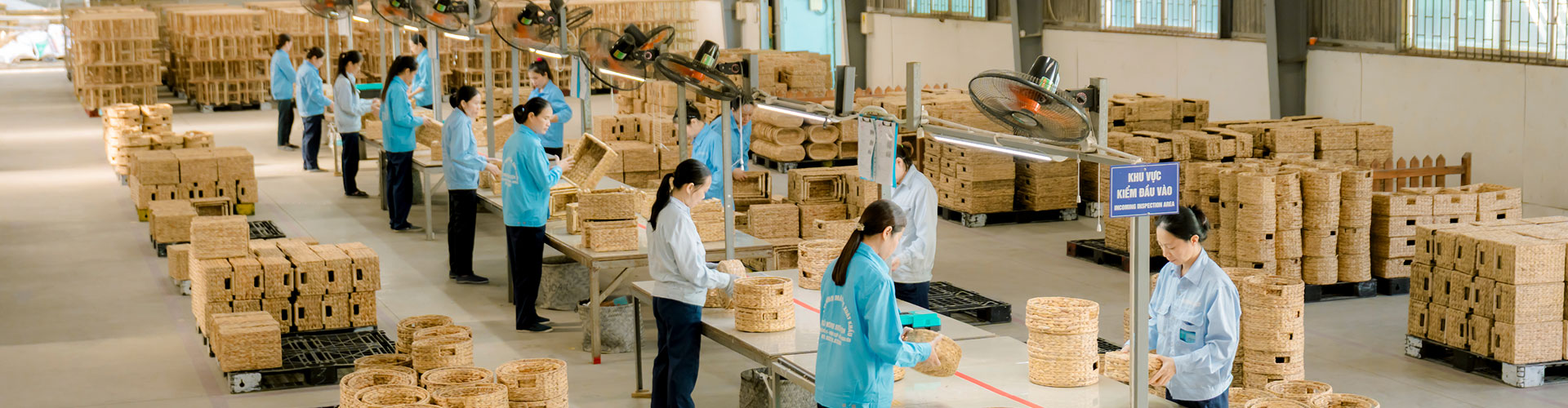
Suppliers equipped with advanced kiln-drying technology, automated metal frame bending, and rigorous ISO 9001:2015 quality control systems will dominate the supply chain. Manufacturers in Vietnam capable of offering standardized, audit-ready woven items will replace unorganized craft villages as primary B2B procurement partners.
STRATEGIC RECOMMENDATIONS: MAXIMIZING B2B EFFICIENCY AND RETAIL MARGINS
To capitalize on European home organization demand while protecting profit margins, global buyers should implement the following steps:
- Specify Clear Technical Drawings: Require suppliers to produce CAD drawings indicating outer dimensions, inner usable volume, and frame tolerances before sample approval.
- Mandate Low-Moisture Sourcing Standards: Partner with manufacturers like Phu Minh Co., Ltd., who maintain strict wood and fiber moisture levels (12-14%) to eliminate post-production warp or shrinkage.
- Optimize Packaging Density: Mandate flat-pack or fully nested master carton packaging to minimize air shipment volume and optimize container utilization rates.
FAQ SECTION:
1- What are the standard dimensions for European modular storage baskets?
The most widely accepted standard dimensions for European modular storage units (such as cube shelving) are 32 x 35 x 32 cm, designed to fit into 33 x 38 x 33 cm shelf openings with adequate clearance.
2- How do natural basket manufacturers control dimensional tolerances?
Manufacturers use rigid metal or acacia wood inner frames, custom weaving molds, and controlled kiln drying to keep dimensional variance within a strict +/- 1 cm tolerance.
3- Why is moisture control critical for European storage basket imports?
Maintaining natural fiber moisture content between 12% and 14% prevents mold, warpage, and shrinkage during transit across changing climate zones from Asia to Europe.
4- Can custom handwoven storage hampers meet BSCI and SCAN compliance?
Yes, certified manufacturing partners like Phu Minh Co., Ltd. operate under BSCI, SCAN, WCA, and ISO 9001:2015 standards to guarantee both social compliance and consistent quality.
RELAVANT ARTICLES