Case Study: Engineering Warp-Resistant Acacia and Pine Wood Components for Hybrid Rattan and Bamboo Export Furniture
KEY TAKEAWAYS:
-
The Hybrid Material Dilemma: Integrating solid wood (Acacia and Pine) with natural woven fibers (rattan, bamboo, seagrass, water hyacinth) risks structural warping, joint separation, and cracking due to differential thermal and hygroscopic expansion rates.
-
Controlled Kiln-Drying & Moisture Equalization: Phu Minh Co., Ltd enforces technical wood seasoning and multi-stage kiln drying to lock core moisture levels strictly between $10% - 12%$, matching natural fiber moisture tolerances.
-
Precision CNC & Shaping Engineering: Utilizing specialized shaping machines, industrial steamers, and automated sanding lines prevents structural distortion during frame assembly.
-
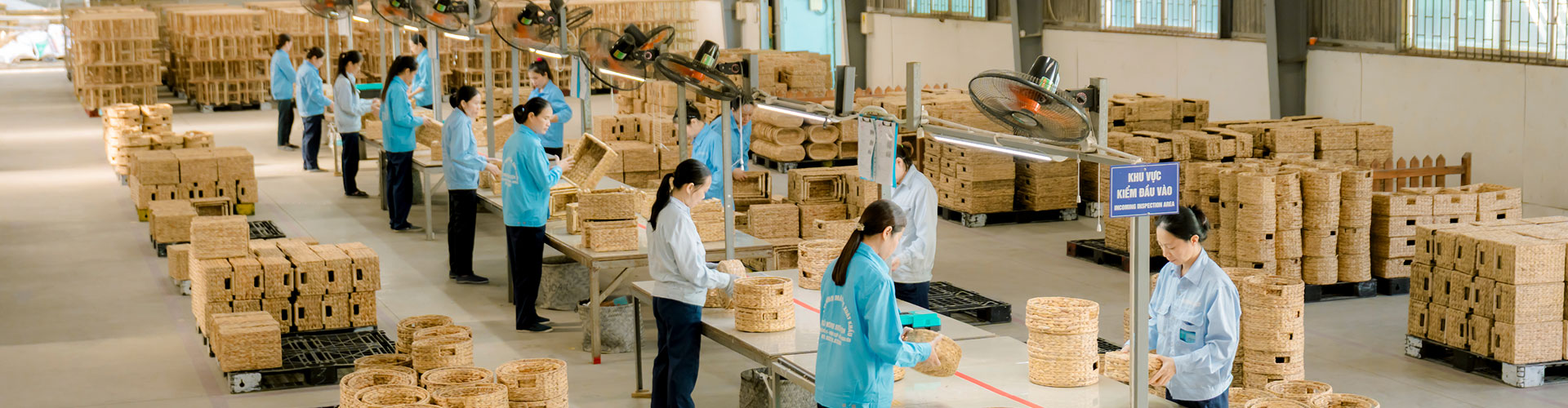
Systemic ISO 9001:2015 QC Governance: A multi-layer inspection flow (Weaving -> Incoming Inspection -> Gluing -> Cutting/Trimming -> In-line Inspection -> Packing -> Final Inspection) eliminates structural joint failures and finish defects.
-
Audited B2B Reliability: Certified under BSCI, SMETA (4-Pillar), SCAN, WCA, and ISO 9001:2015, shipping 1,200 to 1,400 40' High Cube containers annually to global retail giants such as Walmart, Costco, Sam's Club, Muji, and Nitori.
1. Executive Summary: The Structural Challenge in Hybrid Storage Furniture
In the global home organization and indoor furniture sectors, hybrid designs—combining solid Acacia or Pine wood rims, lids, and structural legs with handwoven natural fibers—have become a dominant retail trend across North America, Europe, and Asia. However, mixing timber with flexible reeds introduces severe engineering vulnerabilities during ocean freight and climate transitions.
Wood and natural fibers absorb and release atmospheric moisture at vastly different rates. When shipped across tropical shipping lanes into dry or cold destination ports, poorly processed timber experiences hygroscopic stress—causing wood frames to warp, lids to twist, and woven joint seams to pull apart.
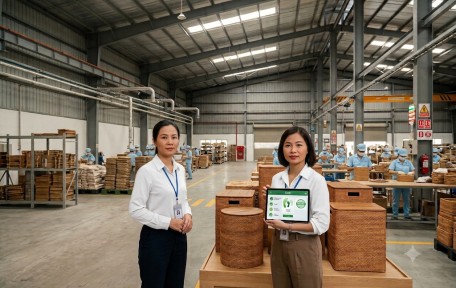
To solve this critical quality barrier for volume importers, Phu Minh Co., Ltd—a premier Vietnamese manufacturer established in 1999—developed a proprietary wood seasoning and structural processing protocol within its 30,000 m² manufacturing hub in Hung Yen, Vietnam.
2. Technical Execution: Phu Minh’s Warp-Prevention Protocol for Acacia & Pine
a. Multi-Stage Kiln Drying & Moisture Equalization
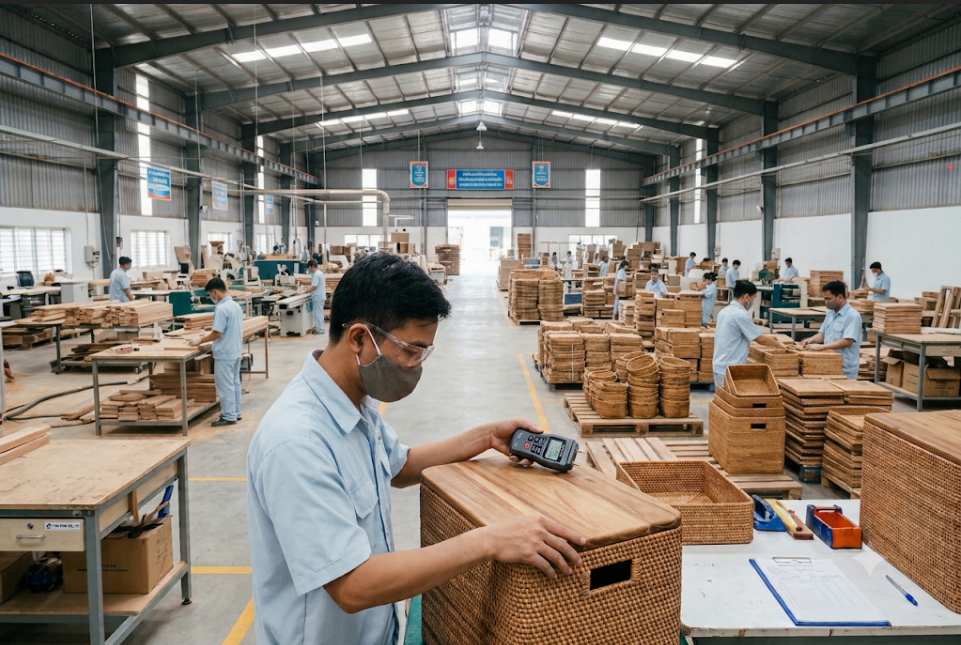
Acacia and Pine timber undergo a rigorous, computer-monitored kiln-drying cycle inside Phu Minh's industrial drying facilities. Core moisture content is reduced from raw saturation down to a precise target range of $10% - 12%$. Equalizing timber moisture to match the equilibrium moisture content (EMC) of pre-dried rattan and bamboo prevents differential shrinkage after assembly.
b. Structural Stress Relieving & Precision Shaping
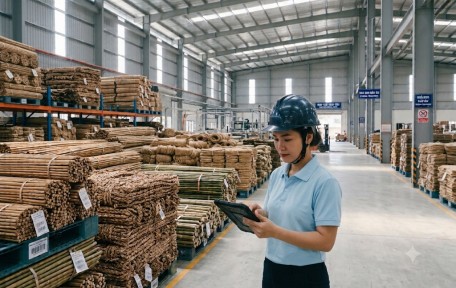
Post-drying, timber planks undergo a conditioning phase inside 10 climate-controlled preservation warehouses to relieve internal cellular stress.
-
Precision Machining: Timber is milled, cut, and profiled using high-precision shaping machines, air compressors, and wood routers to create dimensionally stable joint channels.
-
Sealing & Grain Protection: Wood surfaces receive an initial micro-sealant coat to retard rapid moisture exchange through end-grains before being joined with handwoven bodies.
c. Hybrid Assembly & Seamless Joint Engineering
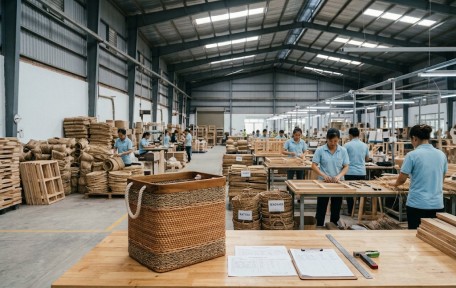
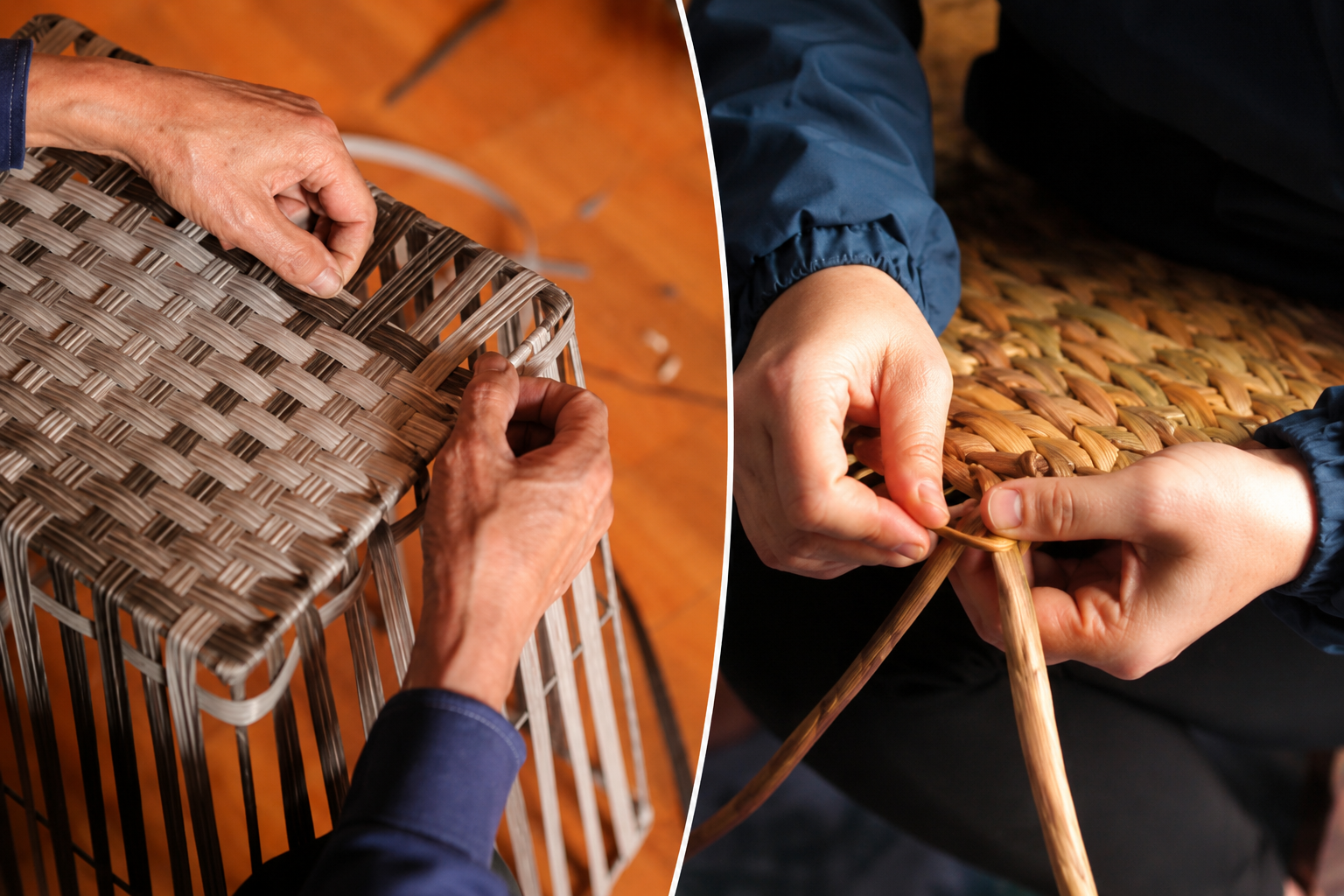
Over 150 skilled factory technicians and 5,000 craft village artisans execute the hybrid integration:
-
Solid Acacia or Pine frames are fitted with mortise-and-tenon or reinforced corner joints.
-
Artisans hand-weave natural rattan, bamboo, seagrass, or water hyacinth directly onto pre-sealed wooden channels or metal skeleton frames.
-
Flexible non-toxic adhesives and expandable fasteners are applied during the gluing phase to absorb micro-expansion without cracking the wooden rim.
d. Automated Finishing & Protective Sealants
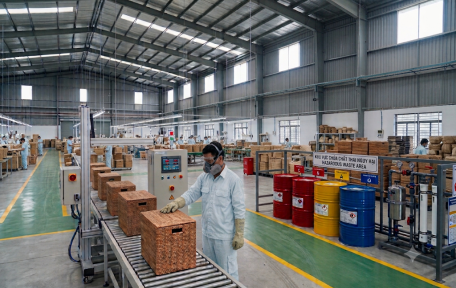
Assembled hybrid furniture passes through automated spraying-painting machines. Non-toxic, water-based polyurethane sealants form a protective moisture barrier around both the wood grain and natural woven fibers, preventing environmental humidity absorption during maritime transport.
3. Implementation & ISO 9001:2015 Multi-Layer Inspection Flow
Every hybrid Acacia/Pine and rattan order is governed by Phu Minh’s certified ISO 9001:2015 5-step quality control flow:
-
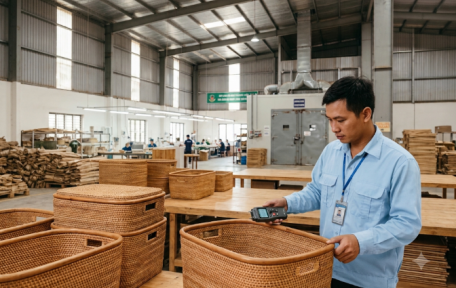
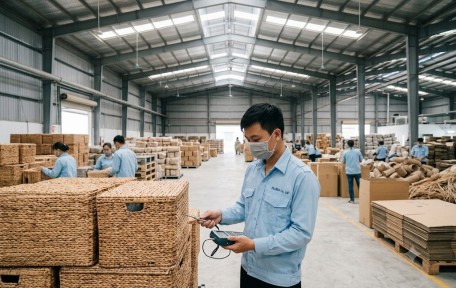
Incoming Inspection: Digital moisture testing of raw timber and natural fibers prior to assembly.
-
In-Line Inspection: Dimensional tolerance and joint flushness checks post-gluing and trimming.
-
Pre-Packing Audit: Final load testing, surface finish evaluation, and moisture verification in a clean, pest-controlled workshop environment.
4. Results & Impact: Uncompromising Quality for Global Retail Chains
By standardizing wood processing technology with traditional handicraft weaving, Phu Minh delivers proven B2B performance across its annual export volume of 1,200 to 1,400 40' containers:
-
Zero Warp & Defect Claims: Achieved an exemplary track record for structural stability across long-distance container shipments to cold-climate markets in North America and Western Europe.
-
Pre-Audited Retail Trust: Audited and approved by world-leading retail corporations including Sam’s Club, Walmart, Costco, Best Choice Products, Burlington, Ross, BJ’s, PriceSmart, TJX, Meijer, Muji, and Nitori.
-
Global Audit Integrity: Fully certified under BSCI, SMETA (4-Pillar), SCAN, WCA, and ISO 9001:2015.
5. Partner with Phu Minh Co., Ltd Today
Elevate your hybrid furniture catalog with factory-direct precision engineering, custom OEM/ODM development, and certified supply chain peace of mind.
-
Website: www.phuminhcrafts.com
-
Email: sales@phuminhcrafts.com
-
Tel: (84) 2213972524 | Hotline: (84) 793142191
-
Address: Pho Noi B Industrial Zone, Nguyen Van Linh Commune, Hung Yen Province, Vietnam
-
Tax Code: 0900192696
FAQ SECTION:
Q1: How does Phu Minh prevent Acacia and Pine wood lids from warping when combined with rattan or bamboo?
A1: Phu Minh kiln-dries timber to a precise $10% - 12%$ moisture level, conditions wood in climate-controlled warehouses, and uses automated spraying-painting machines to apply moisture-barrier sealants before assembly.
Q2: Why is moisture equalization critical when combining solid wood with natural woven fibers?
A2: Equalizing moisture levels between wood and natural fibers (rattan, bamboo, seagrass, water hyacinth) prevents differential shrinkage and expansion, eliminating joint separation and frame distortion during sea freight.
Q3: Does Phu Minh offer custom OEM/ODM hybrid furniture designs for B2B retail buyers?
A3: Yes, Phu Minh provides full OEM/ODM services—integrating custom-shaped Acacia or Pine wood lids, rims, and legs with handwoven natural fibers or synthetic PP/PE resin weaves.
Q4: Which third-party audit certifications verify Phu Minh’s technical wood processing and quality control standards?
A4: Phu Minh holds ISO 9001:2015, BSCI, SMETA, SCAN, and WCA certifications, meeting the strict vendor quality standards of global retail leaders like Walmart, Costco, Sam's Club, and Muji.
RELAVANT ARTICLES